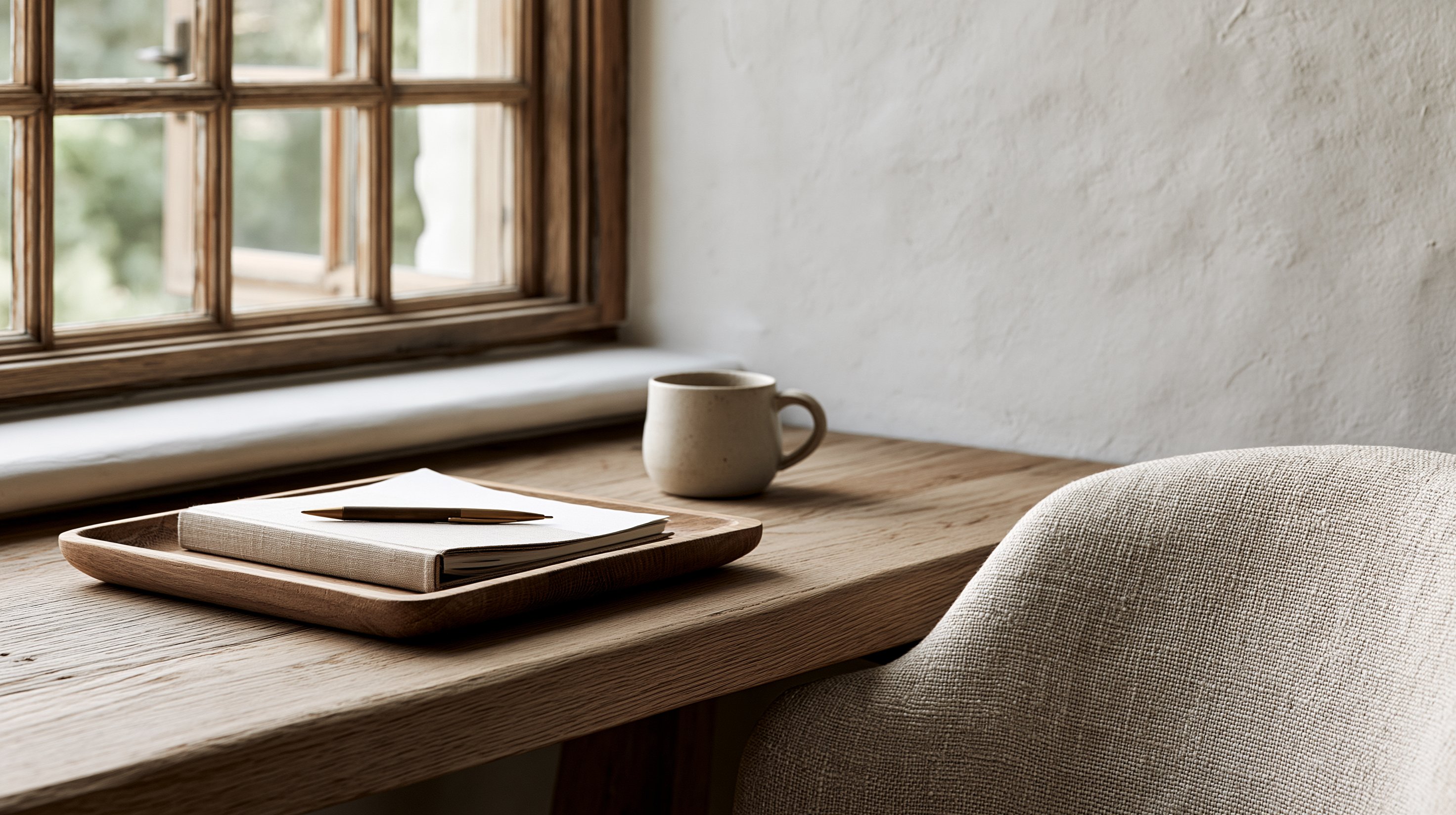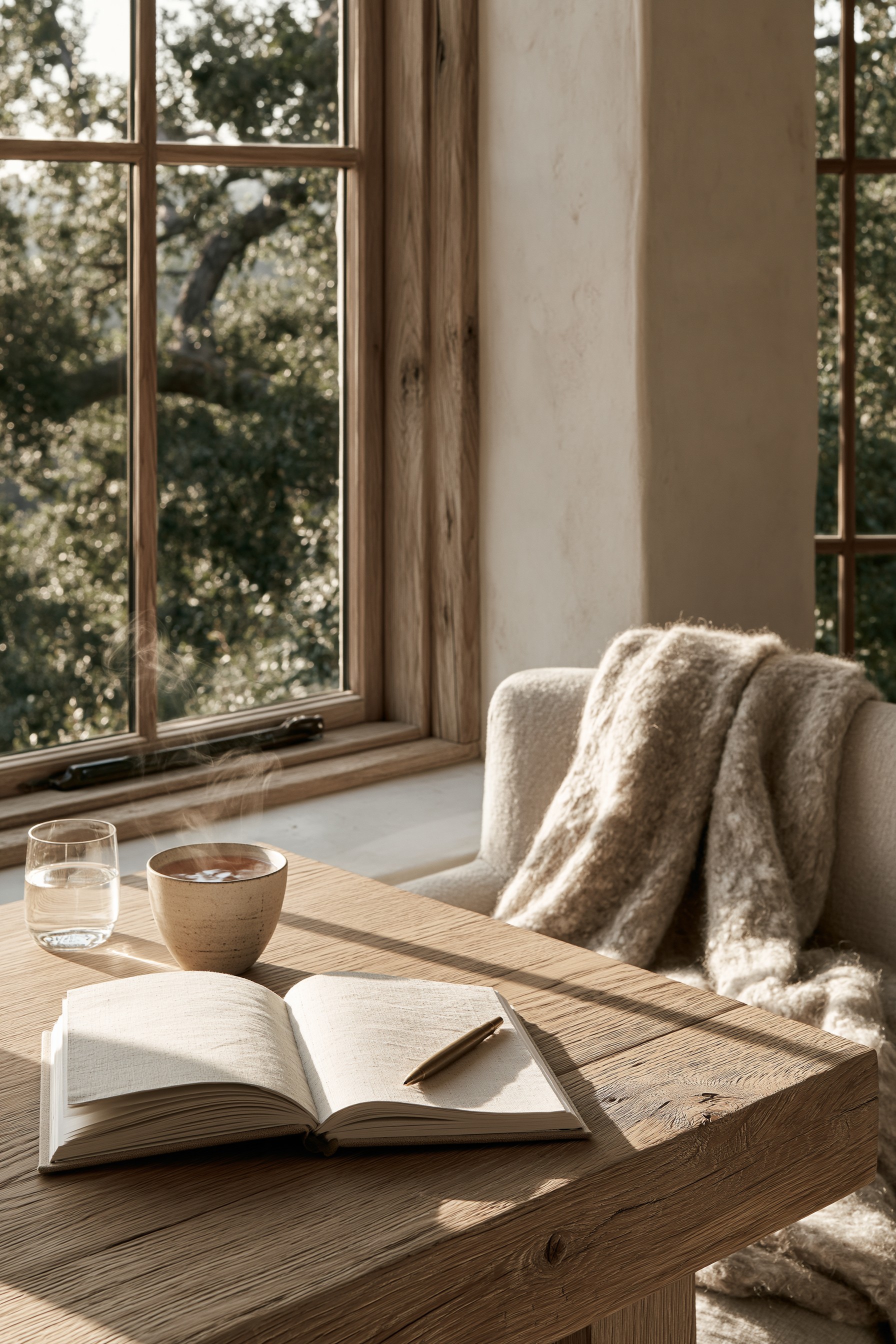

There is a particular hour on a summer afternoon when the light goes soft and sideways, and a chair in the right corner becomes the only place in the house worth being. That is the whole promise of a reading nook: one seat, one pool of light, one surface for the cup, and a reason to stop moving. Most rooms have a corner that could do this. Few rooms have one that actually does, because the corner was furnished for how it looks from the doorway rather than for the person sitting in it.
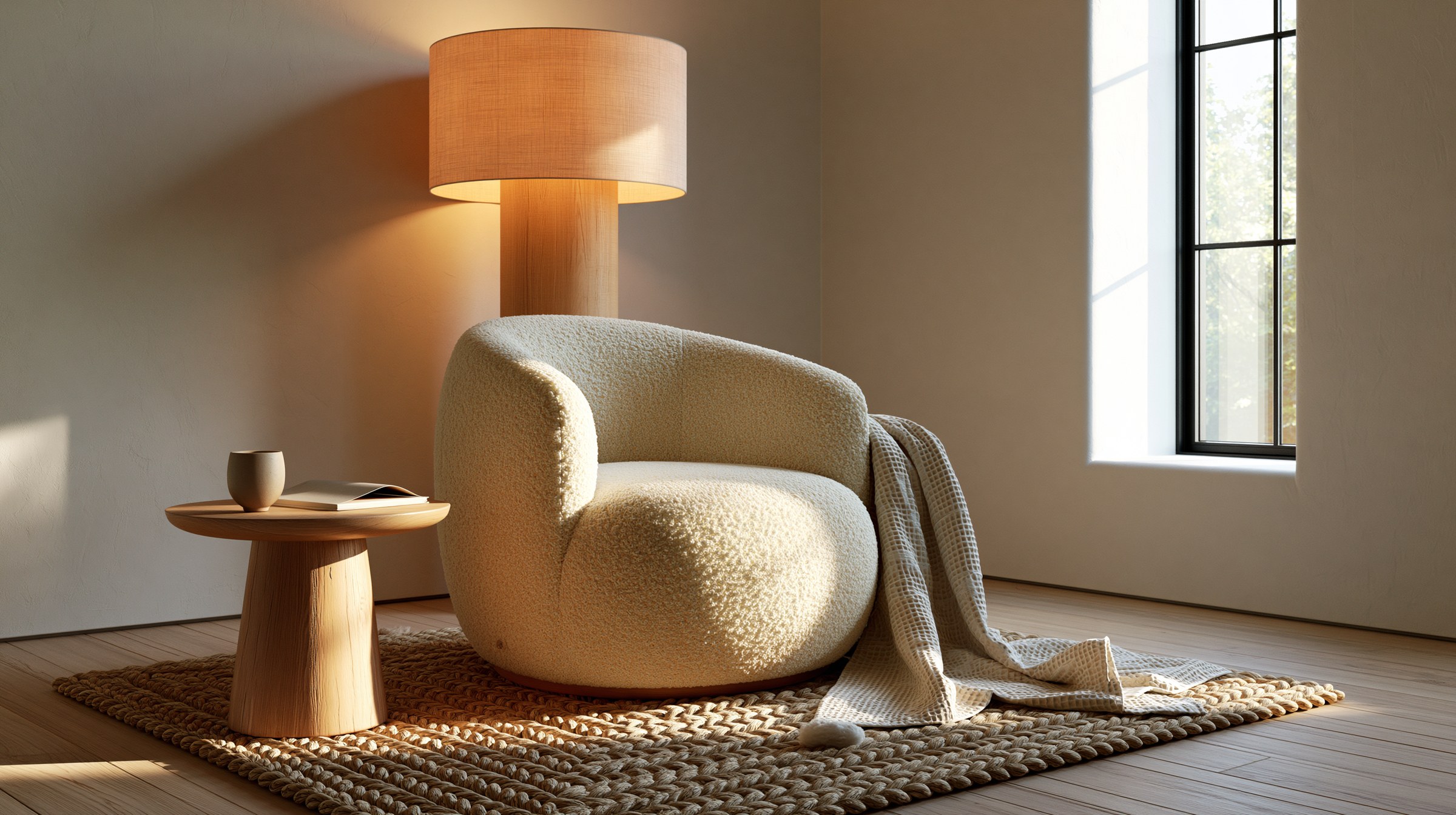
This look is quiet on purpose. A generous chair in a milky white weave, a solid wood lamp with a linen shade, a small pedestal table, and natural texture underfoot. Nothing in it asks for attention, which is exactly why you end up staying.
The Key Ingredients
One honest seat
Everything else in the corner is negotiable. The chair is not. It needs real depth, arms you can lean into, and upholstery that feels good against bare skin in July. A chair you can sit sideways in gets used twice as often as one you can't. If the seat is right, the corner works even before the rest arrives.
Light you control
Afternoon reading light shifts by the hour, so the corner needs its own source rather than a dependence on the window. A floor lamp with a warm bulb and a fabric shade gives you a steady pool of light that follows the page, not the room. Why this works: a defined circle of light marks the corner as its own zone, and a zone with a clear purpose gets used without a decision.
A surface within reach
The difference between sitting for ten minutes and sitting for an hour is usually a place to put things down. A small table at elbow height holds the cup, the glasses, and the book you just finished, so nothing about staying requires getting up.
What You'll Need for This Look
Six pieces build the whole corner. Every one of them earns its place by making the sitting easier, and together they are what separates a reading nook you photograph once from one you use every week.
The foundation
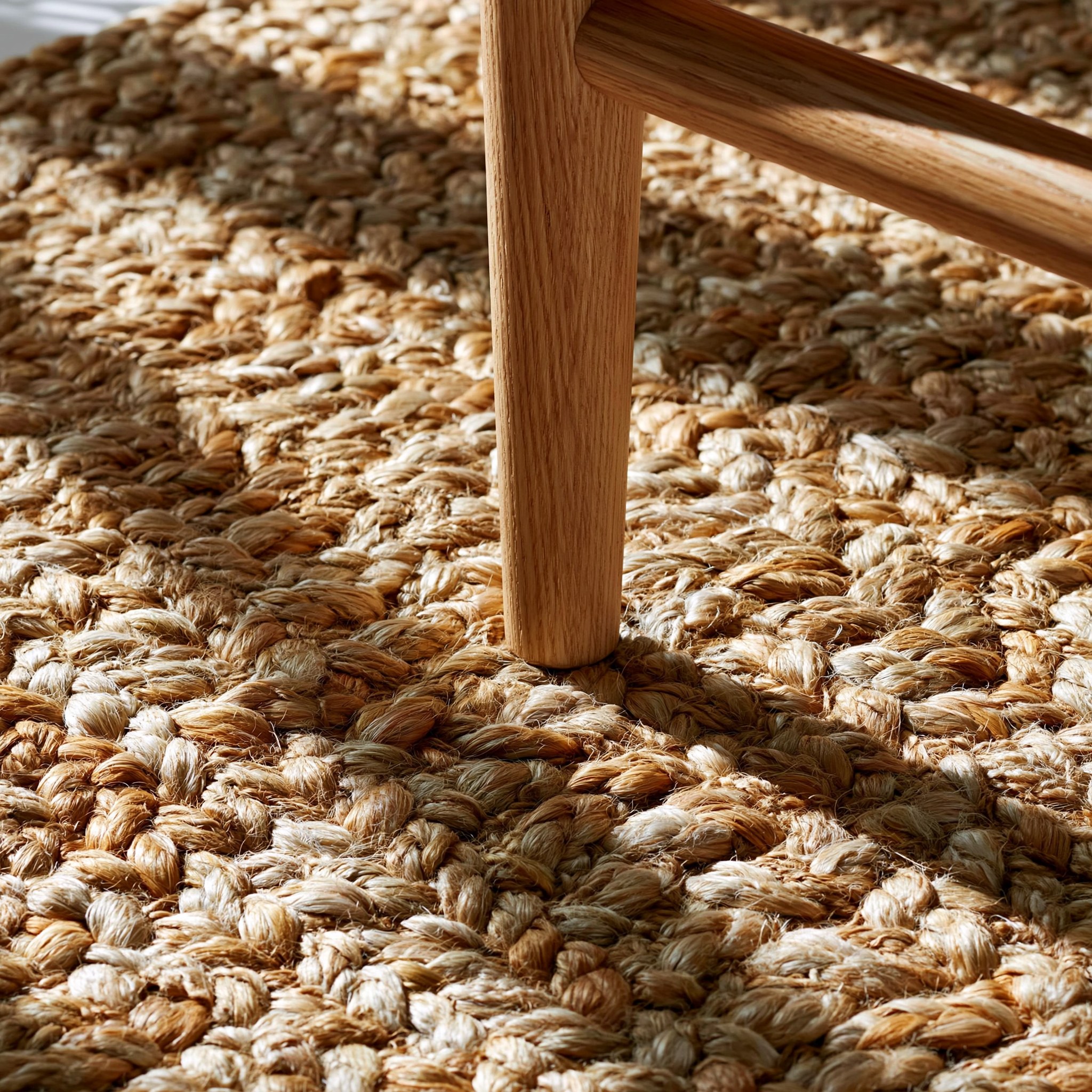
Start with the chair: a barrel or club shape in a textured cream or oat weave, deep enough to curl into, with a solid frame that does not swivel loose over time. Look for removable seat cushions and a fabric with some nub to it, which hides wear and reads warm in low light. Under it, a flatwoven jute or braided natural-fiber rug, around four by six feet, anchors the corner and marks its edges. The rug is what turns a chair against a wall into a place.
Light and reach
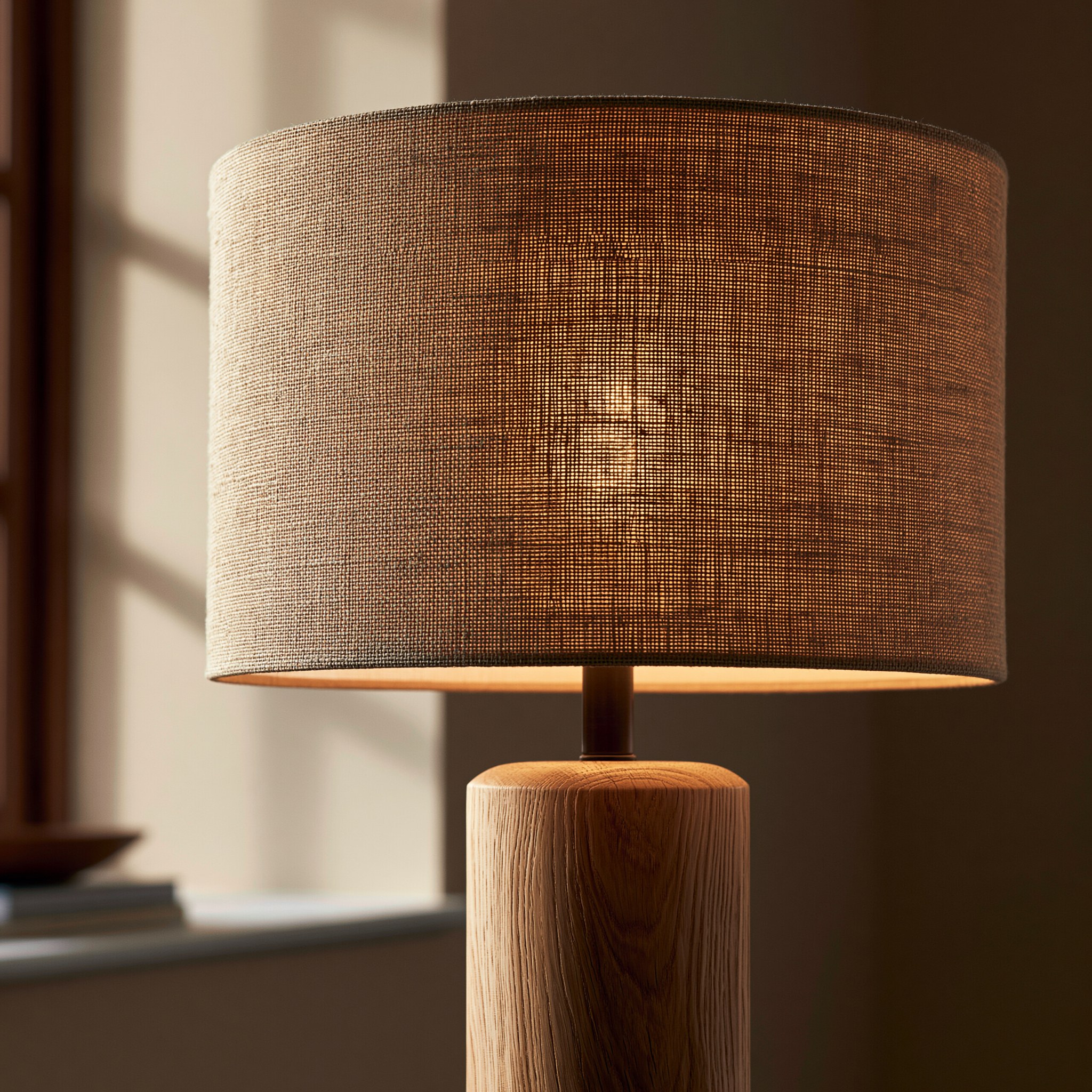
Choose a floor lamp with a solid wood column and a linen drum shade, tall enough that the shade sits just above seated eye level. Warm bulbs only, somewhere near 2700K, so the light says evening even at three in the afternoon. Beside the chair, a small round pedestal table in solid wood, roughly side-table height with a footprint under eighteen inches, keeps the corner open while holding everything you actually need.
The soft layer
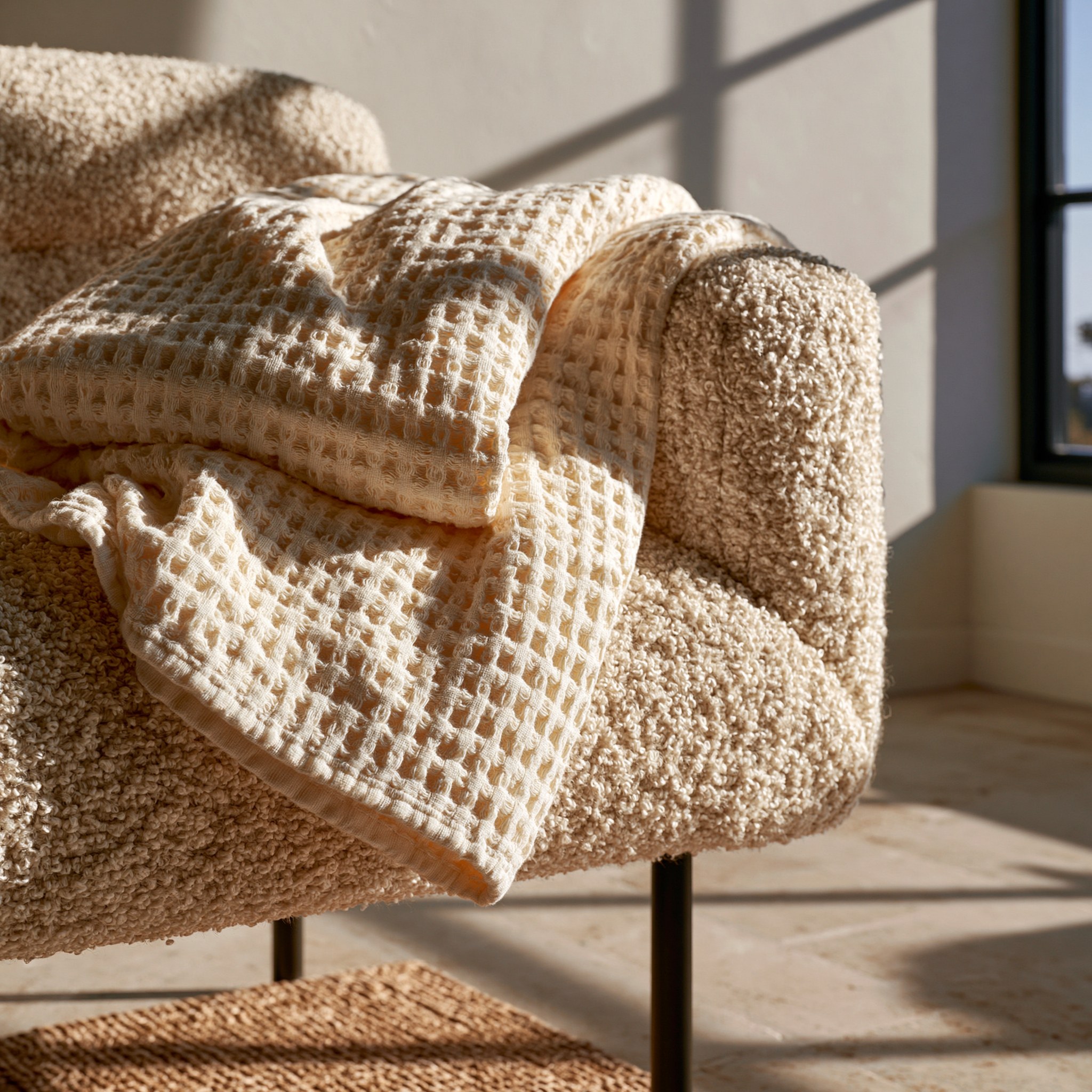
A summer-weight cotton throw in a waffle or basket weave lives folded over the chair arm, there for the air conditioning more than the cold. And one linen lumbar pillow, in a natural flax or oat tone, sits low against the chair back to make long sitting comfortable rather than aspirational. Softness is what signals permission to stay.
What to Watch For
The chair is where most reading corners quietly fail. A seat that photographs well but sits shallow will send you back to the sofa within a week, so check the seat depth against your own frame before anything else.
Overhead light is the second trap. If the corner is lit from the ceiling, it stays part of the room instead of becoming its own place. Turn the big light off and let the lamp hold the space alone.
The third is scale creep. A side table that could double as a desk, a rug that runs under half the room, a second chair for guests who never sit there. The corner works because it is sized for one person and one hour.
Simple Substitutions
- Instead of a boucle weave, try a washed linen or cotton slub upholstery. The texture stays quiet and the seat runs cooler in a warm room.
- Instead of a floor lamp, try a wall-mounted swing arm with a fabric shade. Same pool of light, no floor space spent, better for a tight corner.
- Instead of a jute rug, try a flatwoven wool in oat or sand. Softer underfoot, similar visual weight, better where bare feet will land.
- Instead of a pedestal table, try a small stack of two or three large hardcovers on a stool. The reach is the point, not the furniture.
- Instead of a lumbar pillow, try a standard square in a down-alternative fill. Less tailored, more sink, and the corner reads a touch more relaxed.
Building It Step by Step
Start with the chair and place it before you buy anything else. Angle it toward the window but not square to it, close enough to a wall that the corner feels held. Live with just the chair for a few days and notice where your hand reaches for a cup and where the light falls short. Then add the rug to fix the chair in place, the lamp to solve the evening, and the table exactly where the reach told you it belongs. The soft layer comes last, once the bones have settled in. Built in that order, the corner assembles itself around how you actually sit, and there is nothing to rearrange later.
The Final Layer
Keep the table nearly empty. A cup, the current book, maybe the one you intend to read next. A stack taller than that becomes a to-do list, and the corner stops being a rest.
Let one natural note in. A stem in a small vase on the windowsill nearby, or just the window itself left bare enough to see the afternoon change. The corner should hold a little evidence that time is passing slowly.
Resist the urge to finish it. The most convincing reading corners have one thing slightly off, a throw not quite folded, a book face down on the arm. That is not mess. That is proof the seat is doing its job.
A reading corner is a small argument for a slower afternoon, and it wins by being easier to sit in than to walk past. If you want the same feeling first thing in the day, see how slow summer mornings take shape on the porch.
And if the corner has you wanting a calmer rhythm through the whole house, the free Reset Guide is a gentle place to begin. You will find it just below whenever you are ready.