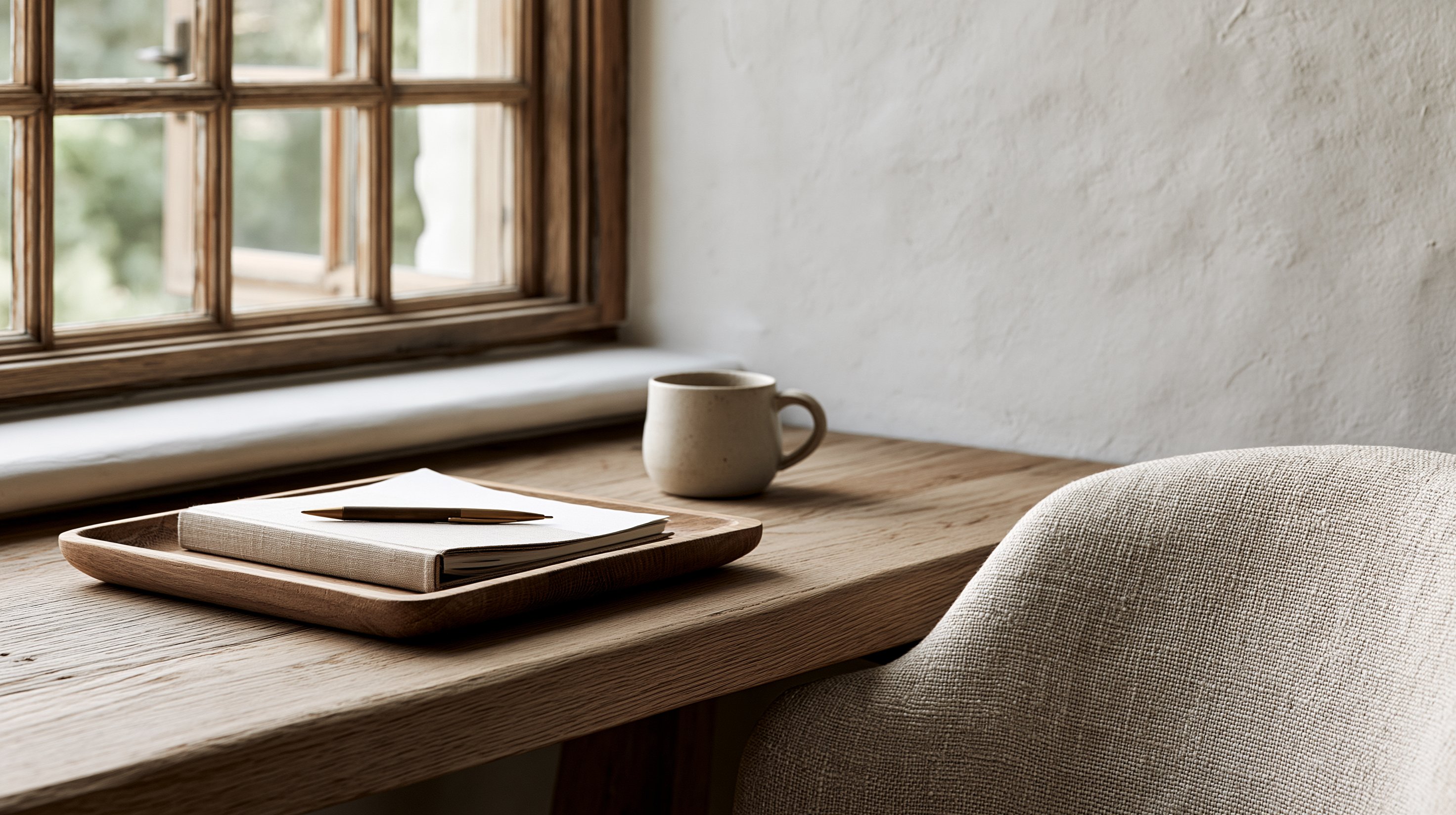


By the end of this post you will have a Sunday planning ritual that takes about twenty minutes and gives your week a shape before Monday gets a vote. If your Sundays currently end with a vague sense of everything you should be doing, this is a gentler way in, and it asks for no discipline you do not already have. The structure does the work. You just show up with a pen.
Most weekly planning fails for the same reason most routines fail: it produces a list of wishes, not decisions. A list says what you want to happen. A decision says when and where it will happen. Psychologists call these decisions implementation intentions, the simple "when X, I will Y" format, and the research on them is some of the most consistent in behavior science. This ritual is built around them.
Quick Supply List
- A notebook or planner you like touching. Paper slows you down in the right way, and a spread you can see all at once beats a scroll.
- One pen that works. Small thing, real friction if it does not.
- Your actual calendar, opened once, early in the ritual.
- Something warm to drink. This is the reward that makes the ritual want to repeat, so do not skip it.
Do This First
Pick a fixed time and seat. Same chair, same hour, ideally attached to something you already do every Sunday, like the after-dinner quiet or the first coffee. The ritual sticks when it has an anchor, not when it floats.
Keep the scope honest. You are planning one week, not redesigning your life. Twenty minutes is the ceiling, and a shorter session that happens beats a thorough one that does not.
Set the room to help you. Clear the one surface you will use, put the phone in another room, and turn on the good lamp. You are building a small environment that says this is the thinking seat.
How to Do It
1. Empty the week out of your head. Open the notebook and write down everything circling, tasks, worries, half-plans, all of it, unsorted. Give it five minutes at most. Done right, the page looks messy and your head feels quieter. Why this works: unfinished tasks keep tugging at attention until they are captured somewhere trusted, and paper counts.
2. Look at the real calendar. Open it once and copy the fixed points of the week onto your page: appointments, deadlines, the evenings that are already spoken for. You are drawing the true shape of the week before you decide what fits inside it. The week you plan around reality survives contact with reality.
3. Choose three priorities, not ten. From the messy page, circle the three things that would make this week feel well spent. Three is not arbitrary. It is roughly what a week with a job and a life can absorb on top of itself. Everything else stays on the page as a holding area, not a promise.
4. Turn each priority into a when-and-where decision. This is the heart of the Sunday planning ritual, and the step most planning skips. For each of the three, write one sentence in the form: when [time and place], I will [specific action]. Not "work on the guest room" but "Tuesday after dinner, I will clear the guest room closet shelf." You should be able to picture the moment happening. Why this works: a formed intention hands the decision to your future self already made, which is exactly when deciding feels hardest.
5. Pre-place the cues. Take two minutes and physically stage the week you just planned. The paperwork goes on the desk for Tuesday, the bag by the door for Wednesday, the book on the pillow. Most of the work here is done by the objects, not by your memory. A staged cue meets you at the right moment; a mental note has to be found.
6. Close with the reward. Pour the drink, read the three sentences back once, and stop. The ritual ends on purpose, in comfort, several minutes before you are tired of it. This ending is what your Sunday self will remember next week when it is time to sit down again.
Trouble Spots + Solutions
If your list of three keeps becoming seven, you are ranking wishes, not making decisions. Ask which one thing would make the week feel settled, write that one first, and let the others fight for the two remaining seats.
If the ritual keeps getting skipped, the anchor is wrong, not you. Move it to a moment that already happens every Sunday without effort, and shrink it to ten minutes until it feels automatic. Consistency first, depth later.
If the week blows up by Wednesday, the ritual still worked. Fixed points changed, so the when-and-where sentences get rewritten in two minutes on Wednesday night. The skill you are building is redirecting, and it is a planning skill, not a failure of one.
If Sunday evenings fill you with dread, do not attach planning to them. A Monday morning version, before the house wakes, works just as well. The ritual belongs to you, not to Sunday.
Easy Variations
The ten-minute version: brain dump, three priorities, three sentences, done. Skip the staging and the calendar copy on the weeks that are already simple.
The shared version: each person does steps one through four alone, then you trade the three sentences over the drink. Ten extra minutes, and the week stops relying on telepathy.
The seasonal check-in: on the first Sunday of the month, add five minutes to ask whether the three priorities of the past month point anywhere you actually want to go. Small course corrections beat grand overhauls.
Finishing Touches
Tonight, just choose the anchor and the seat. That single decision is the whole first week of this practice, and the rest of the ritual will assemble itself around it once the sitting down feels normal. Next Sunday, bring the pen.
If you would like a calm, printable structure for this and the other small rituals that steady a week, the free Reset Guide lays out the gentle framework it all hangs on. You will find it just below whenever you are ready.