
You want to close the door at night and feel the day loosen its grip. If that is not happening, the answer is rarely more discipline, and it is almost never a full redesign. A calm bedroom comes down to a handful of small cues, and the most important one is usually the last thing your eyes land on before the light goes out.
Your attention keeps working after you stop. A room that holds unfinished business, a laundry pile, a charger cable, a stack of paperwork on the dresser, keeps handing that business back to you. Designing a bedroom that helps you rest is mostly the work of finding those signals and quieting them, one at a time.
The Design Direction
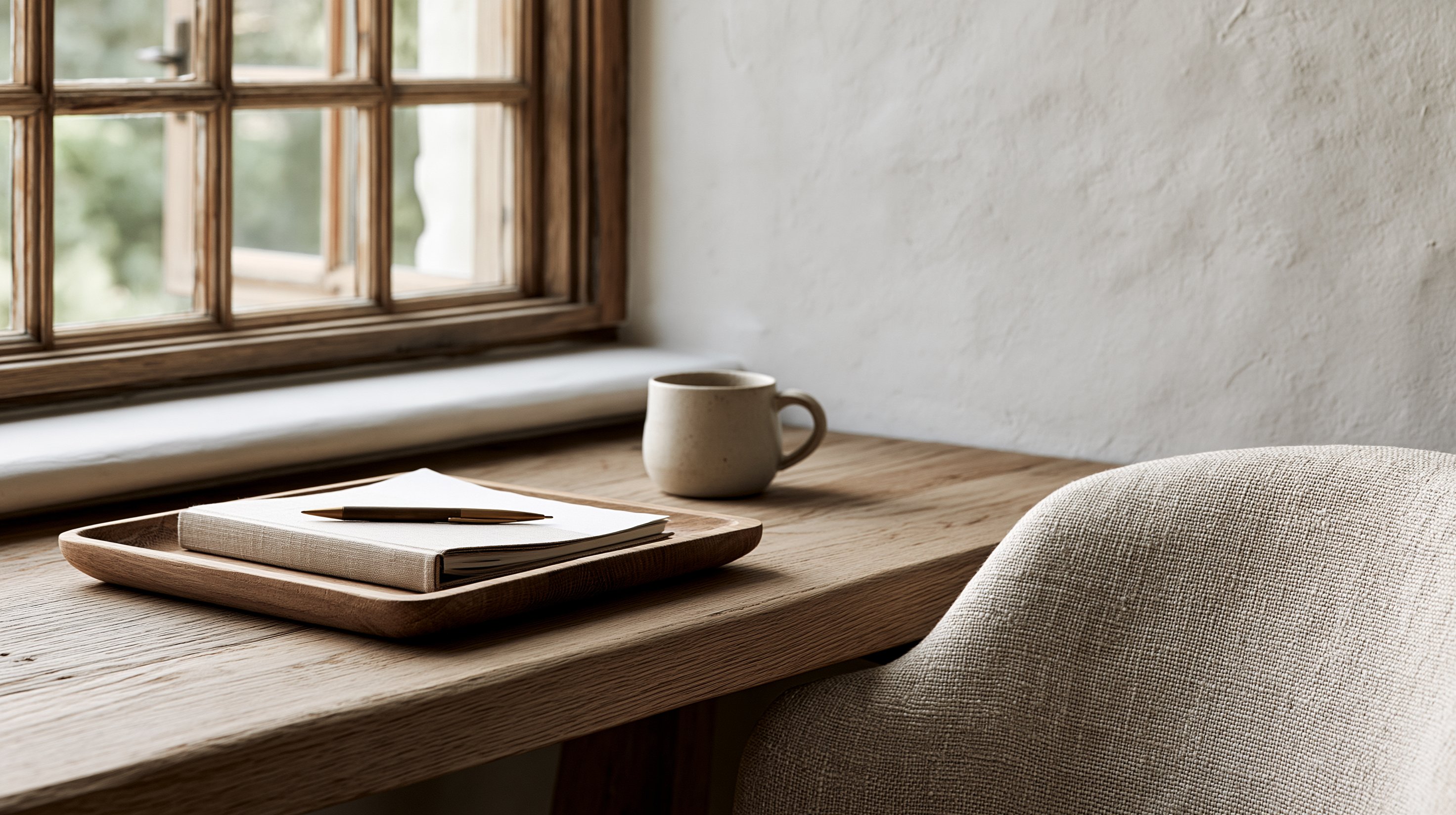
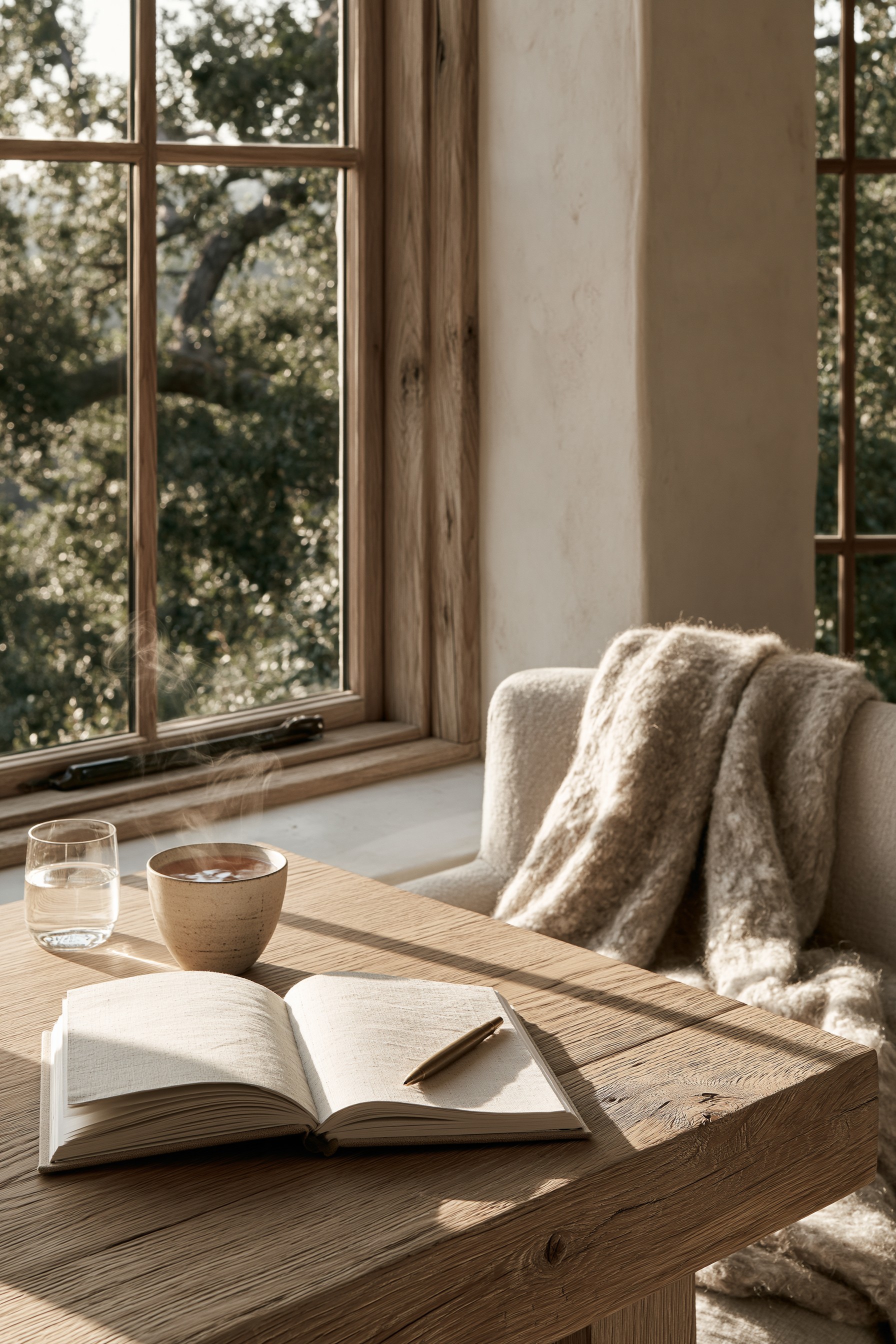
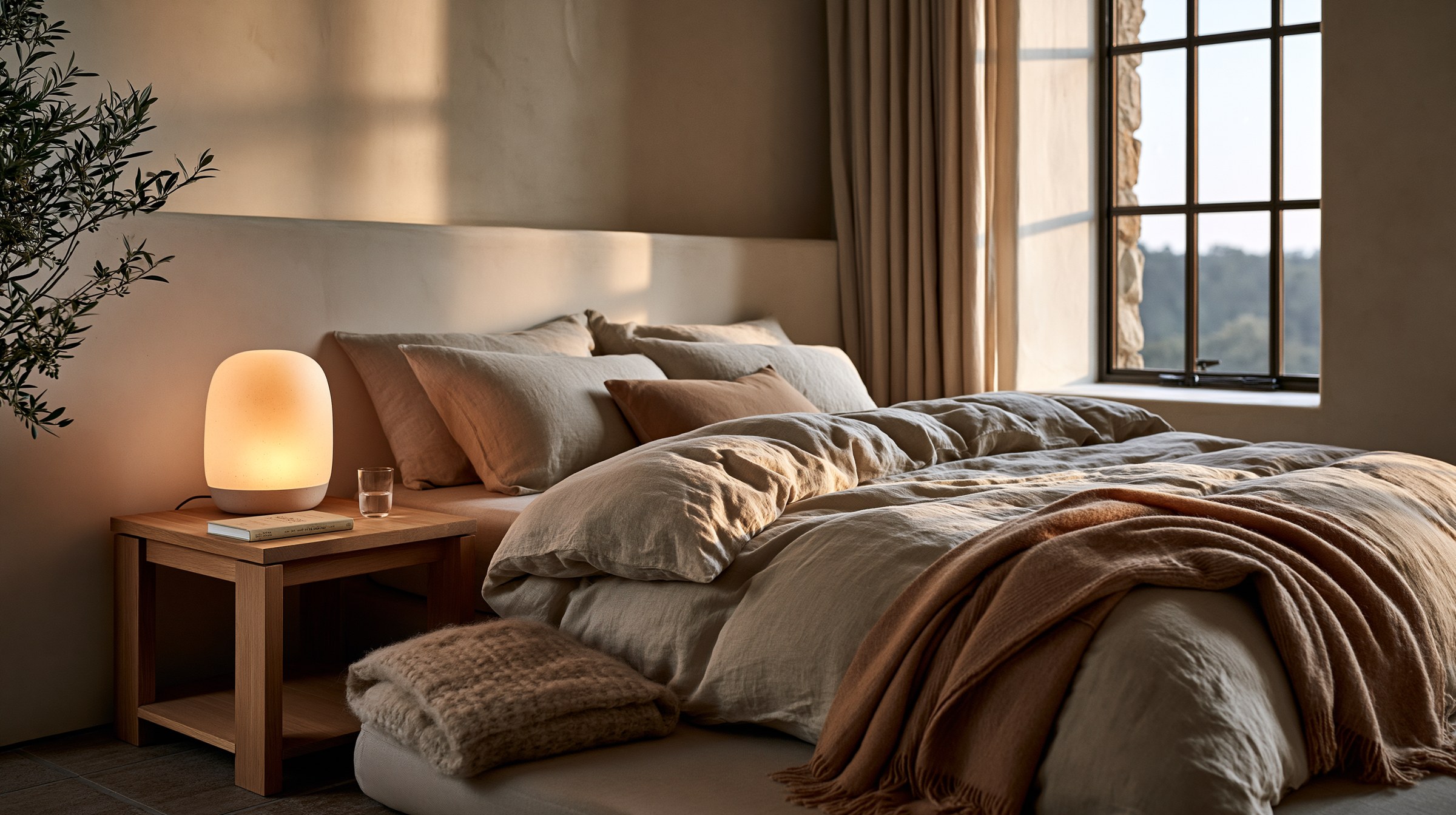
The room you are aiming for is warm, low, and visually quiet. A palette of no more than three or four soft tones, warm white walls, oat and flax textiles, one deeper note in wood or clay. Texture does the work color usually does: washed linen, a wool layer, a rug that softens the first step of the morning. Light sits low and warm in the evening, from lamps rather than the ceiling. Surfaces hold two or three objects, not twelve. Nothing in the sightline from the pillow asks for anything. The effect is not empty. It is settled, the visual equivalent of a lower voice.
Ways to Bring a Calm Bedroom In
1. Change the light before you change anything else
An overhead bulb at ten at night tells your body the day is still going. Move the last hour of the evening onto one or two lamps with warm bulbs, low in the room, and leave the ceiling light for cleaning. Why this works: brightness and angle are two of the strongest time signals your body reads, and lowering both is the fastest way to tell it the day is ending.
2. Give the nightstand a short list
A lamp, a book, a glass of water. Almost everything else on a nightstand is a task wearing a disguise. Clearing it takes five minutes, and the result greets you at both ends of every night. If it helps, keep one small dish for the things that must land there, so even the strays have an edge around them.
3. Move the charger out of arm's reach
Not out of the room if that feels drastic, just out of reach, across the room or inside a drawer. The phone is the most alert object you own. Adding three steps of friction between the pillow and the screen is often the difference between reading four pages and scrolling forty minutes. The cord disappearing from the nightstand is its own small relief.
4. Retire the laundry chair
The laundry chair is the loudest object in most bedrooms. It holds decisions, and it holds them in your sightline. Replace it with a lidded hamper and a single hook rail behind the door for the in-between clothes. The chair can stay. Give it a throw and a better job, or move it to the corner where it becomes a place to sit rather than a place to pile.
5. Darken the room properly
Streetlight through a thin curtain reads as a lamp left on. Line the curtains you love, or hang a blackout layer behind them, and let the room go fully dark. Morning light can still be part of the ritual, that is what opening the curtains is for. The point is that darkness becomes something you choose, not something you negotiate with the window.
6. Take the work out of the sightline from the bed
If a desk, a monitor, or a stack of papers is the last thing you see at night, the room is holding two shifts. When the work cannot leave the room, let it leave the view: a folding screen, a curtained alcove, even a cloth laid over the desk at night. The gesture feels ceremonial the first week. That is the point. Covering the work is a cue that the workday has an end.
7. Warm the surface you touch first and last
A rug where your feet land, washed linen where your shoulders do, a wool layer folded at the foot of the bed for the cold hour before dawn. Touch is the sense that never stops reporting, and it is the cheapest one to please. One good textile change often does more for the feel of a room than repainting it.
8. Let one thing be beautiful for no reason
A branch in a vase on the dresser, a small framed print, a bowl the color of the wall at dusk. Every other cue in this list removes a demand. This one adds a small permission, evidence that the room is for living in, not only for maintaining. A bedroom that is all discipline does not feel restful either.
Refinement Notes
Work top down: light first, then the sightline from the pillow, then surfaces, then textiles. The light is the strongest cue and the least effort.
Change one cue and live with it for a few nights before the next. You are looking for the room to feel different, not just look different, and that reading takes a little time.
If a cue keeps failing, make it easier, not stricter. A hamper that is a step closer beats a rule about the chair. The room should do the remembering for you.
Make It Feel Intentional
Once the loud cues are quiet, the room starts giving you small returns. The bed made in the morning becomes the first finished thing of the day. The lamp clicking on at nine becomes a border the evening respects on its own. None of this requires you to become a different person. It only requires the room to stop arguing with the one you are.
Notice, too, what you no longer see: the pile, the cable, the papers. Rest is mostly the absence of claims on your attention, and a bedroom designed this way makes fewer claims every week.
A restful bedroom is not the reward for a disciplined life. It is one of the quieter causes of it. If you want to build the routine that matches the room, read the evening wind-down that protects tomorrow.
And if you would like a gentle, structured way to reset one room at a time, the free Reset Guide is a good place to start. You will find it just below whenever you are ready.