
The most reliable predictor of whether you will read tonight is not motivation. It is where the book is. Environment design is the practice of arranging your space so the behavior you want is the easy one, and it works because it stops asking willpower to do a layout problem's job.
The Case Against Willpower
Decades of behavioral research point the same direction: self-control is less a muscle people have than a situation people are in. The people who seem disciplined are mostly people whose environments offer fewer fights.
Your home is making suggestions all day. The bowl of keys suggests leaving is simple. The phone on the nightstand suggests the morning starts with everyone else's priorities. Design is choosing the suggestions.
The Three Levers
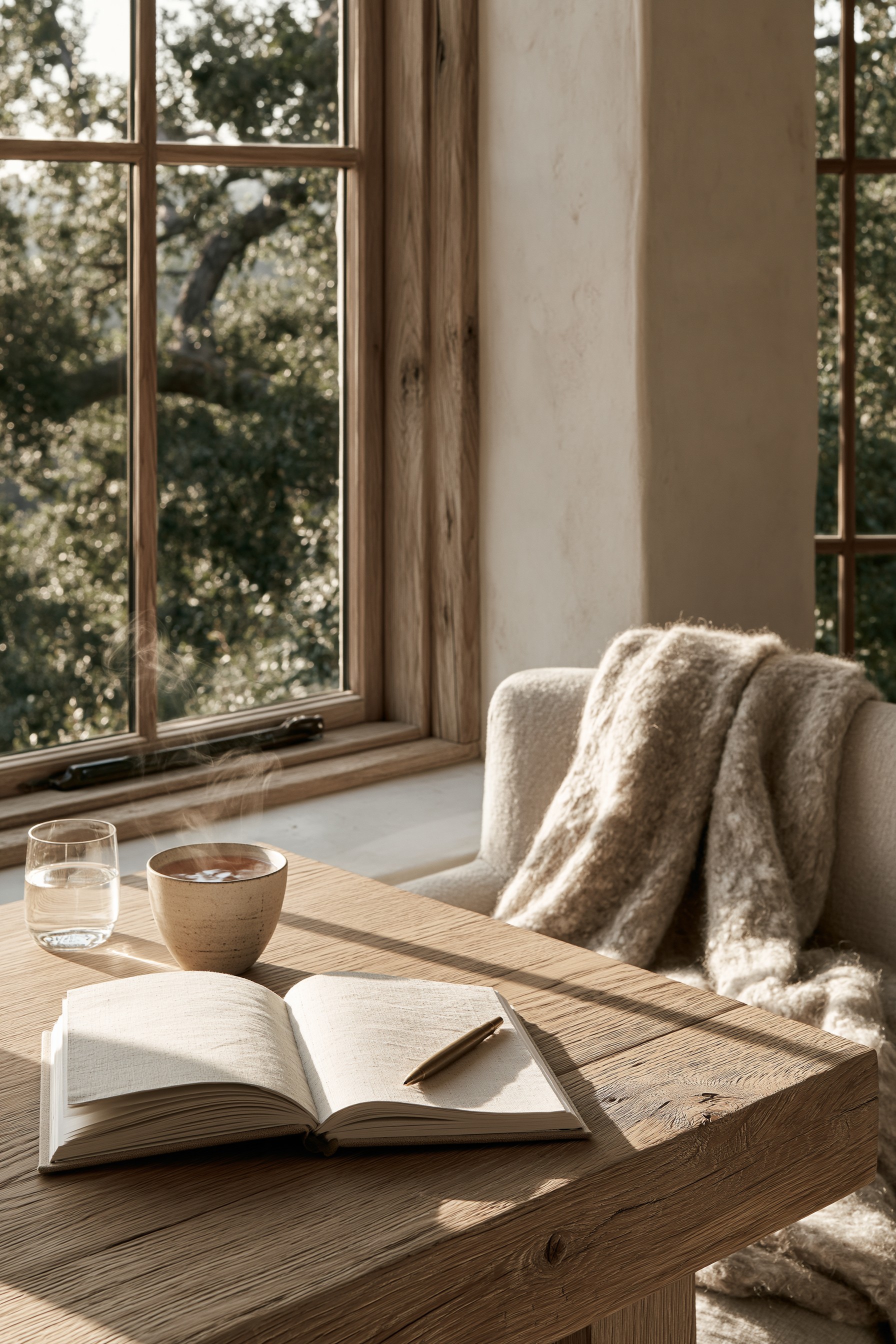
Visibility: you do what you see. A cue in plain sight is a vote for the behavior, which is why the journal stays open on the desk and the fruit sits on the counter.
Friction: every step between you and an action is a small no. Reduce steps for what you want (the yoga mat already unrolled), add steps for what you do not (the remote in a drawer).
Association: a spot used for one thing becomes a trigger for that thing. The chair where you only read becomes a reading switch. The bed where you scroll becomes a scrolling switch, which is worth sitting with for a moment.
Five Placements That Do the Work
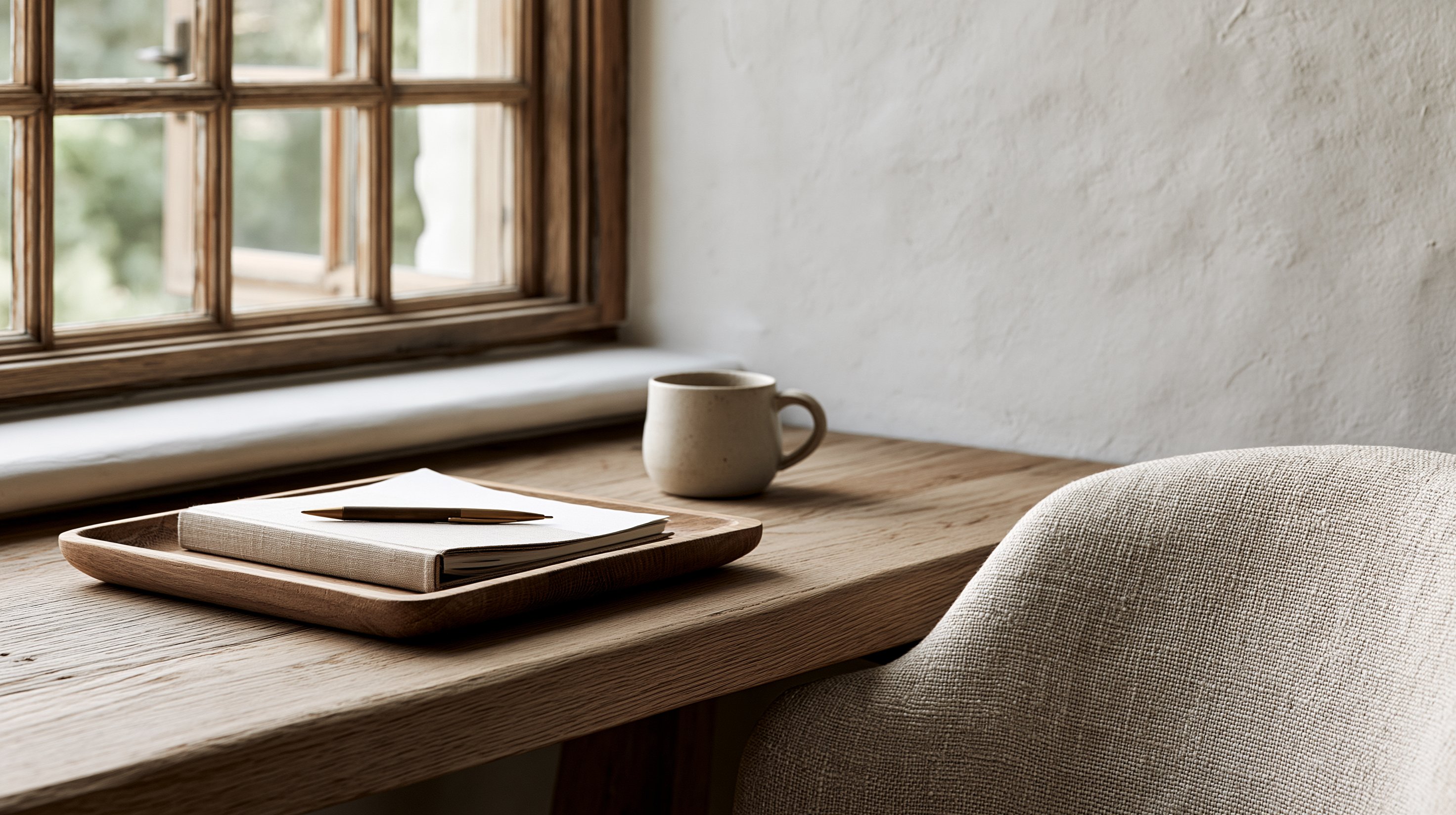
- The open journal and pen on a cleared desk: tomorrow's first behavior, pre-decided.
- The carafe of water on the nightstand: the evening pour is the cue, the morning drink is the payoff.
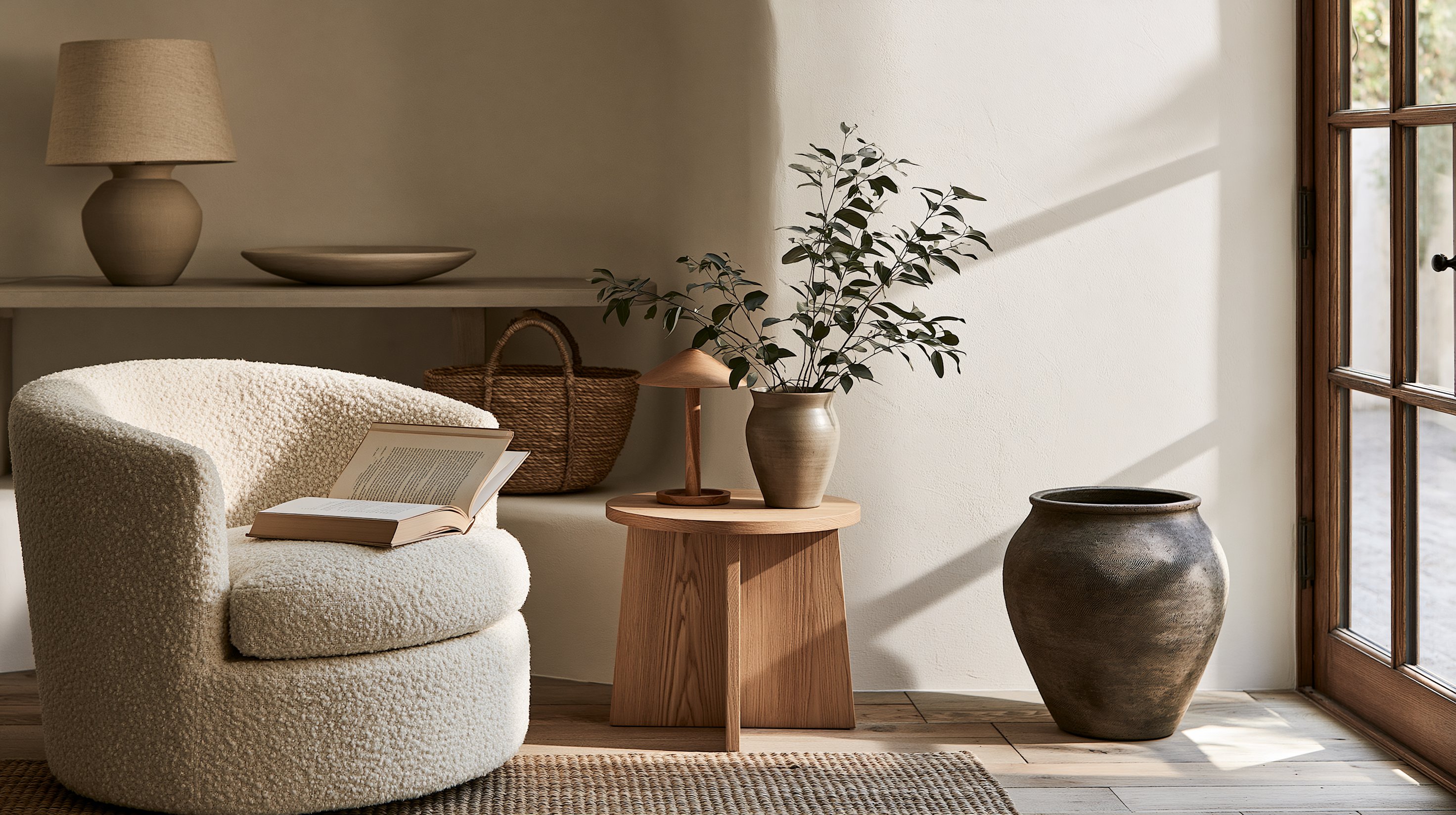
- The book on the chair arm, not the shelf: shelves store books, chairs read them.
- The charger in the kitchen, not the bedroom: the single highest-leverage friction move in most homes.
- The basket by the stairs: a home for the drift, so resetting a room takes minutes instead of resolve.
Designing for the Person You Are Tired As
Design for your 9pm self, not your 7am ideals. The 9pm version of you decides whether the kitchen gets closed and whether the phone comes to bed. Make their right choice the lazy one.
Start With One Behavior
Choose a single habit you have been losing to willpower. Ask what it would look like if the room wanted it to happen: more visible, fewer steps, one consistent spot.
Adjust the layout once, and let the room do the repeating. That is the entire promise of environment design. The space remembers, so you can stop holding everything in your head.