
There is a particular kind of tired that comes from hosting. Not the good kind. The kind that starts days before anyone arrives, when you begin picturing the table that has to look a certain way, the food that has to impress, the version of your home that belongs in a magazine. Somewhere in all that picturing, the simple wish underneath it gets buried. You just wanted to have people over.
Most of what we have absorbed about hosting is really about being impressive. Set a flawless table, plate it beautifully, perform an evening so polished no one sees the effort. It is lovely to look at, and it is exhausting to do, and it quietly keeps a lot of warm, generous people from ever opening their door. There is a calmer way, and it begins with a truth that most hosting advice skips right over.
Guests relax only when the host does
The thing your guests feel most is not the centerpiece or the menu. It is you. A tense host makes a room tense, no matter how beautiful the table, and an unhurried host makes everyone breathe out a little. Your ease is contagious, and so is your effort when it tips into strain. This is why a perfect evening can still feel stiff, and a simple one can feel like home. The goal was never a flawless night. It was a host who is actually present.
Host for the feeling, not the performance
Most hosting stress comes from an invisible audience we are trying to impress. When you set that audience down and host for a feeling instead, the whole evening gets simpler. Decide how you want people to feel before you decide what to serve. Ease. Warmth. Unhurried. A single clear intention does the deciding for you, so you are not lost comparing options or measuring your table against someone else's. Pick the feeling first, and let every smaller choice follow it.
Let the room carry the mood
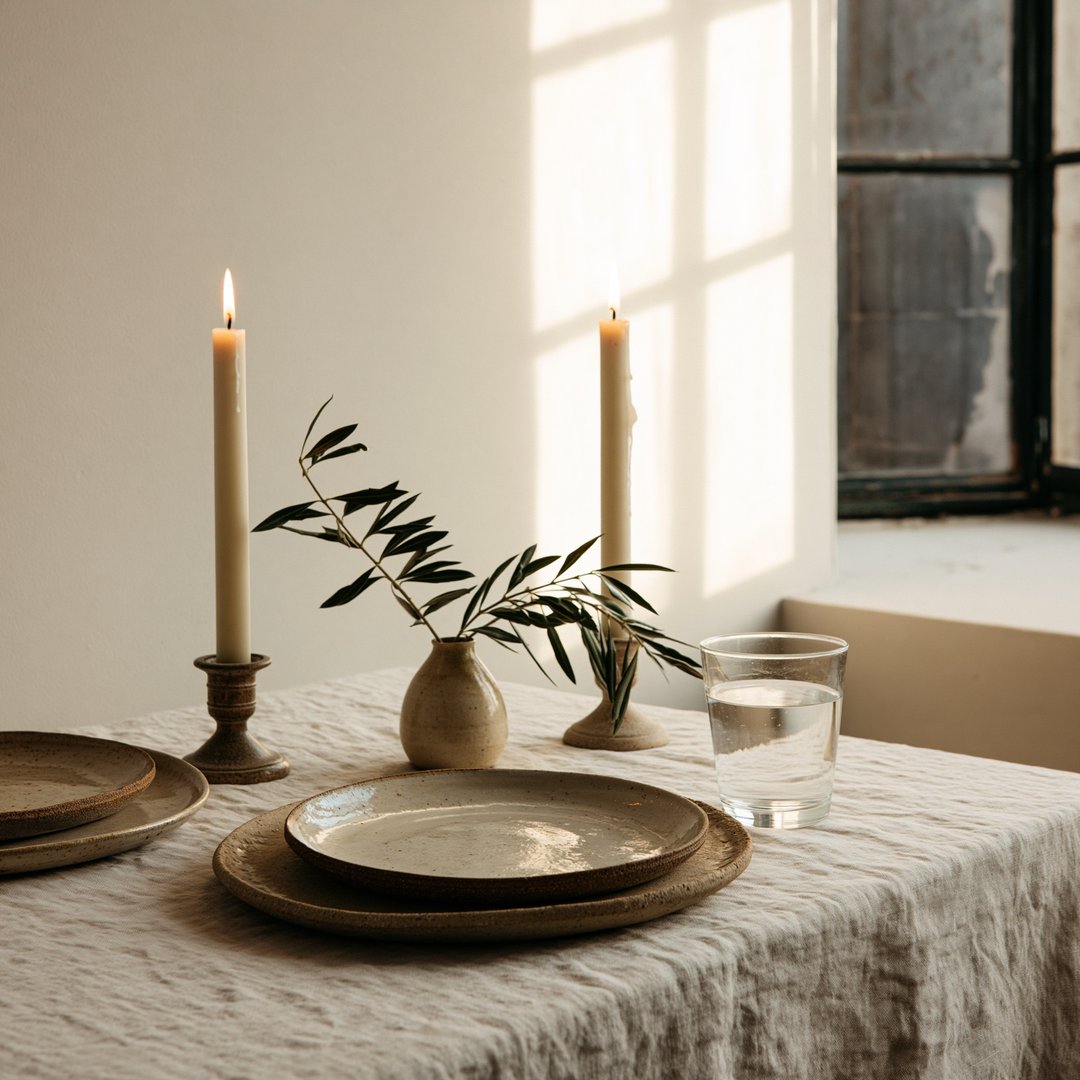
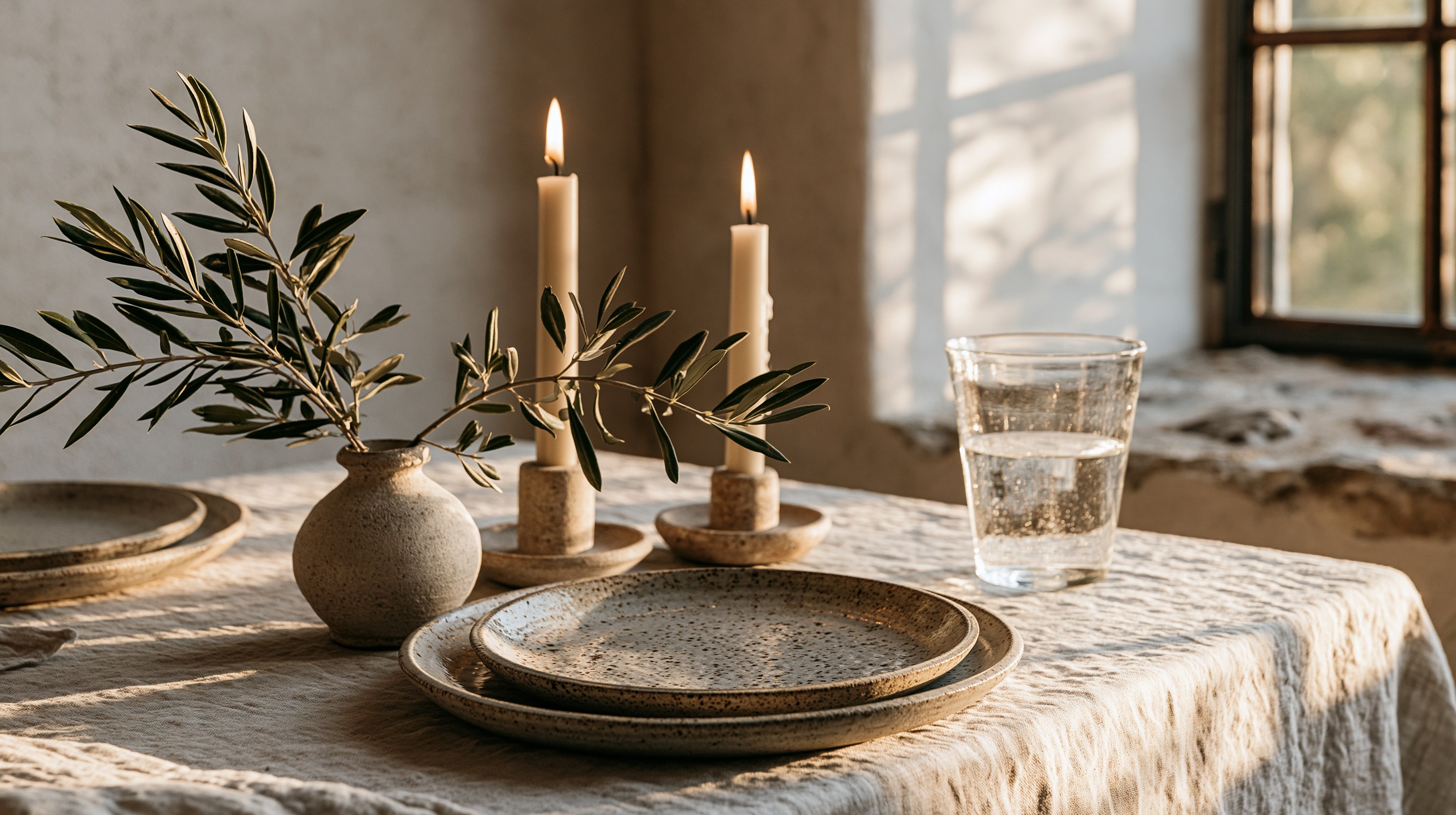
Atmosphere is mostly the room, not your effort. Soft light, one cleared surface, a candle, and something to drink within reach will do more for warmth than an elaborate centerpiece ever could. The space sets the tone before you say a word, so let it work while you rest. Turn off the overhead lights. Light one candle. Clear a single surface. That alone changes how a room feels to walk into, and it costs you almost nothing.
Free your hands before the doorbell
A host stuck at the stove cannot be at the table, and the table is the whole point. The most generous thing you can offer the people you love is your attention, and you cannot offer it from the kitchen with your back turned. So choose food that is mostly done early, something that waits well and asks little of you once guests arrive. The hardest part should be finished an hour before anyone comes. Something simple and ready beats something impressive and frantic, every time.
Leave room for connection to arrive
People remember how a table felt, not what was served. We are wired to feel close to the people we share a meal with, but that closeness arrives faster with a small nudge, especially in the first quiet minutes before everyone settles. You do not need to manufacture a moment. You only need to make a little space for one. Have one open question ready for the first lull. Something gentle, like what has been good lately, or what you are looking forward to. One question is usually all a table needs to soften.
Start smaller than you think
You do not have to host often, or host big. One small gathering, held simply, will teach you more than any amount of planning, because the ease itself is the thing people come back for. Lower the bar on purpose. Choose one thing to do well and let the rest be plain. The polish was never the part anyone remembered. They remembered the candlelight, and the way the evening felt unhurried, and that you seemed glad they came.
A quieter table
Having people over does not have to be a performance you brace for. It can be a small, repeatable ritual that feels like you, the kind of evening that leaves you fuller than it found you. Start with one simple gathering, and notice how much the calm itself does.
If you want a calmer way to gather, I made a short guide to help. The Calm Host's Starter Guide walks through five simple principles, with one easy thing to try for each. It is free, and it is yours to keep.