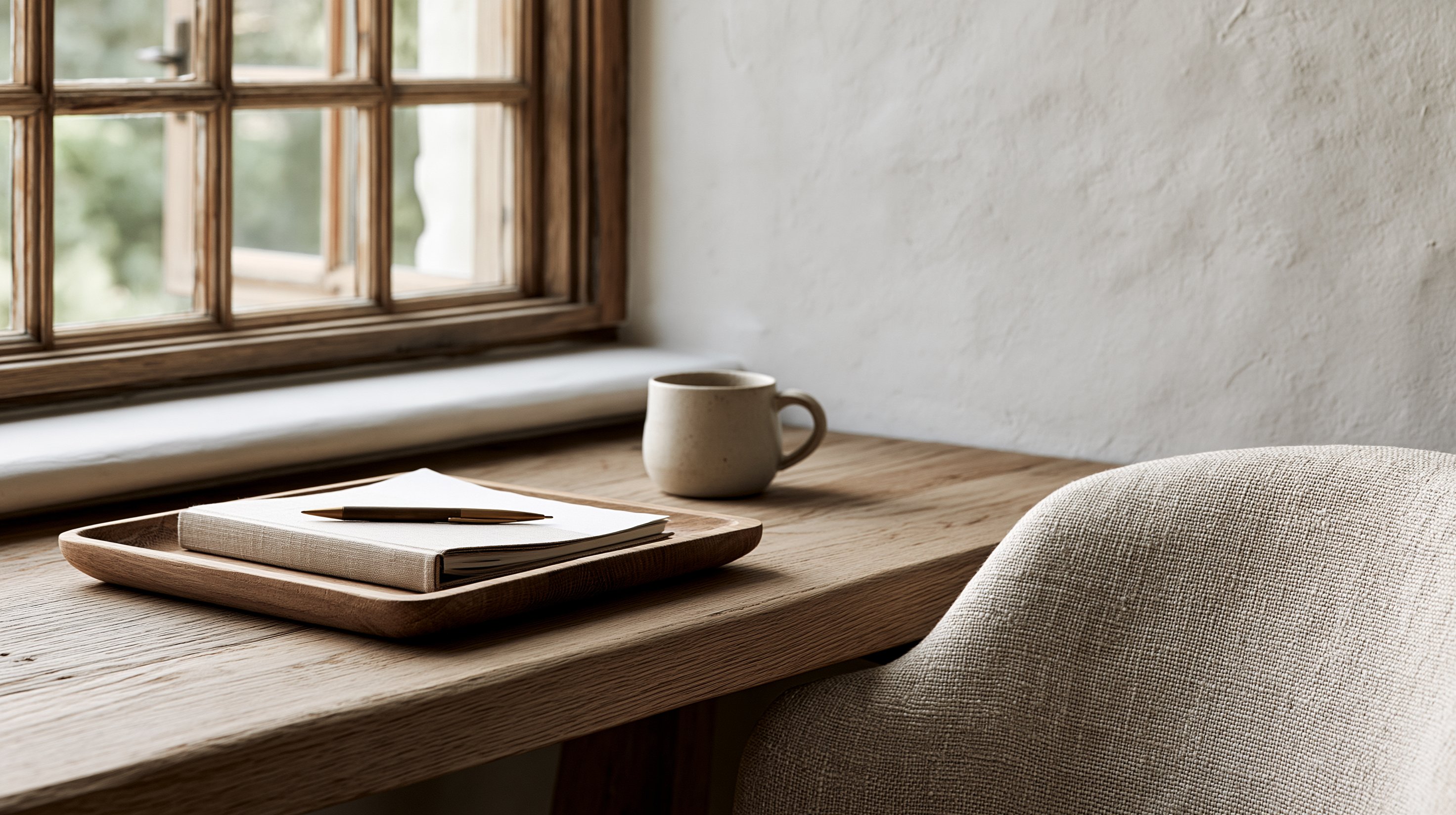


The first thing you touch in the morning sets the terms for the hour that follows. For most of us, that thing glows. The phone hands you forty other people's mornings before you have met your own, and the day starts in response mode before your feet find the floor. A simplified morning is not a routine. It is a removal.
What Simplified Actually Means
Not five a.m. Not an hour of practices stacked like cordwood. A simplified morning means the first thirty minutes contain only things you chose on purpose, and almost nothing else.
For one person that is water, a window, and silence. For another it is tea and ten slow minutes with a notebook. The content matters less than the authorship. You wrote the opening scene, so the day belongs to you a little longer.
The Phone Is Not the Villain, the Timing Is
Nothing on the phone is bad in itself. The problem is sequence. Attention is most impressionable in the first minutes after waking, and whatever enters first tends to set the day's emotional baseline.
Give that opening slot to a feed and the baseline becomes comparison and reaction. Give it to something quiet and the baseline becomes, simply, yours (the difference is noticeable by Thursday).
Subtract Before You Add
The instinct is to build a better morning by adding practices. Start the other way.
Move the charger out of the bedroom. That single subtraction does more than most additions, because it removes the default and forces a small, daily act of choice.
Let the first drink be water, already waiting in a carafe from the night before. Let the curtains open before any screen does.
Then, only if you want to, add one small thing you love: a page of writing, a slow stretch, standing outside for a minute. One. The simplified morning collapses the moment it becomes a checklist.
What It Feels Like After a While
The first mornings feel oddly empty, the way a cleared counter does. That emptiness is withdrawal from input, and it passes.
What replaces it is harder to describe but easy to recognize: you arrive at your desk, or the kitchen, or the school run, already settled instead of already behind. Decisions cost less all day. Evening you quietly thanks morning you.
Begin Tomorrow
Tonight, fill the carafe, set the phone to charge in another room, and decide the one thing your morning opens with instead.
That is the entire practice. Small on purpose, because the small version is the one that survives.