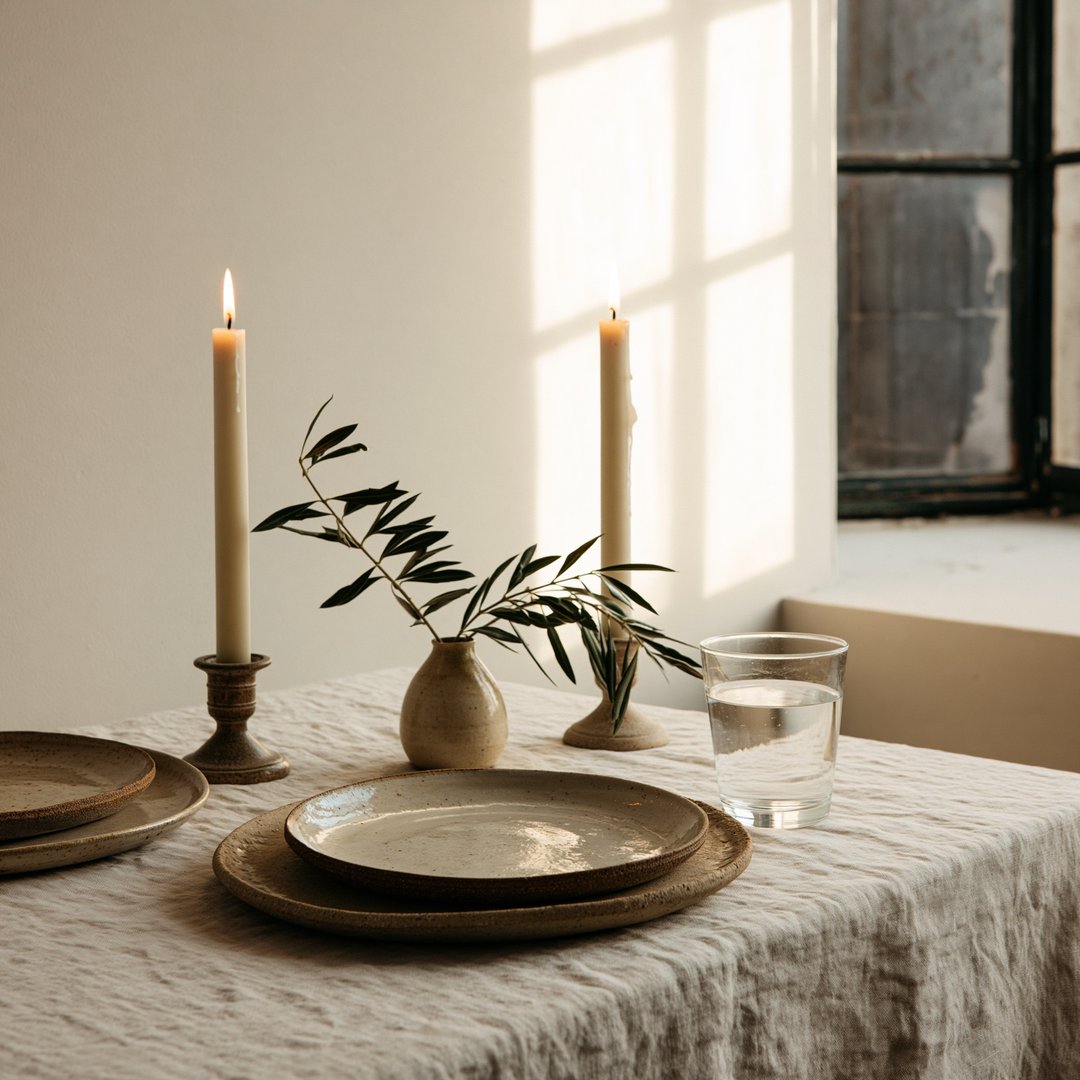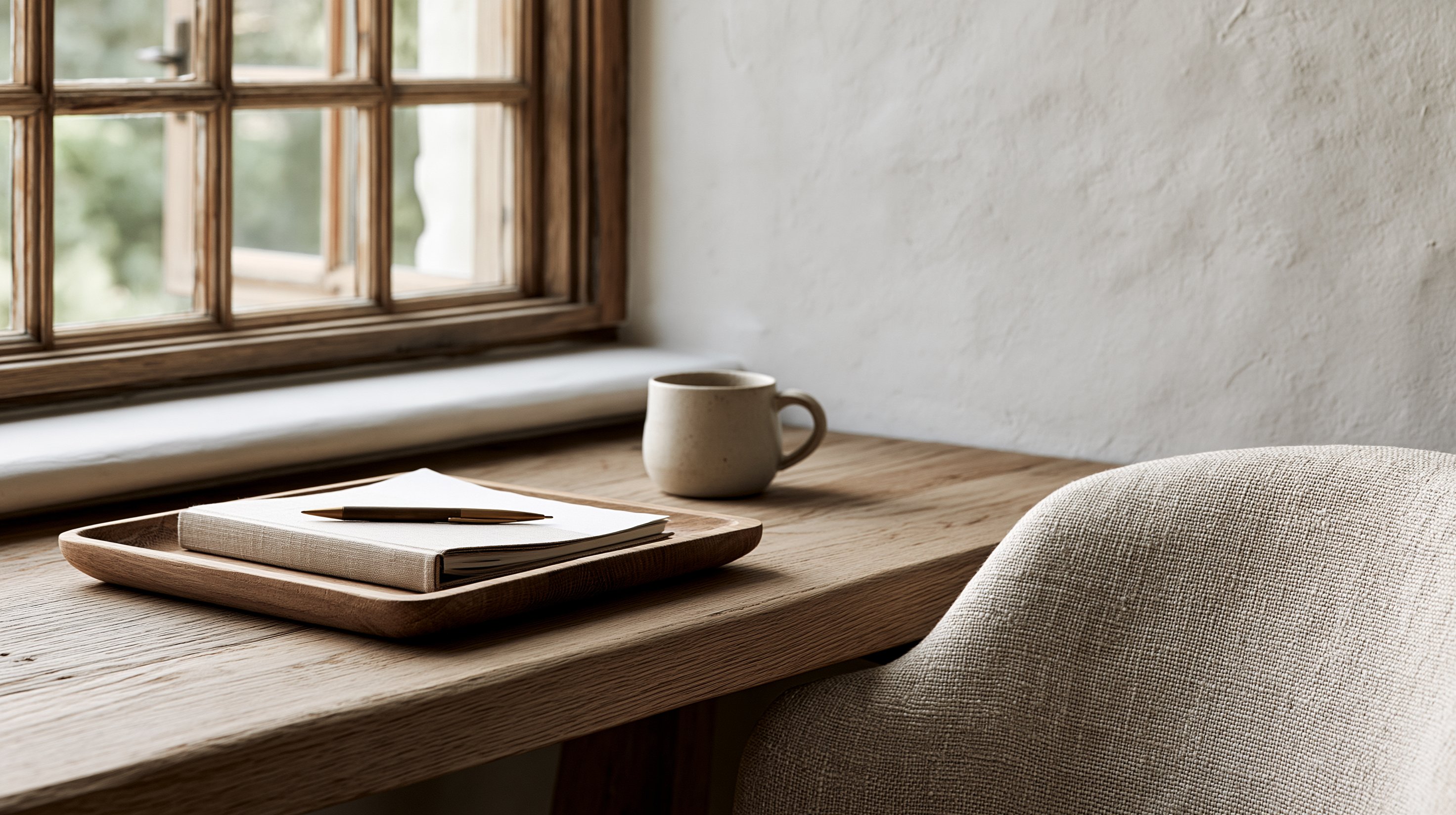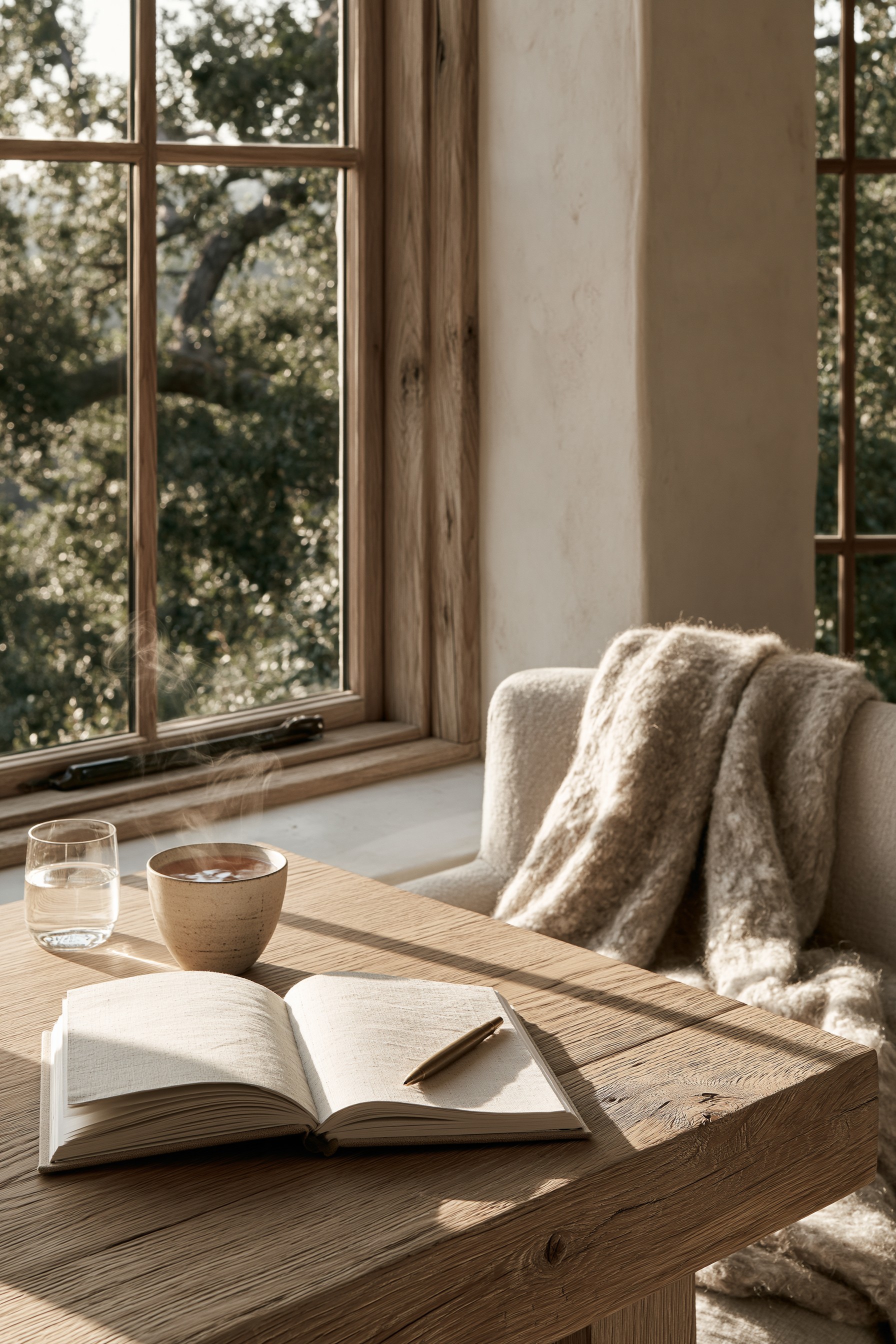

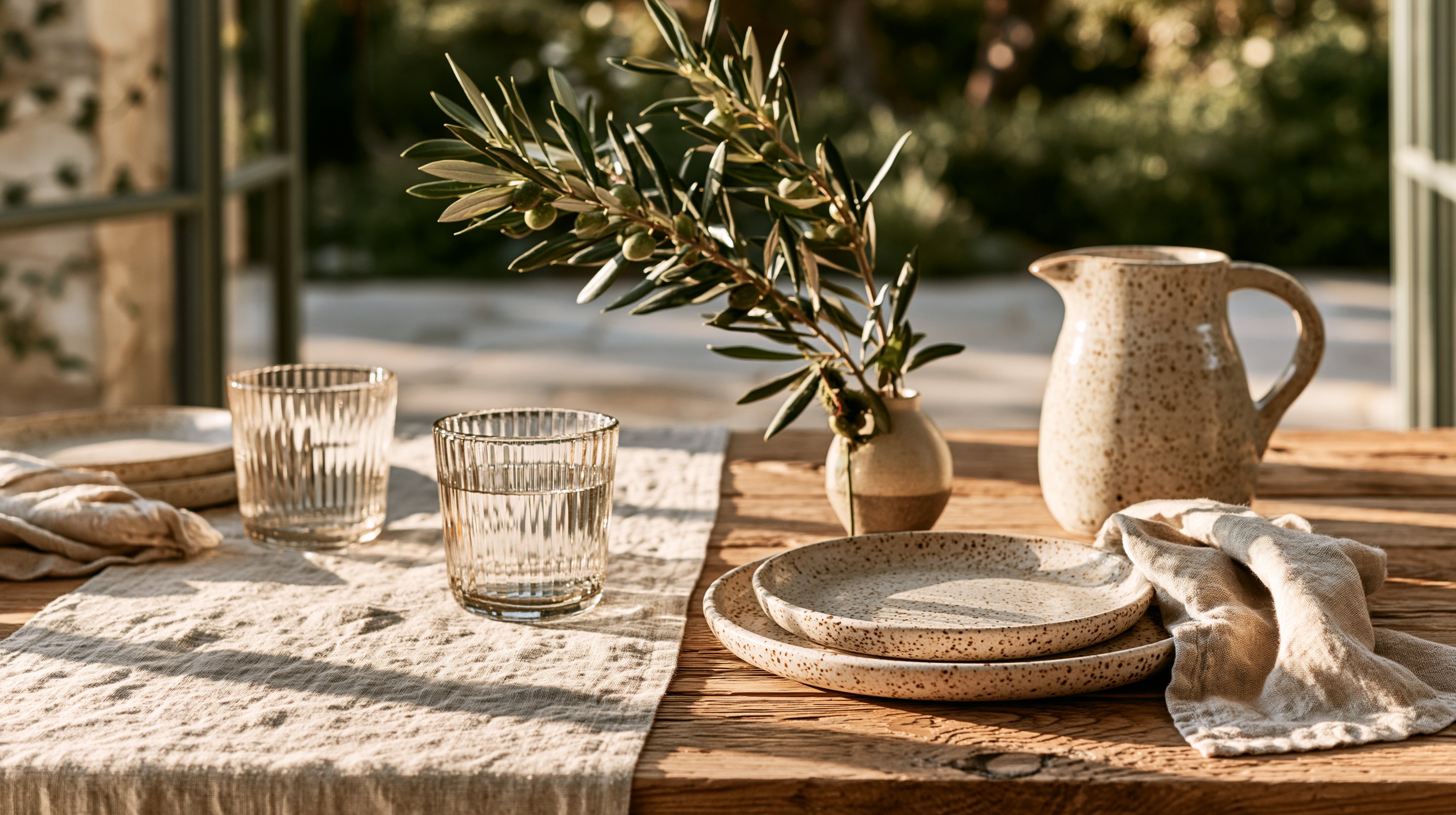
A summer table does not need a theme. It needs a few honest materials, set down with enough room to breathe, and light that is allowed to do most of the work. This guide breaks down the quiet summer table look layer by layer: what each piece is, why it earns its place, and how to set it so the whole thing feels gathered rather than styled.
The Look, In One Glance
Washed linen on the table, matte stoneware on the linen, ribbed glass catching the light, and one stem where a centerpiece would normally go.
The palette stays inside cream, oat, pale clay, and clear glass. Color comes from the food and the evening, not the tableware.
Nothing matches exactly. Everything agrees.
Why This Works
A table reads as calm when the eye can rest. Fewer materials, repeated, give it somewhere to land: linen touching stoneware touching glass, the same three textures at every seat.
There is also a practical psychology here. A simple table lowers the effort of gathering, and anything that lowers effort gets repeated. The look is really a system for eating together more often.
The Pieces That Build It
- A washed linen table runner in oat. The foundation layer. It softens the wood without hiding it, and it forgives wrinkles by design.
- Washed linen napkins, generously sized. Folded loosely beside the plate, never pressed into shapes.
- Matte stoneware dinner plates in cream. The quiet workhorse. A soft glaze keeps the food as the focal point.
- Ribbed glass tumblers. The texture catches evening light the way cut crystal wants to, without the formality.
- A ceramic pitcher for water. Filled and set on the table, it signals that everyone can settle in.
- One stem in a small vase. Olive, eucalyptus, or whatever the market had. One is enough (a full arrangement competes with the meal).
How to Set It
Run the linen down the center rather than covering the whole table. Let wood show at the edges.
Stack nothing. One plate, one napkin, one glass per seat, with real space between settings.
Place the pitcher and the stem off-center. A quiet table is balanced, not symmetrical.
Make It Yours
If your plates are white and glossy, keep them and shift the linen layer first: the runner and napkins do most of the visual work.
If your table is dark wood, choose oat linen over white for a softer step between surfaces.
If you host rarely, set the table this way for an ordinary Tuesday dinner. The look is not saved for occasions. That is the point.