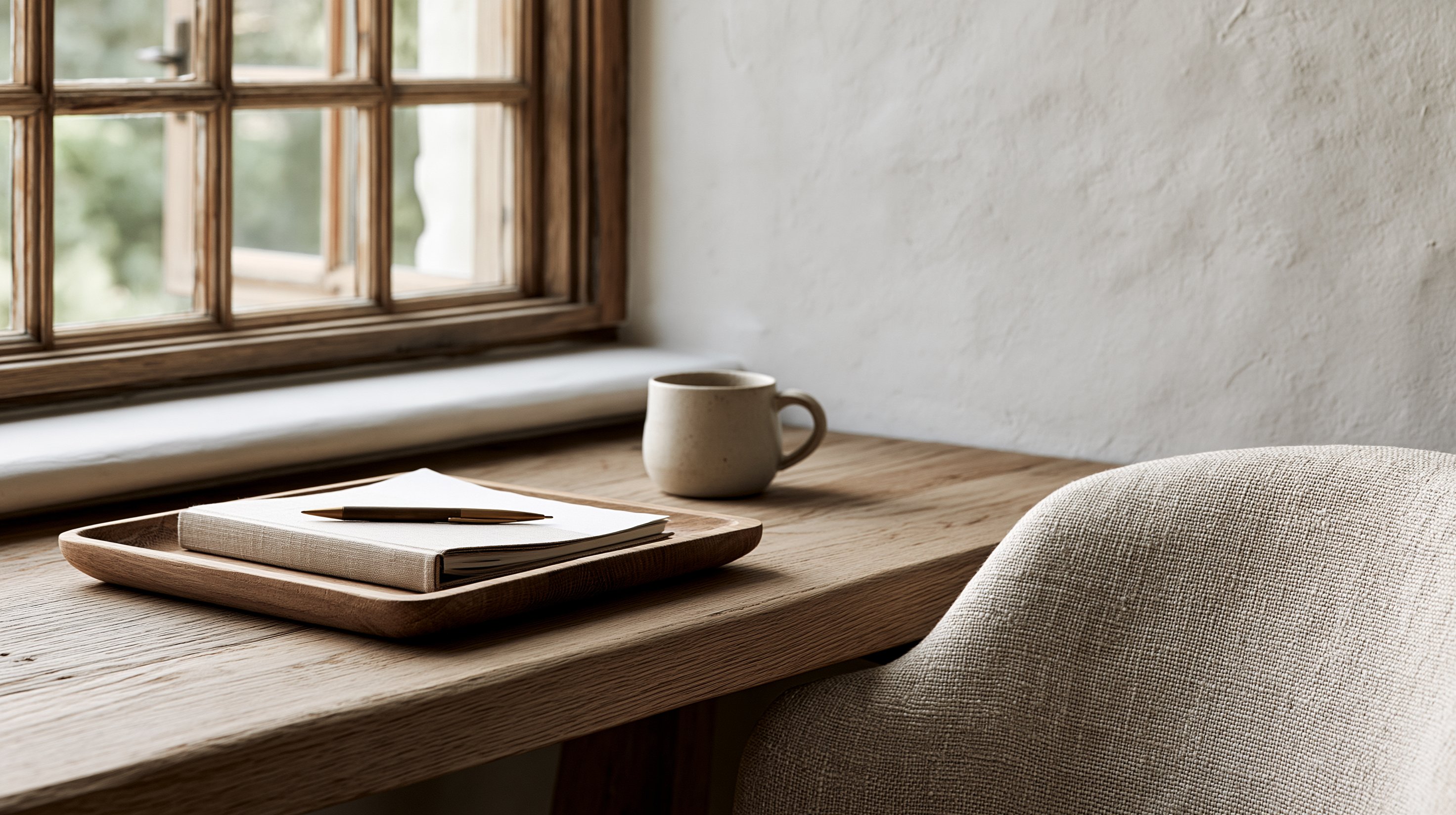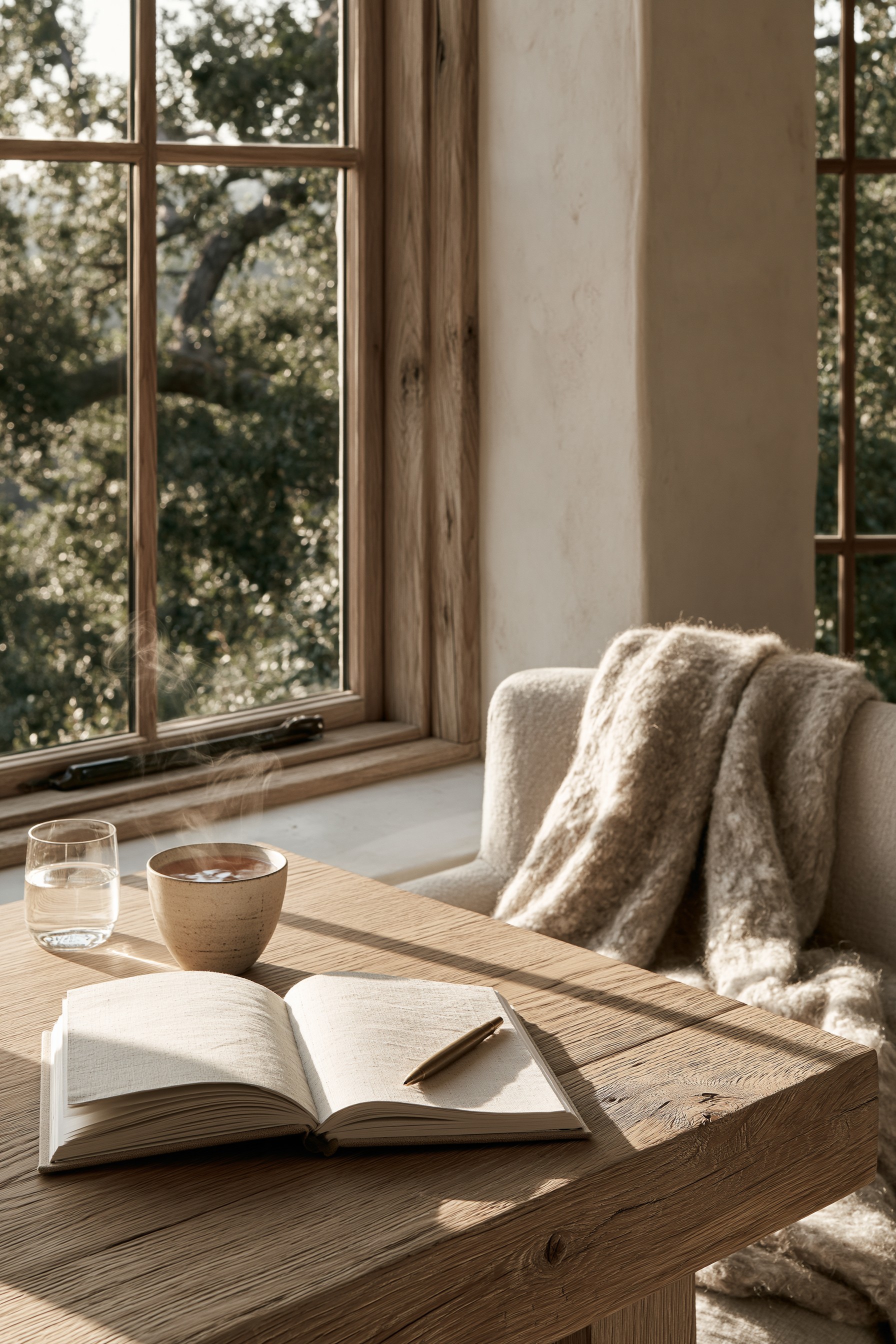

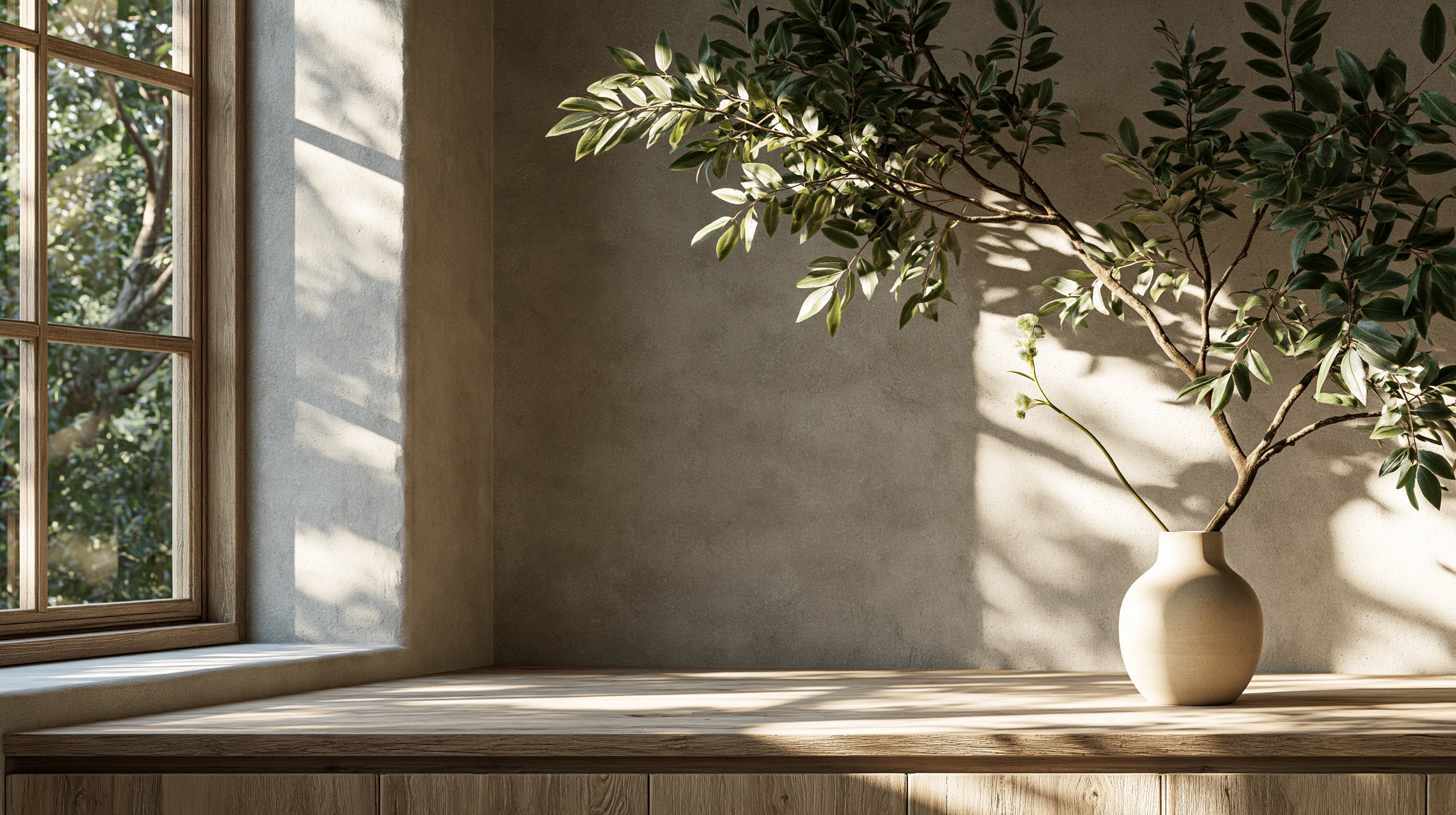
There is a particular kind of quiet that arrives when one surface is finally clear. Not the whole kitchen, not the whole house, just the counter by the window with nothing on it but the morning light. A clear counter does something a tidy drawer never will, because you see it every time you pass. This is less about cleaning and more about how much your attention is asked to hold before you have even made coffee.
Most of us treat a cluttered surface as a chore we have not gotten to yet. It is worth treating it as information instead. The objects gathered there are a record of unfinished decisions, and each one asks for a sliver of your attention whether you answer it or not.
The Weight a Surface Carries
Stand in the doorway of any room and your eye lands on the busiest surface first. A counter stacked with mail, chargers, a vitamin bottle, two mugs, and a thing you keep meaning to return is not neutral. It reads as a list. The mail says respond, the bottle says remember, the mug says later. None of it is urgent, and all of it registers.
This is the difference between a clean room and a calm one. A room can be technically clean and still feel loud, because the surfaces are crowded with small open loops. Clear one counter completely and the room exhales, even when nothing else has moved. The change is not in the square footage. It is in how little the space asks of you when you walk in.
What a Clear Counter Actually Does
Your attention is not infinite, and it does not switch off because you are busy elsewhere. Visual clutter competes for it constantly. The more objects in your field of view, each one with a different shape, label, and unspoken task, the harder your mind works to sort what matters from what can wait. Researchers who study attention describe this as the brain dividing its limited focus across everything visible, so a crowded surface quietly taxes you even when you are not looking directly at it.
A clear counter removes that low background draw. With nothing competing for the eye, there is nothing to sort, nothing to defer, nothing to feel mildly behind on. What you experience as calm is partly just attention that has been given back to you. The surface stops narrating and lets you think your own thought first.
This is also why a clear counter changes behavior, not only mood. An open surface has a kind of standard built into it. You are far less likely to set the junk mail down on a counter that is bare than on one already holding three other things. The empty space protects itself, which means the calm tends to hold longer than a single tidy-up would suggest.
Ways to Bring This In
Choose one counter, not the kitchen. The point is a single surface you see often enough for the effect to register daily. The counter by the coffee, the bathroom vanity, the entry ledge where keys land.
Clear it completely before you style it. Take everything off, wipe it down, and look at the empty surface for a moment before you decide what earns its way back. Most things will not.
Give the surface one job. A counter that exists to make coffee holds the kettle and nothing else. A vanity that exists to start the morning holds one tray. When a surface has a single purpose, anything outside that purpose has an obvious place it does not belong.
Move the chargers out of sight. Cords read as clutter even when everything is neatly arranged, because the eye reads the tangle before it reads the order. A single drawer or a small box returns the surface to stillness.
Let one object stay for pleasure, not utility. A clear counter is not a sterile one. A single stem in a small vessel, or one ceramic dish, gives the eye a place to rest without giving it a task. There is something about a single considered object on an open surface that does more than a styled vignette ever could.
Keep a landing spot somewhere else. The mail, the keys, the returns still need a home. Give them a drawer or a tray off the main surface, so clearing the counter does not just relocate the pile to your mind.
What to Watch For
Clearing is not the same as hiding. Sweeping everything into a basket buys you a calmer surface and a louder cabinet. The relief lasts longer when each object lands somewhere it actually belongs.
The first day feels stark, and that is normal. An empty counter can read as unfinished before it reads as calm. Give it a week. The eye recalibrates, and the open space starts to feel like the point rather than an absence.
Watch the surfaces near the clear one. Clutter tends to migrate to the next available counter. Clearing one well often makes the next one feel obvious, which is how a single surface becomes a habit rather than a one-time reset.
The Little Details
The counter you clear should be the one you face most, not the one that is easiest. Difficulty is the wrong filter here. Frequency is the right one, because the calm only compounds if you actually see it.
Resist the urge to add storage to solve the problem. More bins usually means more permission to keep more. The quieter fix is fewer objects with clearer homes, so the surface stays open on its own.
Let the clear counter set the standard for the room rather than the exception. Once one surface shows you how a space feels with less on it, the rest of the room tends to follow without much effort from you.
Where to Start
If your home feels busy in a way you cannot name, start with the single surface you pass most and clear it all the way down. The calm you are after is often just attention returned to you, one counter at a time.
If you would like a gentle structure for noticing where your attention is going and adjusting the spaces that pull on it, our free Reset Guide walks through it one quiet step at a time.