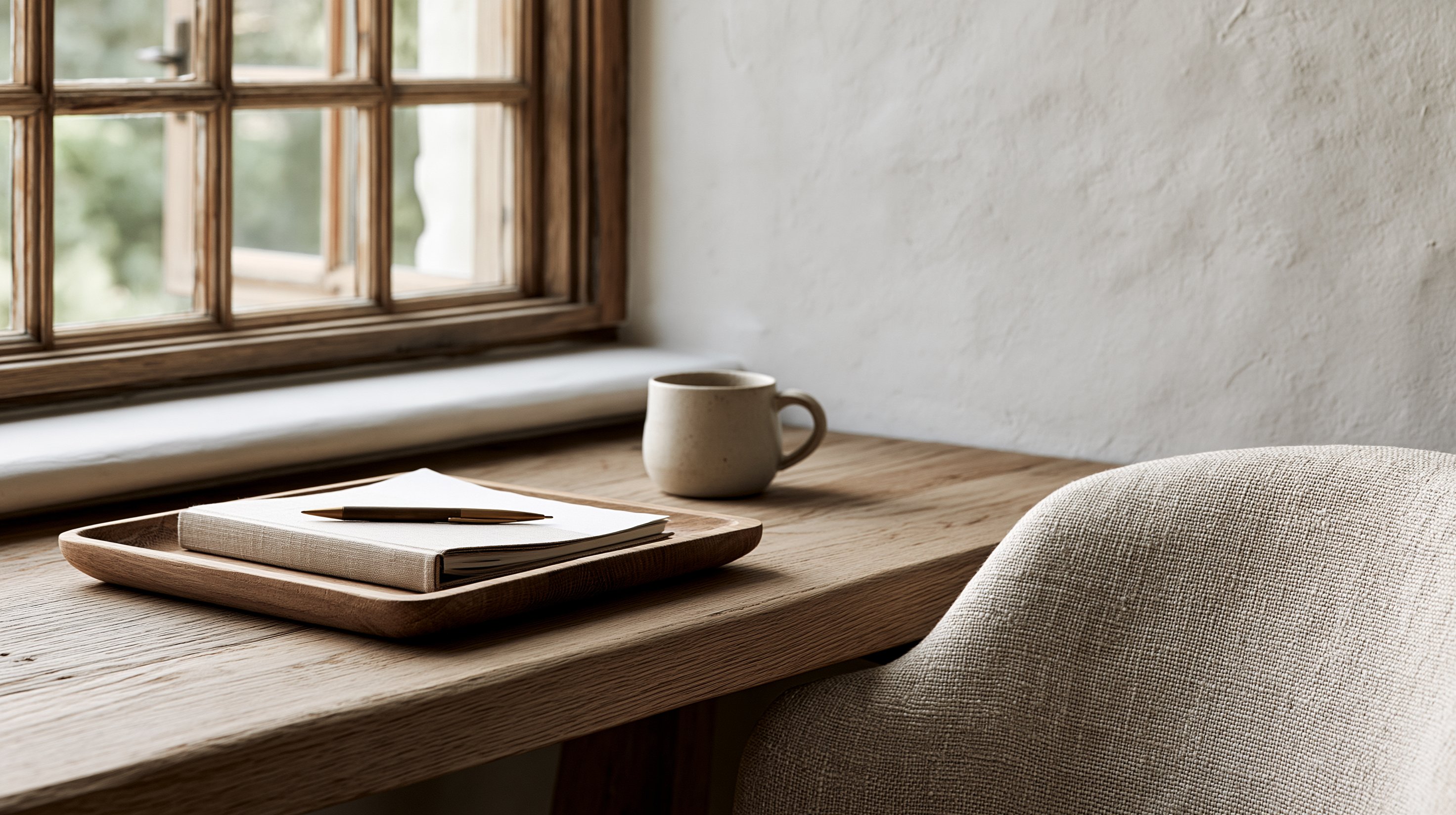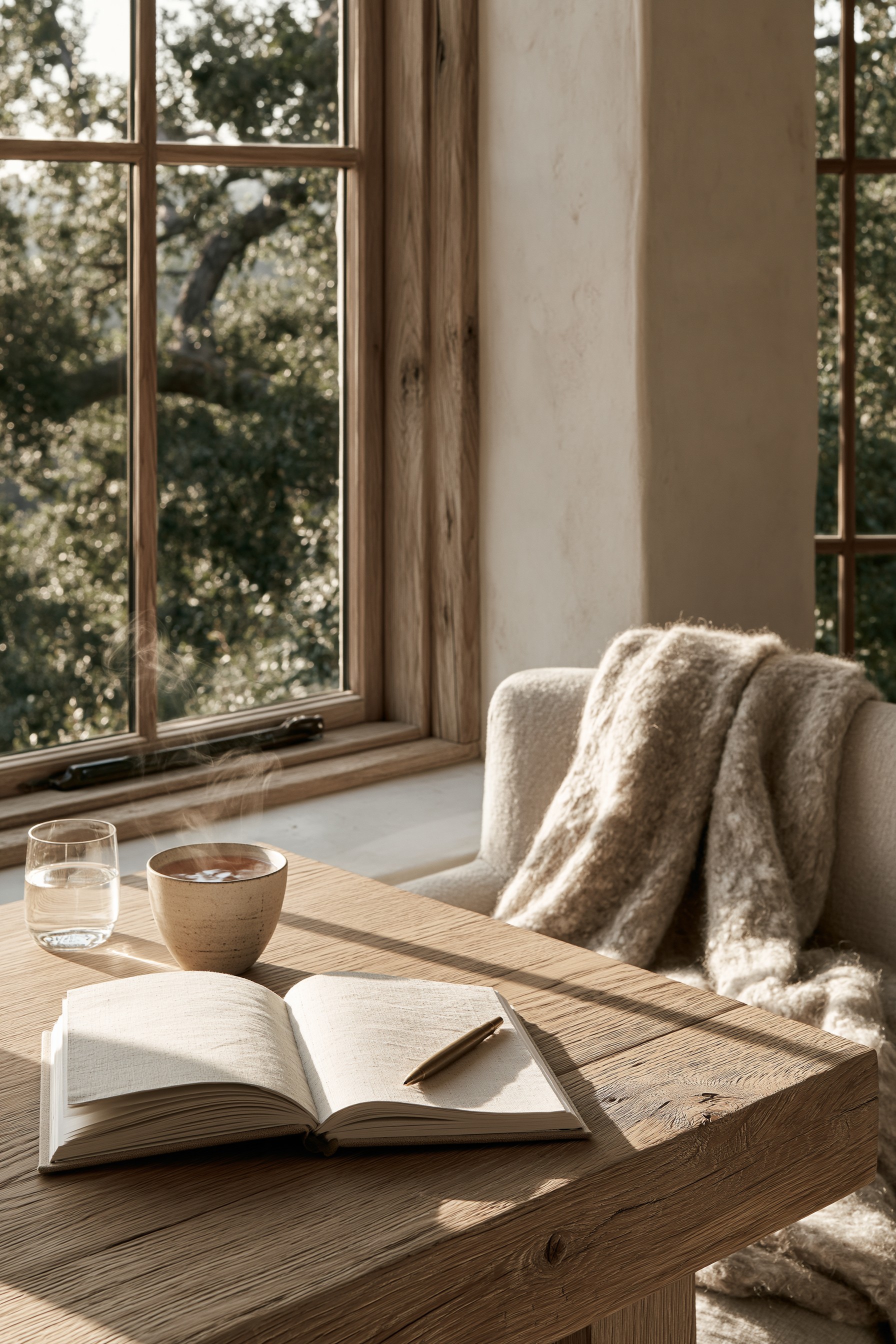


The nightstand is the last surface you see before the light goes out and the first one you see when it comes back on, which makes it the most quietly influential three square feet in the house. Most calm nightstand ideas start with what to add. This one starts with what the surface is for, because a nightstand with one clear job stops collecting the day's leftovers on its way to becoming a shelf.
If yours currently holds a charging cable, a water glass from Tuesday, and a receipt you meant to sort out, this list is for you. Eight pieces, and the wall above them, chosen for what they do at the end of a day rather than how they photograph.
What I Looked For
- A small footprint. Most nightstands are under sixteen inches wide. A wide base takes the surface out of use, and a surface out of use is where the mail lands.
- Warm, low light. Cool overhead light says keep going. A warm, low pool of light says the day is closing.
- One fixed landing spot. Rings, glasses, the book you were holding. When there's a defined place for the small things, the surface never scatters.
- Nothing that asks for attention. No screens, no glowing numbers, no small pile of unread anything. Your brain reads the room before you decide to look at it.
- Something on the wall above. The surface is what you use, but the wall is what your eye rests on. A blank wall leaves the room unfinished, and a finished room is easier to keep clear.
A Curated Selection of Calm Nightstand Ideas
Ordered from the piece that changes the most to the one that refines the rest. You don't need all eight. Most rooms settle at four.
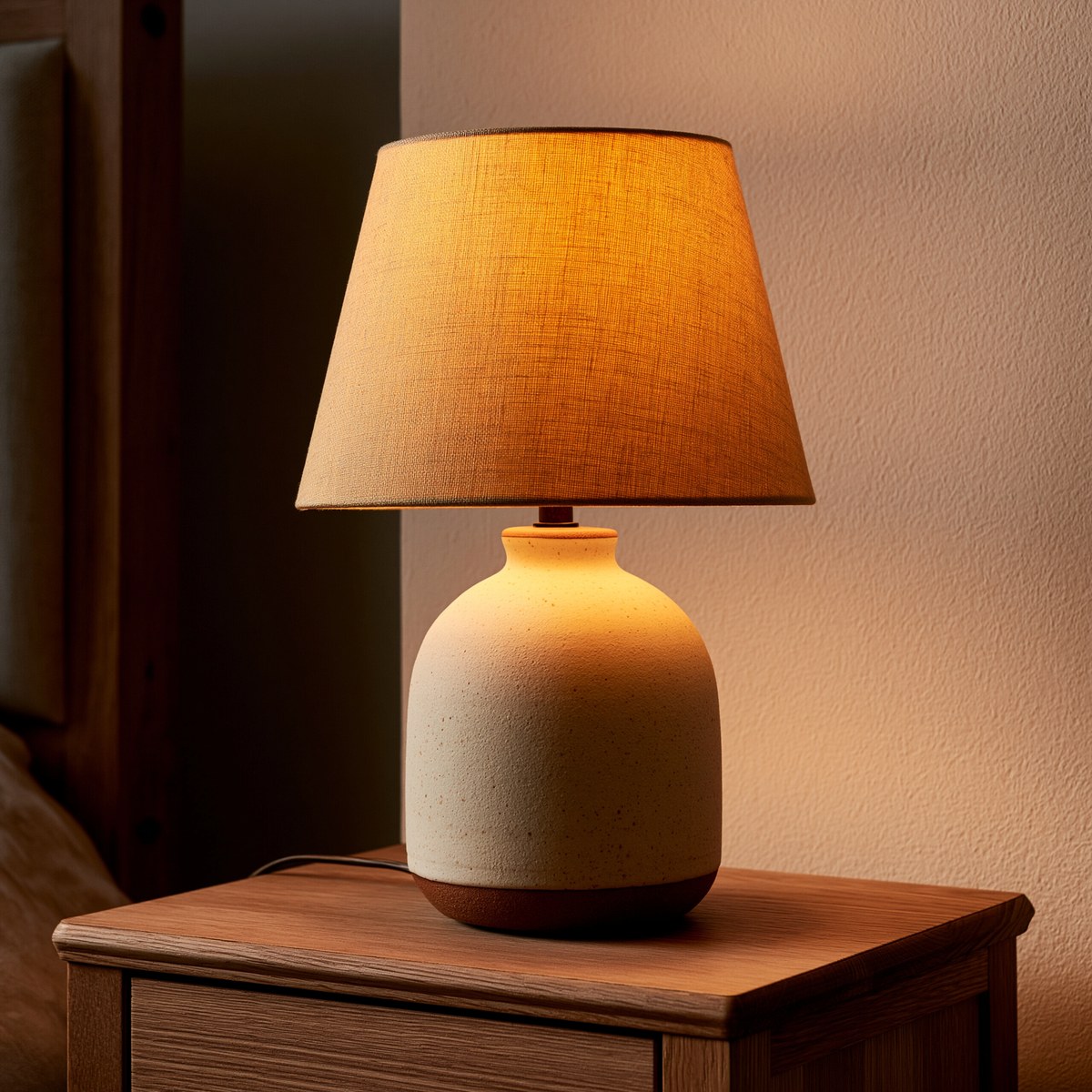
1. A small lamp with a warm, dimmable bulb
Best for: anyone whose bedroom runs on an overhead fixture.
What to look for: a base around twelve to eighteen inches, a linen shade that diffuses rather than spots, a warm bulb near 2200 to 2700 kelvin, and a dimmer.
Why it works: light is the most reliable cue the body has, and lowering it at the same point each evening works whether or not you're paying attention.
Worth noting: a ceramic or stone base is steady but heavy, which matters if your nightstand is a floating shelf.
2. The Quiet Wall
Best for: the bare wall above a headboard, where the room ends without quite finishing.
What to look for: a set of three sharing one ground color, so the wall reads as a single piece rather than three decisions. The Quiet Wall is three line drawings in charcoal and terracotta on cream. Hang the group eight to ten inches above the headboard, spanning about two-thirds the width of the bed.
Why it works: the wall above the bed is the view you lie down facing, and filling it deliberately closes the room. It also lifts the eye, which makes a small nightstand read as intentional rather than sparse.
Worth noting: it arrives as files, so the frames are yours to choose, and one purchase prints at any size from 5x7 up to 24x36. The linework wants a wall with real daylight.
3. A shallow tray or low catch dish
Best for: the small things that live loose on the surface.
What to look for: six to nine inches across, a lip low enough to reach into without looking, and some quiet weight, ceramic, carved wood, or a shallow woven form.
Why it works: everything inside the tray looks placed, and everything outside it starts to look like it's visiting. It's the piece most calm nightstand ideas skip.
Worth noting: anything deeper than two inches turns into a container, and containers fill.
4. The Moon
Best for: a narrow wall beside the bed, or a room where one piece is enough.
What to look for: a single form with real negative space around it. The Moon is one crescent in an unbroken terracotta line, and an 11x14 or 16x20 sits comfortably above a nightstand.
Why it works: one quiet image does the same closing work as a set, at a scale that suits a smaller or shared wall, and it gives the eye somewhere to land that isn't a phone.
Worth noting: a single piece needs the wall to itself. Beside a mirror or a shelf it stops reading as a focal point.
5. A simple, low-glow clock
Best for: the reader who wants the phone out of the bedroom but still needs an alarm.
What to look for: analog, or a display that dims to nearly nothing, a silent sweep movement, and a face you can read at a glance.
Why it works: it's what lets the charger live across the room, and moving the charger is the highest-leverage change here. Ten steps of friction is enough to end reaching for the phone in bed.
Worth noting: any lit display sits in your field of view all night. If you sleep facing the nightstand, choose one that goes fully dark.
6. A carafe and a single glass
Best for: anyone with three half-full glasses on the nightstand.
What to look for: a covered carafe, or a bottle with a tumbler that inverts over the neck so the set stores as one object. Twenty to thirty ounces is enough.
Why it works: it removes a reason to get up and collapses a clutter category into one considered object.
Worth noting: glass marks a wood surface quickly. A coaster or the tray solves it.
7. A cloth-bound notebook and one pen
Best for: the mind that starts making lists the moment the light goes off.
What to look for: something that lies flat when open, a soft cover that won't slide, and paper heavy enough for the pen you actually like.
Why it works: writing the open loop down closes it. The point isn't the record, it's that the thought has somewhere to go other than around again at one in the morning.
Worth noting: it only works if it stays out. A notebook in a drawer is a notebook you don't use.
8. One quiet object
Best for: the last corner, once everything functional has a place.
What to look for: one thing, with a use. A small vessel holding a single stem, a solid balm in a tin, a stone dish. Low profile, matte, no shine to catch the lamp.
Why it works: a surface with one unhurried object reads as cared for. A surface with five reads as storage.
Worth noting: resist making this the start of a collection. One object is the idea.
A Few Standout Options
If you're only changing three things this month, change these.
- The lamp. It turns the routine on, and it works before you've decided to participate.
- The tray. The smallest change on the list and the fastest to feel.
- The Quiet Wall. The wall above the bed is the part of a bedroom most people leave undone for years.


A Few Smart Rules
- Measure the surface before you choose anything. A nightstand under fourteen inches wide holds a lamp and one other thing, and knowing that in advance saves you from owning a tray that doesn't fit.
- Let the lamp be the tallest thing on the surface. Height variation reads as styling in a photograph and as clutter in a real room at eleven at night.
- Hang the art before you add more objects. A bare wall makes the surface below it look unfinished, and the usual reflex is to fill the surface instead of the wall.
- Choose matte over glossy for everything within the lamp's reach. Shine catches light and pulls the eye, which is the opposite of what this surface is for.
If This Doesn't Fit Your Space
- Instead of a table lamp, try a plug-in wall sconce mounted just above the nightstand. Same warm pool of light, and it hands the whole surface back to you. Best when the nightstand is under twelve inches deep.
- Instead of a set of three above the bed, try one larger single piece. An 18x24 centered over the headboard does the same closing work as a trio, and it suits a wall interrupted by a sloped ceiling or a window.
- Instead of a tray, try a shallow lidless box in the same wood as the nightstand. It reads as part of the furniture rather than as an accessory, which helps in a room where you want fewer visible objects.
- Instead of a nightstand entirely, try a wall-mounted shelf at mattress height with a small lip. In a narrow room this frees the floor and keeps the surface honest, since there's only room for what matters.
A Simple Plan
- Clear it completely. Take everything off, including the lamp, and leave it empty overnight. In the morning you'll see what actually tries to come back, and that list is shorter than what's on the surface now.
- Solve the light. Lamp or sconce, warm bulb, dimmable if you can. Nothing else here works as well without it.
- Give the small things one landing spot. The tray goes down second, before anything decorative.
- Finish the wall. Art above the bed or above the nightstand, hung at the right height, before you add another object below.
- Add one thing at a time after that, and only when you can say what it does at eleven at night. If you can't, it belongs somewhere else in the house.
What a calmer nightstand does over time is quieter than it sounds. It takes a handful of small decisions out of the end of every day, and it puts the same cue in front of you at the same hour until your body starts reading it without being asked. That's the whole mechanism, and it's why the surface matters more than its size suggests. For the routine this surface supports, read the evening wind-down that protects tomorrow. For the rest of the room, see how to design a bedroom that helps you rest.
If you want a place to start with the evening itself rather than the surface, the free Reset Guide walks through it in about fifteen minutes. You'll find it just below. And when you're ready to build the routine out properly, The Ritual Reset workbook takes it further.