
An open counter is the rarest surface in the house, which is exactly why everything migrates toward it. If you have been trying to keep a calm kitchen counter and keep losing it to mail, chargers, and half-decisions, the answer is usually not an empty surface. It is a small number of better objects, each with a real job, arranged so there is nowhere obvious for clutter to land. This list is for the person who wants her counter to look settled on an ordinary Tuesday, not just after a deep clean.
Every piece here was chosen the same way: it either gets used daily or it makes the daily things easier to reach, and it is made from a material that looks better with time. Nothing decorative for its own sake, with one deliberate exception at the end.
What Matters Most Here
- Daily use first. An object earns counter space by being touched most days, not by looking good in a photo.
- Natural, quiet materials. Wood, stoneware, marble, and glass age well and keep the surface visually calm. High-shine and printed plastic do the opposite.
- Weight. Heavier pieces stay where you put them, and a surface where things stay put reads as ordered even when it is busy.
- A defined job. Each piece should answer a specific daily friction, like where produce lands or where the cooking tools live.
- Scale for the counter you have. Measure your open run before buying. One generous piece beats three small ones that read as scatter.
The eight pieces below cover the working zones of a counter: the landing place, the cooking zone, the sink edge, and the one quiet corner. Together they hold a counter steady without filling it.


The Lineup, Piece by Piece
1. The acacia pedestal bowl
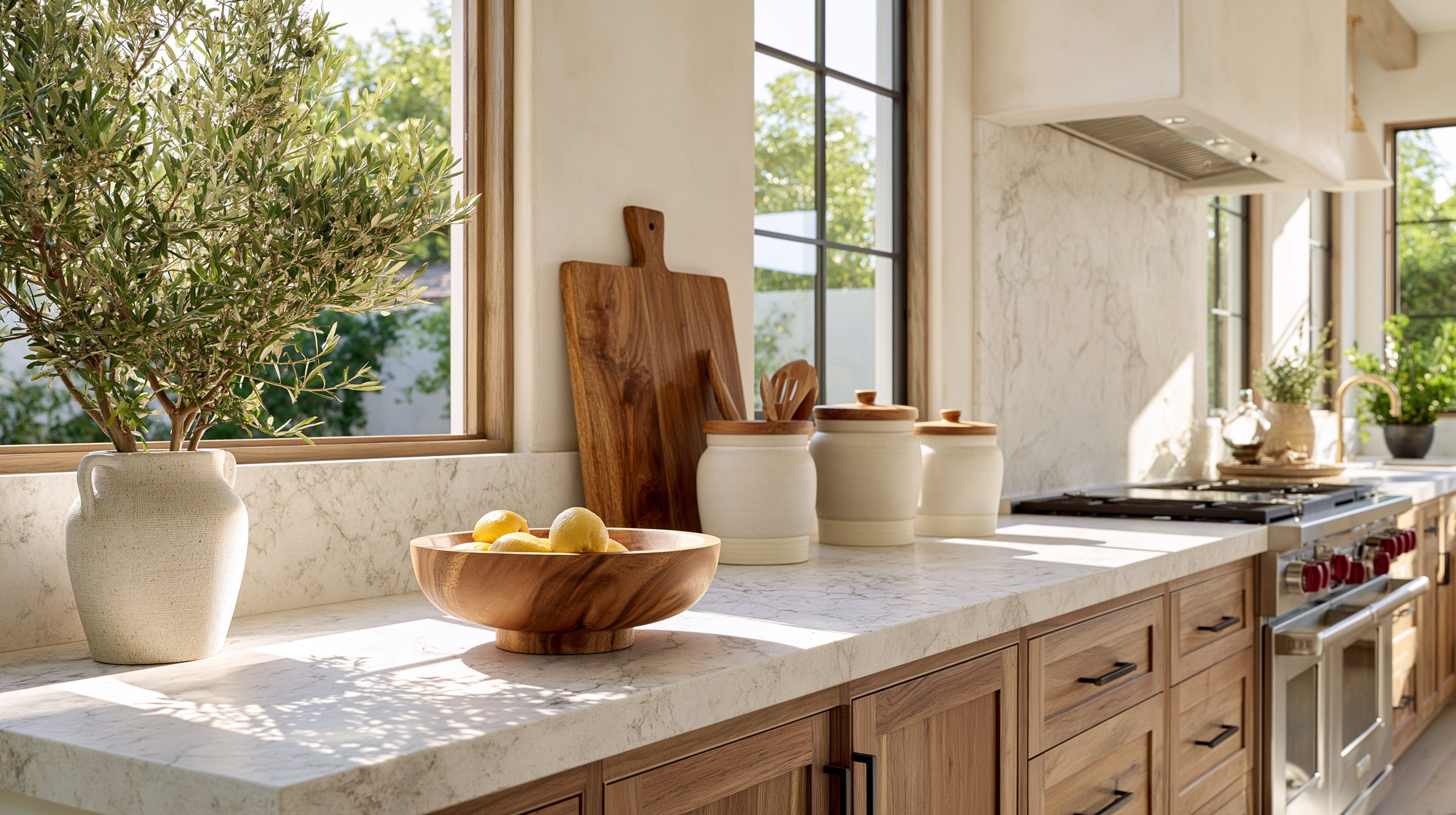
Best for the household where produce, keys, and small strays have no fixed address. Look for solid acacia or mango wood, around twelve inches across, with a raised foot. The pedestal is the point: lifting the bowl off the surface reads as a deliberate centerpiece rather than storage, and a defined landing place quietly absorbs the things that would otherwise scatter. The bowl matters more than most people expect. It is less about holding fruit and more about giving the day somewhere to land. One honest note: it needs a clear stretch of at least fourteen inches to breathe, and it wants an occasional wipe of food-safe oil.
2. The ceramic utensil crock
Best for anyone who cooks most nights and reaches for the same five tools. Look for a crock around seven inches tall with a wide mouth, a glazed interior, and real weight so it does not tip under a heavy spoon. It works because it removes a small friction at the exact moment you have no patience for one, mid-cook with a hand full of onion. It holds a working set, not the whole drawer. If everything fits, too much is out.
3. The marble salt cellar
Best for the stove-side pinch. Look for solid marble with a fitted acacia lid and a small spoon inside. Salt you can reach without unscrewing anything changes how you season, and a piece of stone beside the stove gives the cooking zone one object that feels permanent. The marble will show oily fingerprints, so it earns a quick wipe now and then.
4. The glass oil cruet
Best for retiring the branded bottle that undoes an otherwise calm kitchen counter. Look for tinted glass, which protects the oil from light, a weighted spout that cuts off cleanly, and around seventeen ounces so refills stay occasional. Decanting the everyday into something worth seeing is the fastest visual upgrade on this list. It does ask for a proper wash between refills rather than a top-up.
5. The leaning serving board
Best for softening the hard line where counter meets backsplash. Look for a solid acacia board with a handle, large enough to lean rather than lie flat. Upright, it adds warm texture at eye level and takes no working surface. In use, it handles bread, cheese, and gatherings. Hand-wash and oil it, and give it a wall to lean on. On a shallow counter it will feel like an obstacle rather than a backdrop.
6. The soap dispenser set
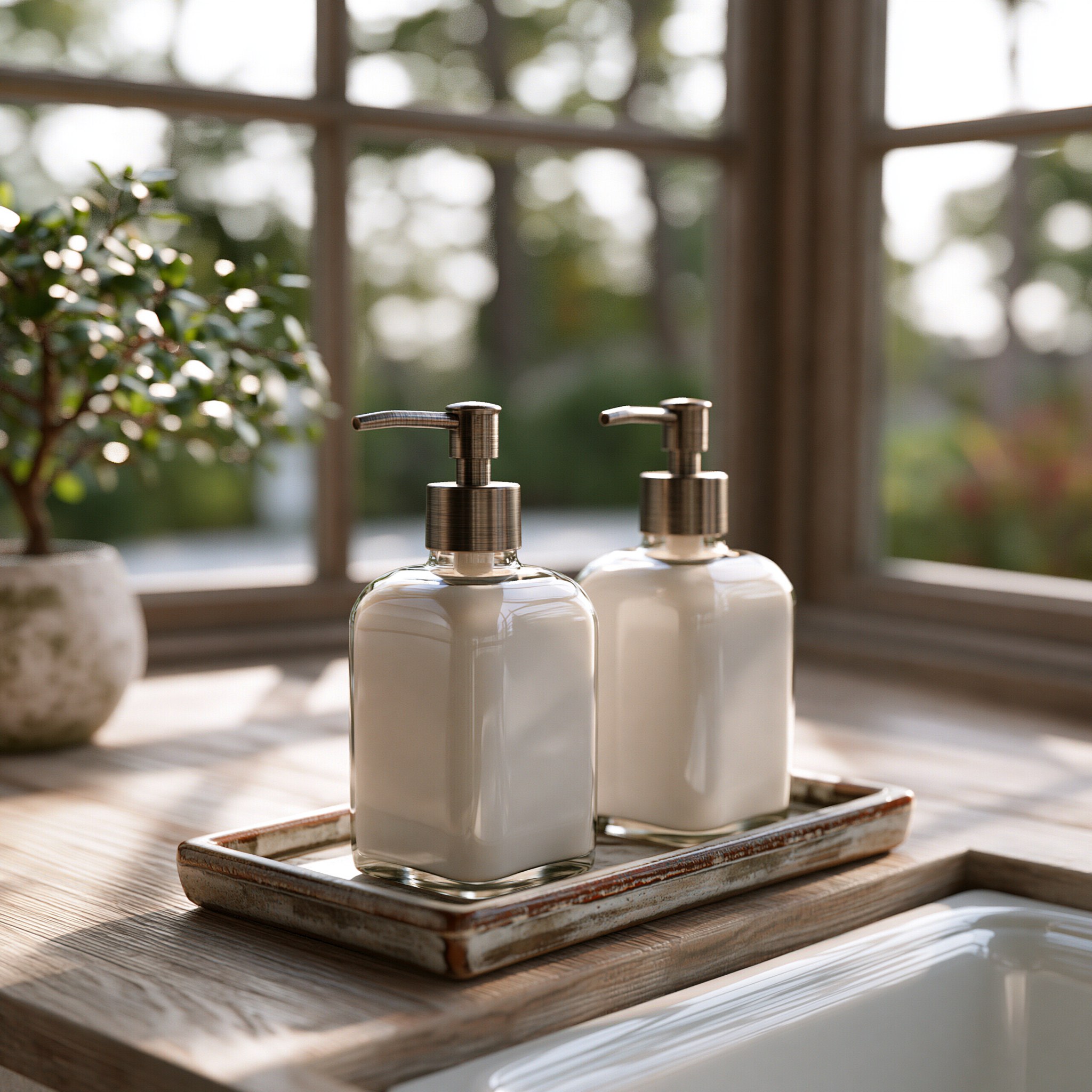
Best for the sink edge, which is where most counters lose the plot. Look for glass or ceramic bottles with metal pumps and a tray underneath. The tray does the real work: it defines the zone, contains drips, and keeps the sponge from wandering. The printed plastic soap bottle is usually the loudest object on the counter, and this replaces it. You are signing up for refilling as a small recurring chore, which is a fair trade.
7. The ceramic canister set
Best for the staples you touch every morning, coffee, tea, and sugar. Look for airtight wood lids, a matte glaze, and graduated sizes so the set reads as one thought. Canisters end the half-rolled bags and packets that colonize a counter one breakfast at a time. They are opaque, so either commit the order to memory or label the bases where no one sees.
8. The small pottery vase
Best as the single piece whose only job is presence. Look for matte, weathered off-white pottery under six inches with a weighted base, sized for one stem from the yard. A counter that is all function can still feel braced. One living thing signals that the room is tended, not just maintained. This is the piece to skip if your counter run is short. It earns its spot only after the working pieces have theirs.
Before You Decide
- Measure the open run first and subtract the work zone you need clear. Buy for the space that is left, not the space you wish you had.
- Repeat materials. Two woods and one stone read as calm. Five different finishes read as a collection of purchases.
- Favor glazed interiors and removable parts. The pieces that are easy to clean are the pieces that stay out.
- Pick up the piece before you commit where you can. Weight is the difference between an object that holds its place and one that slides into clutter.
- Add one piece at a time and live with it for a week before the next. The counter will tell you what it actually needs.
Other Ways In
If solid wood feels heavy for your light, spun bamboo gives the same landing-place function with a finer, airier grain, and carved stone goes the other direction, cooler and more sculptural on a modern counter. The visual weight is the variable, not the job.
If marble reads too formal for your kitchen, a lidded stoneware pinch pot does the same stove-side work with a warmer, more handmade presence. And if opaque canisters frustrate you, glass jars with wood lids trade a little visual quiet for the convenience of seeing what is running low.
The Easy Way to Decide
Start with the landing place, because the bowl solves the problem that creates most of the mess. Add the pieces you will touch daily next, the crock, the cellar, the cruet, the soap set. Let the quiet ones, the board, the canisters, the vase, come last, once the counter has shown it can hold its new shape. And keep the one rule that protects all of it: anything that has not been touched in a week comes off. If you want the deeper reasoning on why one clear surface changes how the whole room feels, read why a clear counter clears your head.
If this post has you eyeing more than the counter, the free One-Drawer Reset is a short, gentle way to start settling the rest of the kitchen, one small win in a single afternoon. You will find it just below whenever you are ready.