
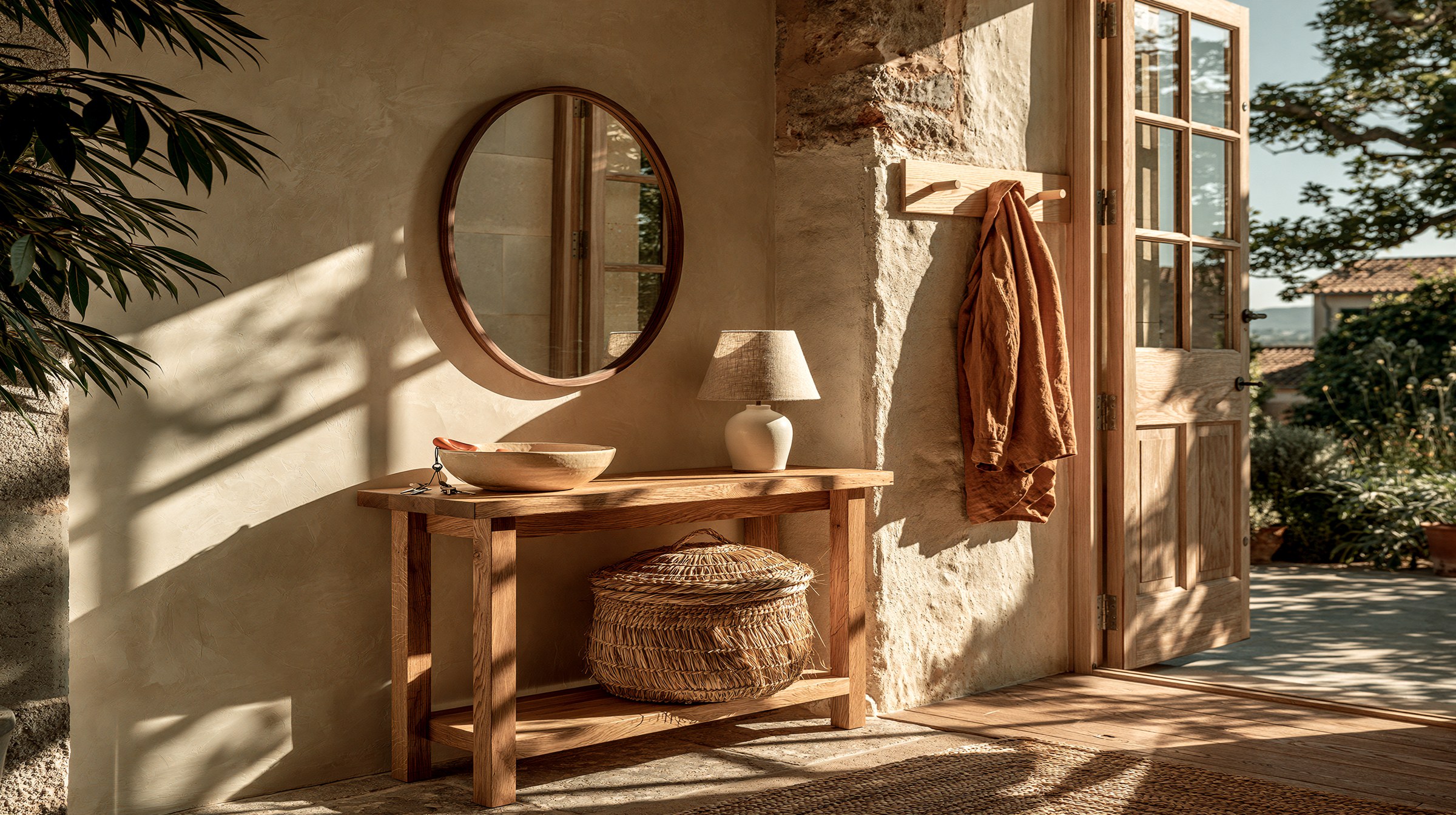
A calm entryway changes how coming home feels before you've taken off your shoes. It's the first surface your eyes land on, and when that surface holds three considered things instead of a season's worth of mail, the whole house seems to exhale. The anchor of the look is a narrow console in solid wood, edited down until everything on it has a reason to be there.
This is a look about subtraction as much as styling. The pieces are few: a slim table, a round mirror, a low bowl for keys, a rail of hooks, one lidded basket, one small lamp. What makes it work is what's missing.
The Style Formula for a Calm Entryway
One surface with one job
The console exists to receive you, not to store things. Its surface holds the bowl, the lamp, and open space. Open space is not wasted space here, it's the visual quiet that tells your brain the day's clutter stops at the door. Why this works: every object you see on arrival is a small open loop, and an edited surface means walking into fewer decisions at the exact hour you have the least patience for them.
A home for what leaves with you
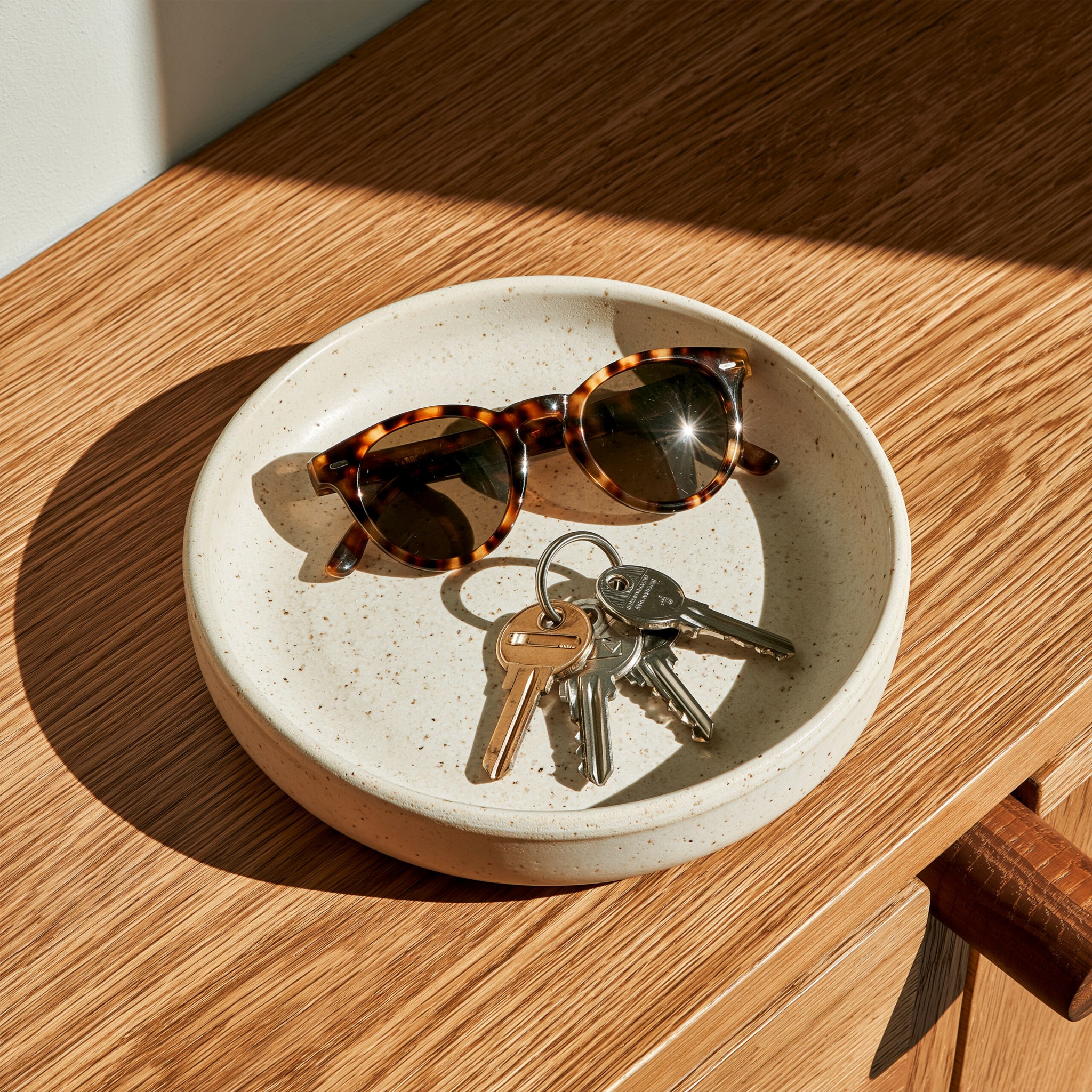
Keys, sunglasses, the dog's leash, the bag. Everything that exits the house each morning gets one fixed landing spot at the door, a bowl for the small things, hooks for the hanging things, a lidded basket for the rest. When the landing spots exist, the scatter never starts.
Light that greets
Overhead light flattens an entry into a hallway. A small lamp on the console, warm bulb, switched on in the evening, turns the same three feet into a welcome. It's the difference between a space you pass through and a space that receives you.
Pieces That Shape the Look
Six pieces build a calm entryway, and they divide into what grounds the space, what works for it, and what warms it. Together they're deliberately modest: the look holds because each piece is doing one clear job.
The foundation
The console table sets the scale. Look for solid wood over veneer, a slim profile somewhere near ten to twelve inches deep so it holds the wall without narrowing the hall, and a lower shelf if you can get one, since that's where the basket will live. A warm mid-tone finish reads calmer than high contrast against most walls.
Above it, a round mirror, roughly thirty inches, in a thin wood frame. The circle softens the rectangles that dominate an entry, doorframes, console, floorboards, and it doubles the light you already have. Hang it so the center sits at eye level, and the pairing feels settled rather than staged.
The working layer
A low open bowl in ceramic or carved wood takes the keys and the small pocket things. Choose one with some visual weight, a ribbed or hand-finished texture, so it reads as an object rather than a container. The bowl is doing more organizing than the table is.
Beside the door, a wall-mounted hook rail in solid wood carries what would otherwise land on the banister. Pegs with a little depth hold a bag strap and a jacket collar without either sliding off, and mounting into studs means it takes real weight without complaint.
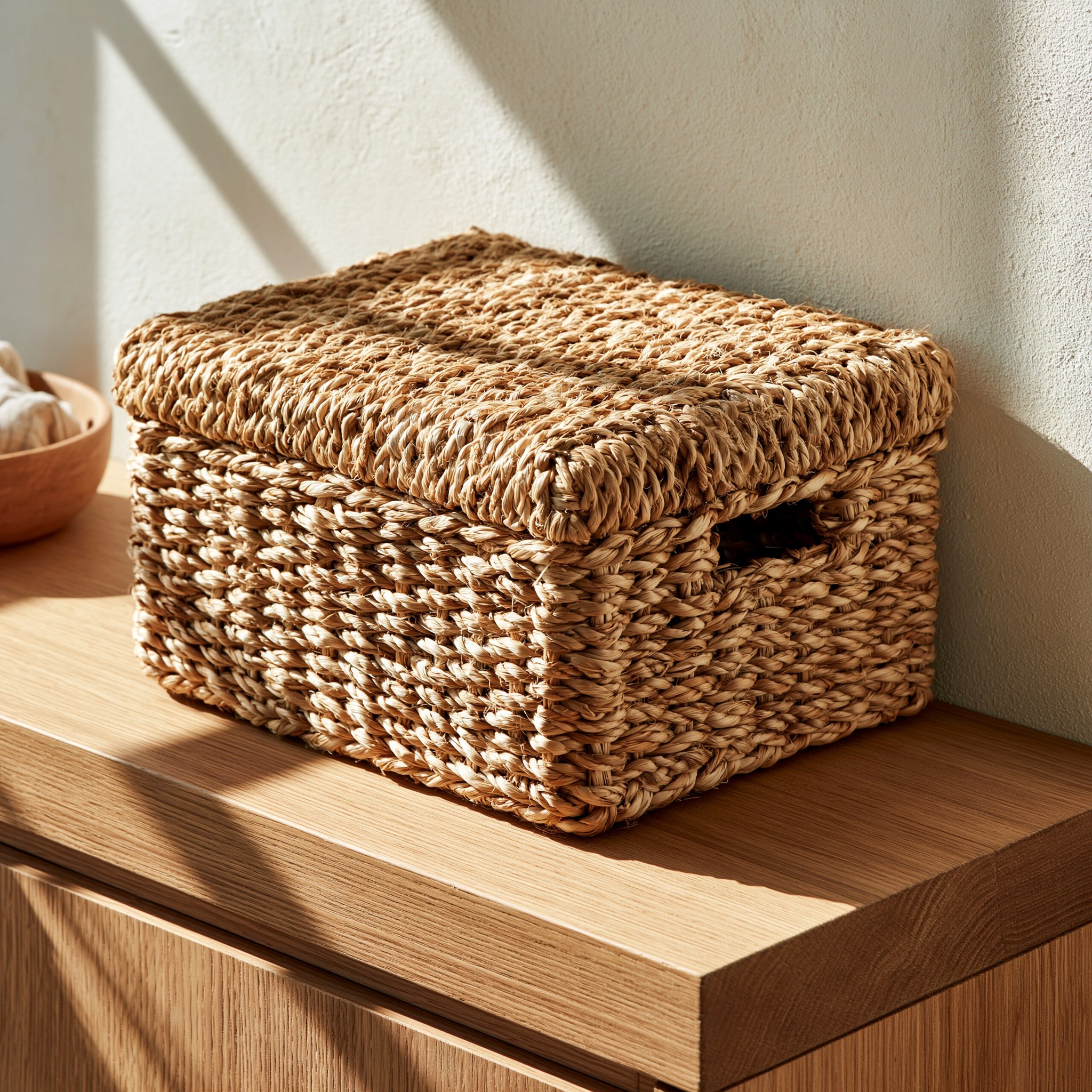
On the console's lower shelf, one lidded woven basket in seagrass or water hyacinth swallows the category of things that has no other home, the gloves, the dog towel, the return that hasn't been returned. The lid is what makes it calming. Texture stays, contents disappear.
The finishing layer
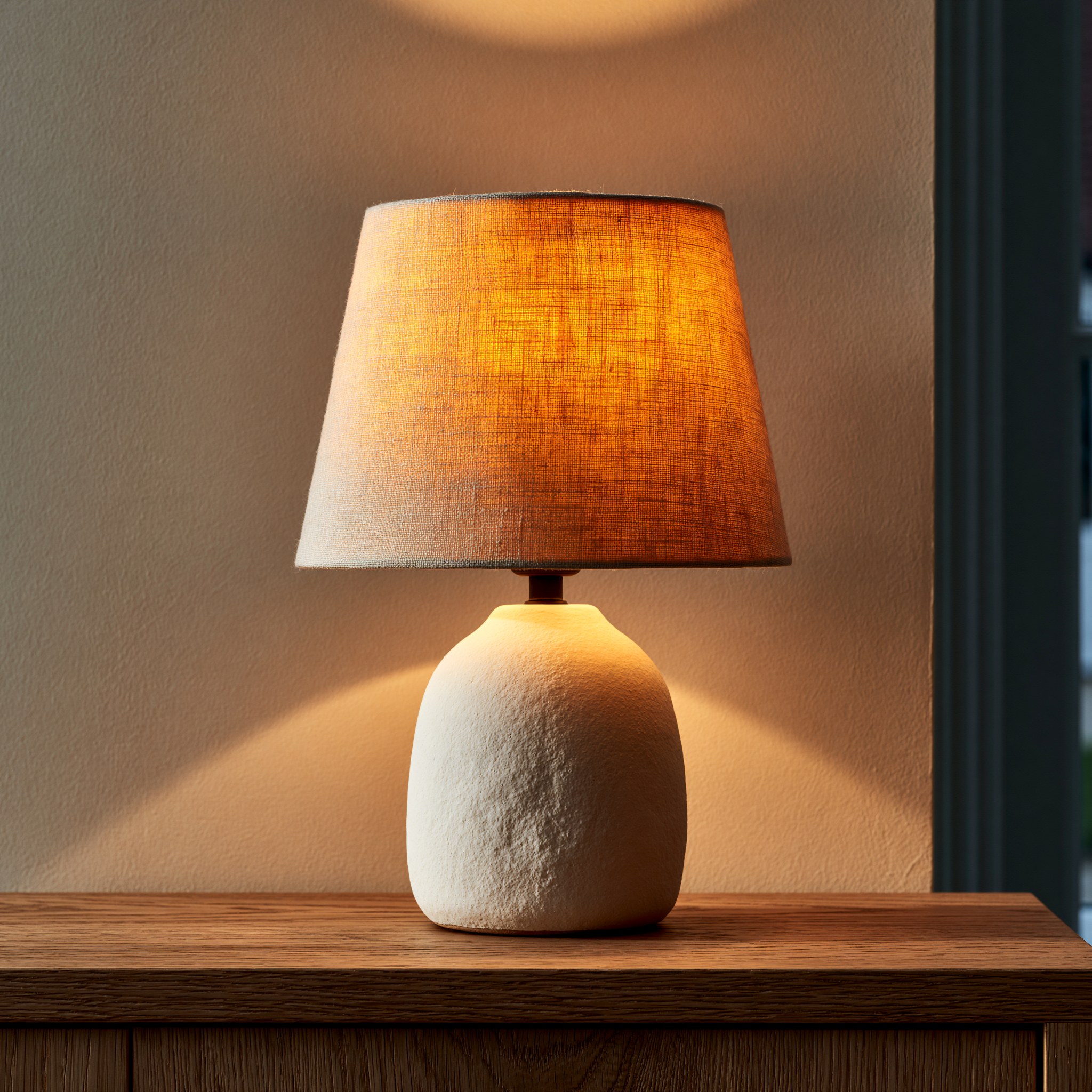
The small lamp comes last and matters most in the evening, a ceramic base around twelve to twenty inches with a fabric shade and a warm bulb. Its only job is a pool of light at the door after dark, so a modest footprint that leaves the surface mostly open is exactly right.
A Few Helpful Finds
When you're sizing the mirror, let the console decide. A mirror about two-thirds the width of the table beneath it looks anchored; wider starts to loom. Thirty inches over a thirty-six inch console is the easy ratio to remember.
Check the pegs' weight rating and mount into studs where you can. A rail that sags after a month of winter coats undoes the whole working layer, and the difference is usually the mounting, not the rail.
Measure the shelf clearance before choosing the basket. A lid that can't open in place turns the basket into a box you never look inside, which is how the category of homeless things ends up back on the surface.
Smart Substitutions
- Instead of a console table, try a floating shelf in the same solid wood at hallway-narrow depth. The surface and the ritual survive even where the furniture won't fit.
- Instead of a round mirror, try a soft-arched one in a similar thin frame. The curve does the same softening work against the entry's straight lines.
- Instead of a peg rail, try three individual wood wall hooks spaced a hand-width apart. Same capacity, and they climb a narrow wall vertically if that's all the door allows.
- Instead of a lidded basket, try a low woven tray on the shelf. You trade the hidden storage for easier reach, and it suits an entry where the shelf sits close to the floor.
- Instead of a table lamp, try a plug-in wall sconce with a linen shade above the console. The pool of light stays, the surface opens up entirely.
How to Layer the Look
Start with the clearing, not the shopping. Take everything off the entry surface, then let it stay empty for a day so you can see what actually tries to land there. The console, or its shelf stand-in, goes in first and sets the scale for everything else. The mirror follows, hung to the console's width and your eye level. Then the working layer, in the order the door gets used: bowl on the surface, hooks by the frame, basket below. Live with that for a week before adding the lamp, because by then you'll know exactly where the light should sit. Built in this order, the entry assembles itself around how you actually leave and arrive, and nothing on it is decorative clutter wearing a job title.
Polishing Moves
Keep one thing seasonal and nothing else. A single stem in a bud vase, a bowl of clementines in winter. One note of season keeps the surface alive without starting a collection.
Edit the hooks to the week, not the year. Two coats and a bag look intentional. Seven jackets look like weather. The out-of-season layer goes to the closet, and the rail keeps its calm.
Put the lamp on a plug-in timer or smart plug so it greets you without being asked. Walking into warm light you didn't have to switch on is a small daily argument that the house is on your side.
The whole look comes down to one principle: everything at the door either leaves with you or receives you, and anything that does neither lives somewhere else. Start with the clearing and the rest is choosing well. For the same thinking applied one surface deeper into the house, see the eight calm objects that earn their counter space.
And if the clearing is the part that appeals, the free One-Drawer Reset is a fifteen-minute place to begin. You'll find it just below.