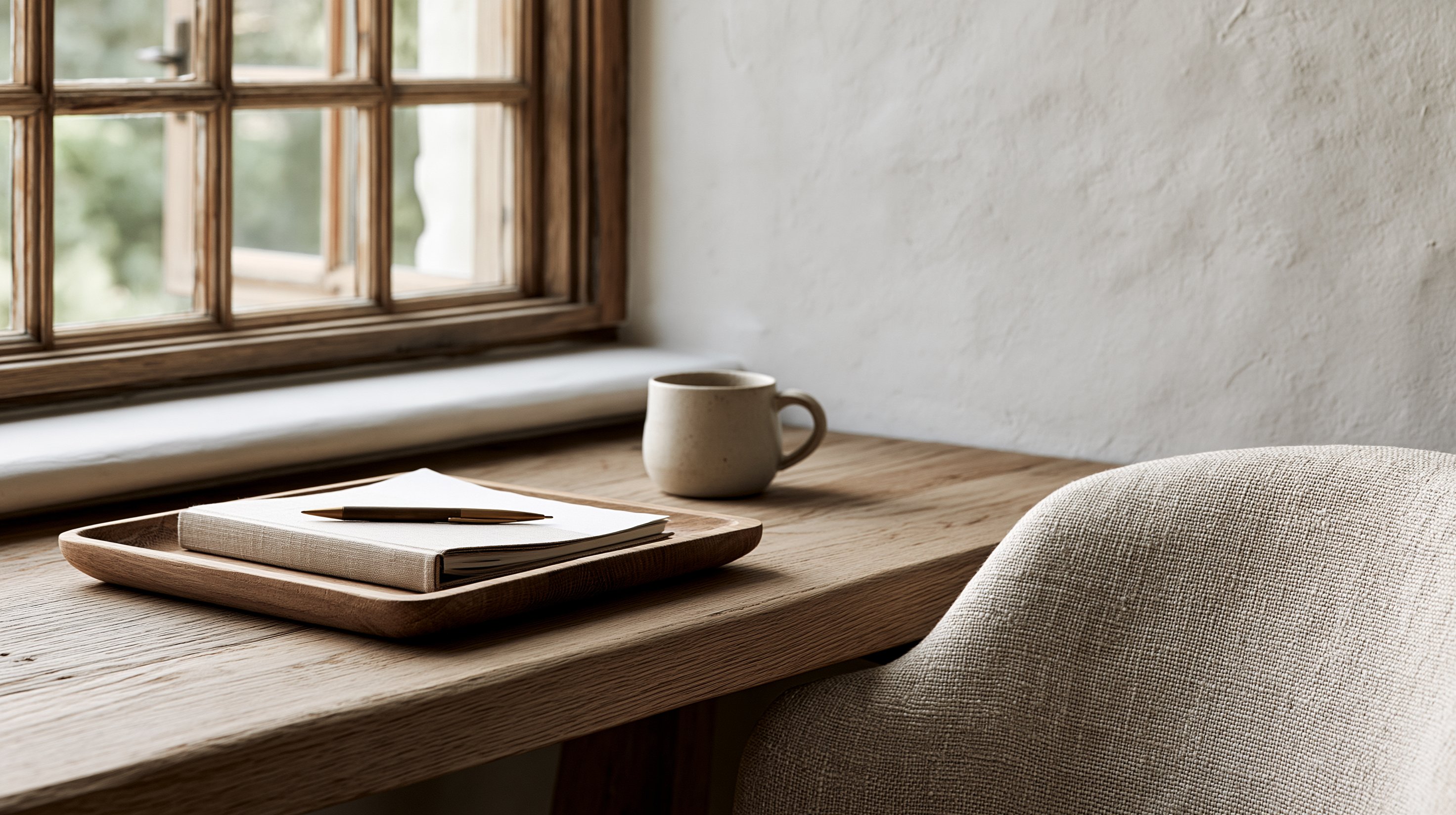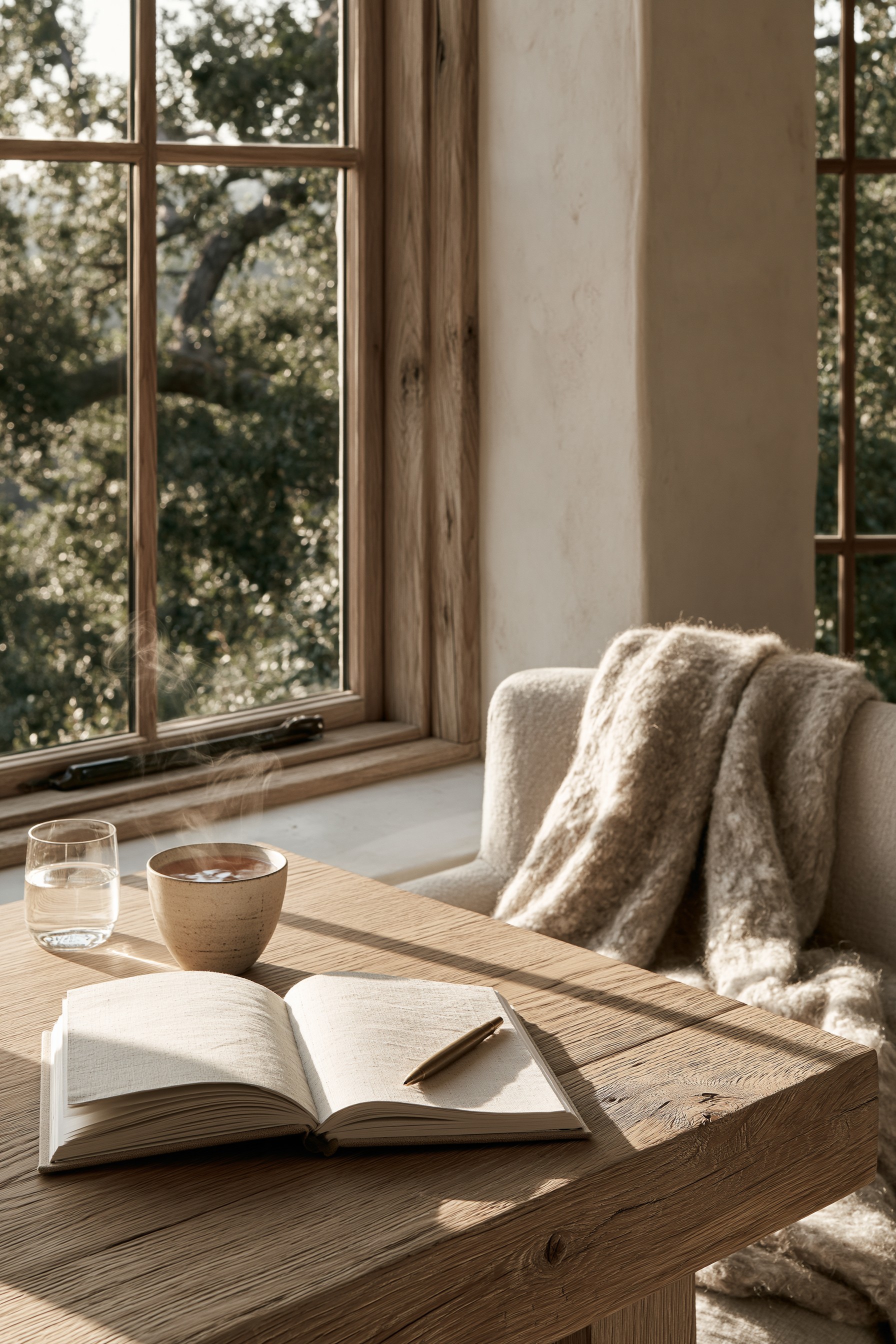

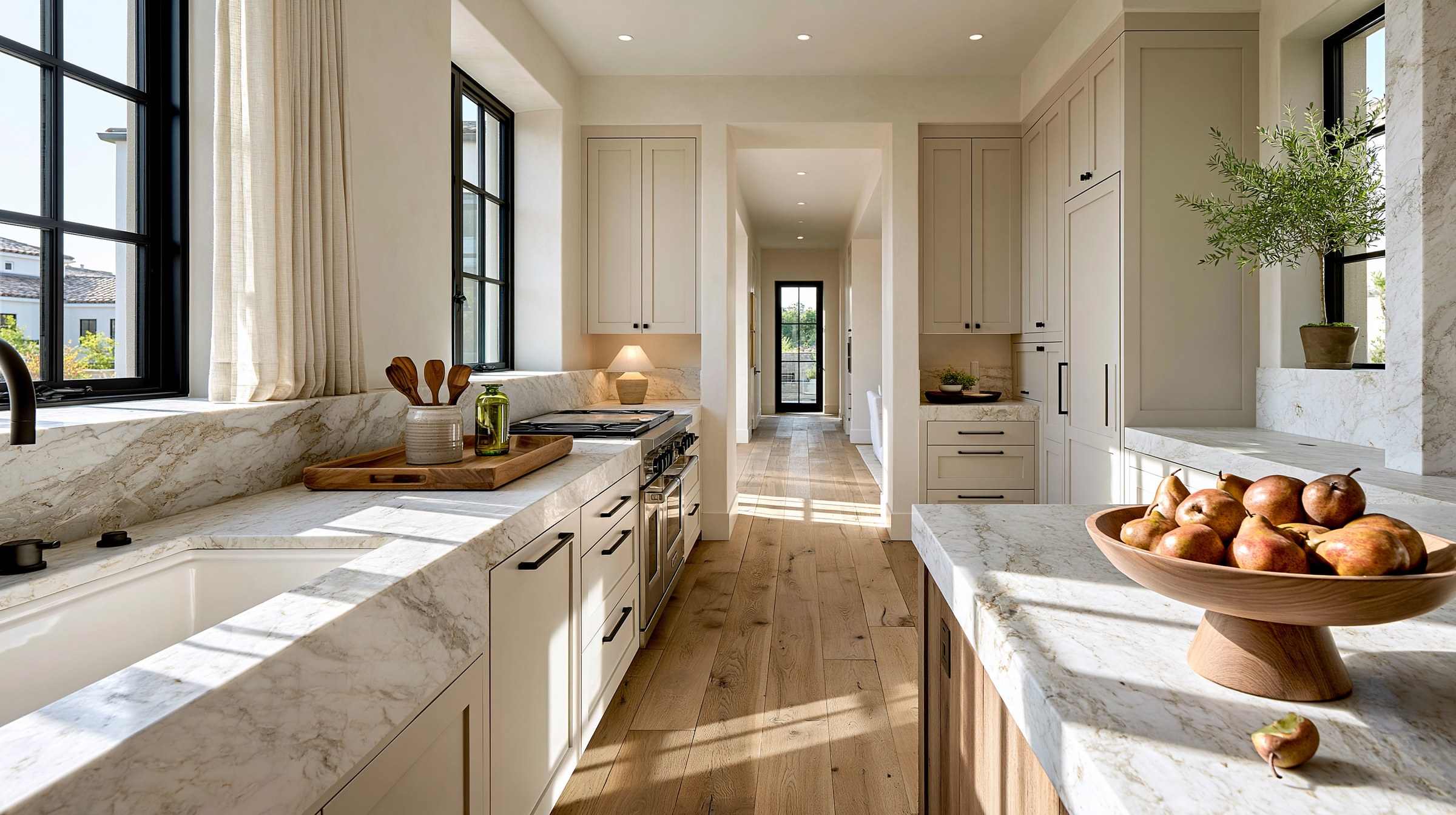
A kitchen where the counters stay clear is running on a system, not on discipline. If you have been trying to keep kitchen counters clear with willpower and a Sunday sweep, the problem was never you. It is that everything in the house is looking for the nearest flat surface, and the kitchen counter is almost always the nearest flat surface.
It sits beside the door you actually use, at hand height, with more open surface than any other room. Convenience runs through a house like a current, and it only ever flows one way. A calmer kitchen is not about sweeping against that current every night. It is about giving the current somewhere better to go.
The Mood + Palette
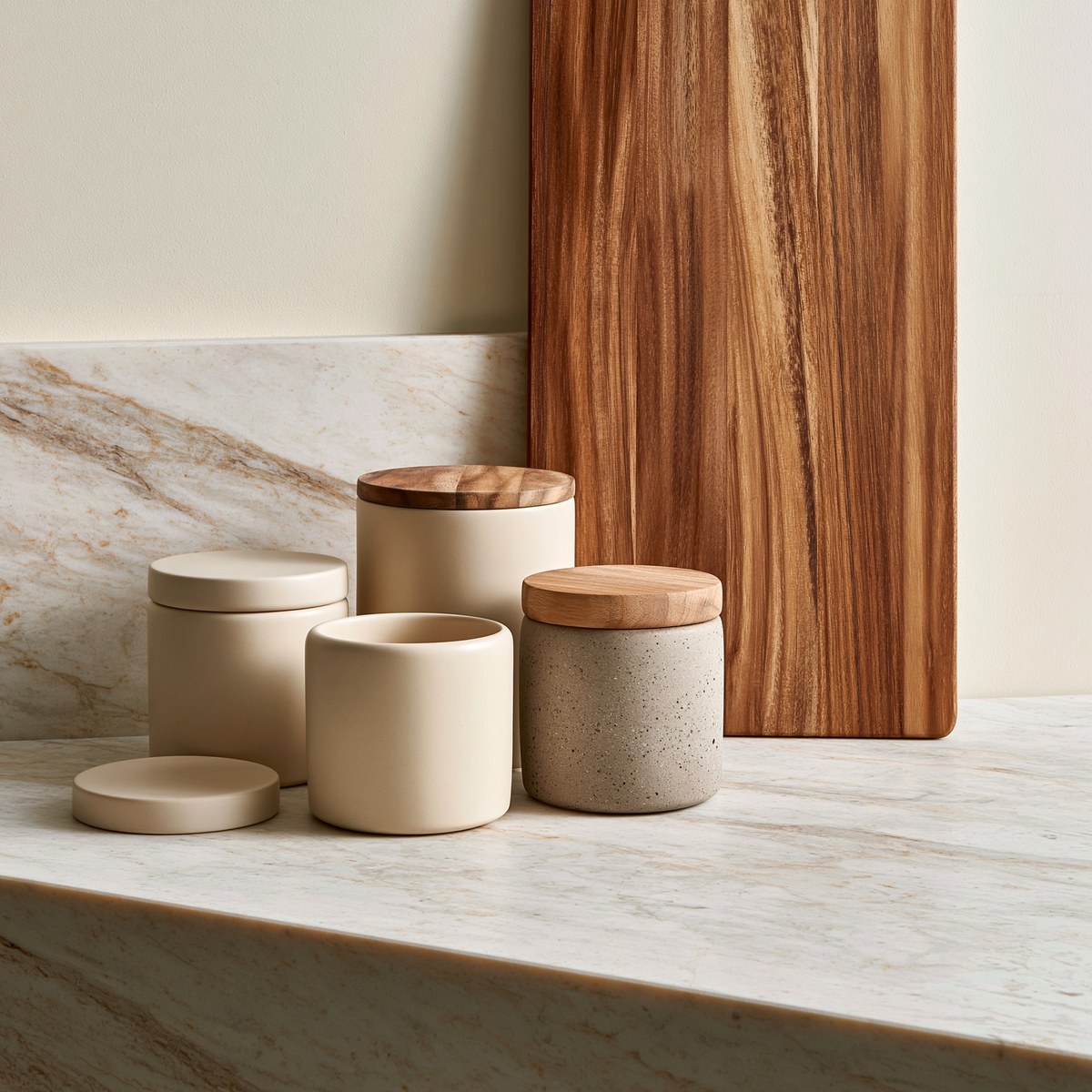
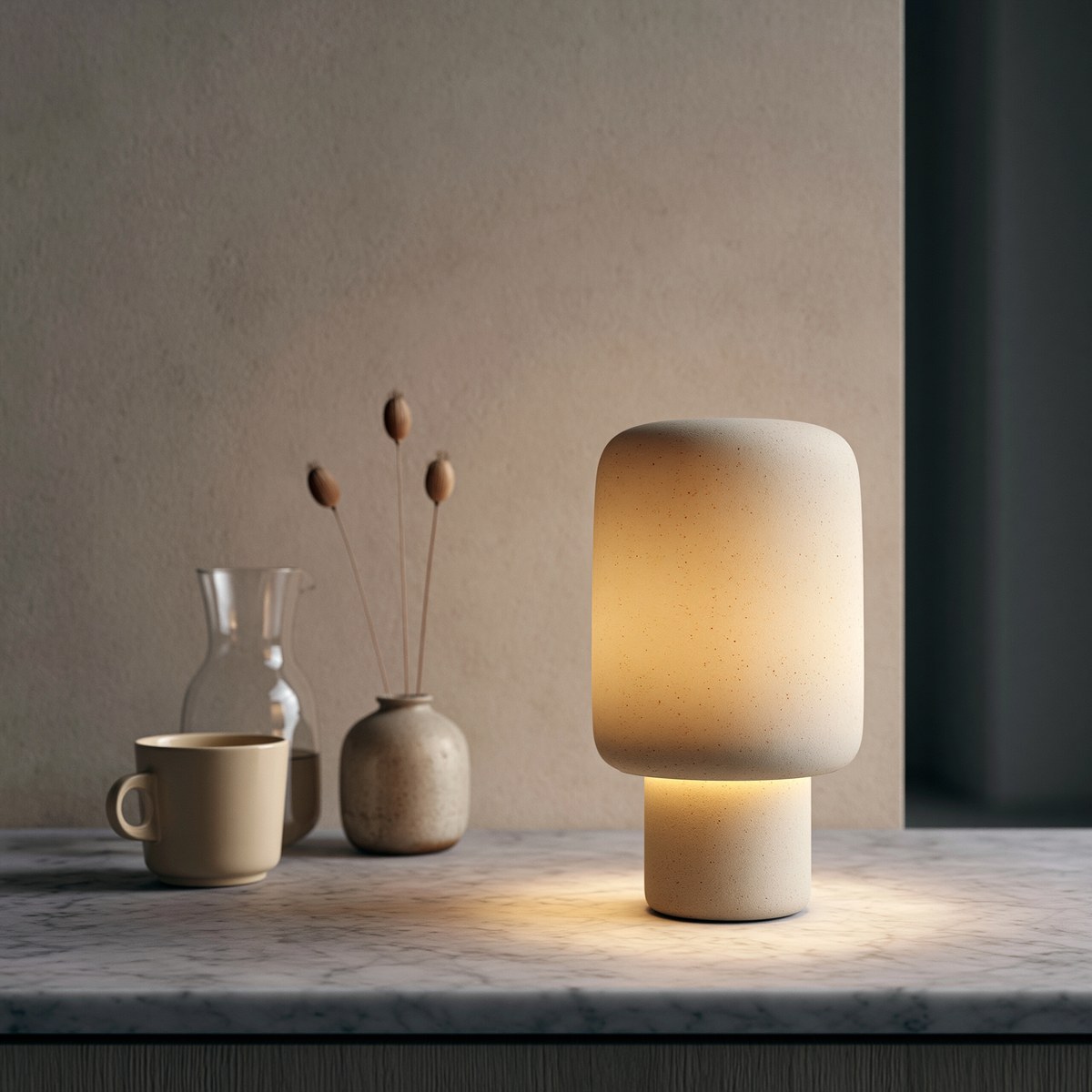
The quiet kitchen this post has in mind is warm, not clinical. Pale stone or wood counters, cream walls, cabinet fronts in a soft matte finish, and open surface left visible on purpose. What stays out is matte stoneware, oak and glass rather than plastic and print, so the few objects that remain read as material rather than as mess. Light does most of the styling: a window over the sink through the day, a small lamp at the counter's end once the evening comes. Hold to roughly four parts surface to one part object. Clutter free kitchen countertops are usually described as a look, but at that ratio the room also works better, because the space to cook is there before you start.
Ways to Keep Kitchen Counters Clear
Six moves, in the order that makes each one easier than the last. None of them takes a weekend.
1. Give each counter one job
Stand in the kitchen and name what each stretch of counter is for. The span beside the stove is for cooking. The corner by the kettle is for the morning drink. Why this works: a surface with a stated job rejects clutter on its own, because you can tell at a glance what does not belong. It is ambiguity that invites the pile.
2. Move the landing zone out of the kitchen
Mail, keys, sunglasses, the receipt you might need. They end up on the counter because the counter is the first flat surface past the door. Give that drop a real home within two steps of the door itself, a shallow bowl and a wall file, and the kitchen stops being the sorting office. Why this works: piles form where friction is lowest. You do not fight that. You move the low-friction point somewhere that can hold it.
3. Sort what is out by honest frequency
Daily earns the counter. Weekly lives behind a door at reach height. Seasonal leaves the room. Be honest rather than hopeful about which is which. The toaster is rarely as daily as it claims. This is the quiet center of how to keep kitchen counters clear: fewer residents, each with a better home, so the surface is not asked to remember anything. Why this works: every object left out is a small ongoing tax on attention, paid each of the dozens of times your eyes sweep the counter in a day.
4. Give what remains one shared base
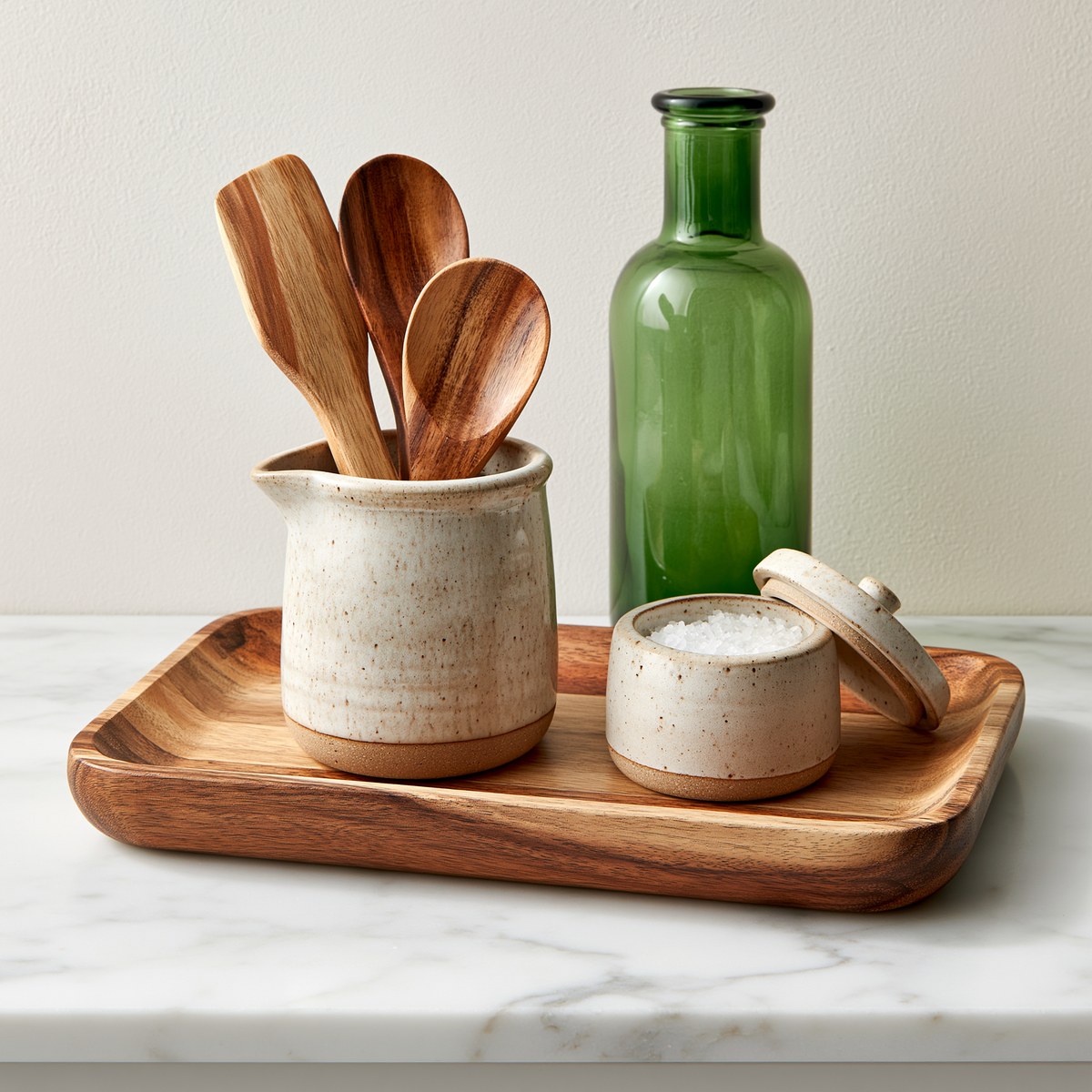
The oil, the salt, the crock of wooden spoons. Set them on a single generous tray beside the stove instead of letting them stand loose. Why this works: a tray turns six objects into one decision. Its edge draws a line the eye reads as intention, and moving one tray to wipe the counter is a ten second job instead of a juggling act.
5. Protect the working span
Keep one stretch, ideally the one between sink and stove, empty at all times. Not minimal. Empty. About an arm's width is enough. Why this works: cooking begins the moment it does not have to start with clearing. Removing that first step is the difference between making the meal you planned and ordering something at eight.
6. Close the kitchen each evening
Ten minutes after dinner: surfaces cleared back to their jobs, the tray straightened, the lamp on, the overhead light off. In the morning, the rack empties while the coffee brews. The counter you meet tomorrow is the one you leave tonight. Why this works: a routine attached to the end of an existing one, dinner, needs no reminder to survive. A cleared counter at 7 a.m. says the day starts calm before you have decided anything.
Most of this asks nothing of your taste and everything of your landing places, which is why the short list of objects below matters more than it looks.
Refinement Notes
Homes before rules. A counter rule fails the day an object has nowhere else to go. Clear one reach-height shelf or drawer first, then set the rule. The order matters.
Do not buy organizers yet. Containers bought before the sort just formalize the pile. Decide what stays, then measure what is left, then buy once.
The counter is workspace, not storage. Storage happens behind doors. The counter is where things are done, not where they live. That one distinction makes every smaller call obvious.
Watch the vertical surfaces. The fridge front and the windowsill count as counters to the eye. Paper on the fridge undoes a cleared counter below it.
Elements That Shape the Look
Seven object types carry most of the system. Material and scale are what to shop by, not brand.
- A generous tray in oak or matte stoneware. Large enough for the oil, the salt and the utensil crock together, with a raised edge that draws the line. Wood warms a stone counter; stoneware quiets a wooden one.
- Lidded stoneware canisters. Matte glaze in cream or clay, sized to what you genuinely decant weekly. Lids matter: open vessels collect, closed ones contain.
- A wide cutting board that lives leaned against the backsplash. End-grain oak or walnut, big enough to be the whole workstation. Leaned upright it stores in zero counter depth and reads as material, the kitchen's own version of art.
- A knife strip inside a cabinet door or a slim in-drawer block. Walnut or matte steel. It retires the bulkiest object on most counters without adding a visible one.
- A dish rack that stows. One that folds flat or lives in a cabinet between uses. The rack is the counter's most permanent squatter, and built to last matters more here than looks, because a flimsy one never gets put away.
- A small counter lamp. Ceramic base, warm low bulb, at the counter's far end. It is the closing cue for the evening ritual, and the reason a cleared counter reads as calm rather than bare.
- A shallow bowl and wall file for the entry, not the kitchen. The landing zone's new home. Stoneware bowl for keys, oak or steel file for paper, mounted where the drop actually happens.
Subtle Finishing Details
Leave one corner deliberately empty. Not staged, just left. An empty corner is what makes the rest of the room read as chosen rather than merely tidy.
Keep one living thing out. A bowl of whatever fruit is in season, or three stems in a stoneware vase. One, not both. The counter needs a single note of life, not a display.
Hold what stays visible to three materials. Stoneware, wood and glass is the usual answer. When everything out shares a palette, even a used kitchen photographs calm.
Counters stay clear when every object has a home it can reach in one motion and every surface has a job. Build that once, gently, and the room holds it for you afterward. For the fuller argument about what an open surface does for your attention, read why a clear counter clears your head. If the whole room needs a reset before any system will stick, start with the five-minute tidy.
And if beginning feels bigger than one evening, begin smaller than the counter. The free One-Drawer Reset takes a single drawer and about fifteen minutes, and it is the gentlest way to feel this kind of order before you scale it up. You'll find it just below.