
The hardest objects to decide about are almost never the expensive ones. Work out how to decide what to keep and you have a test you can run on any drawer, shelf or room in about an hour, and a short pile you can let go of without the ache that usually follows. The test is three questions long. Nothing here asks you to be ruthless.
What makes it work is that the deciding happens against the life you are living now, not against what something cost or the version of you who bought it. Those are real feelings. They are just poor at sorting.
What This Takes
Almost none of this is a purchase, and the few things worth owning are worth owning permanently, because you will run this again.
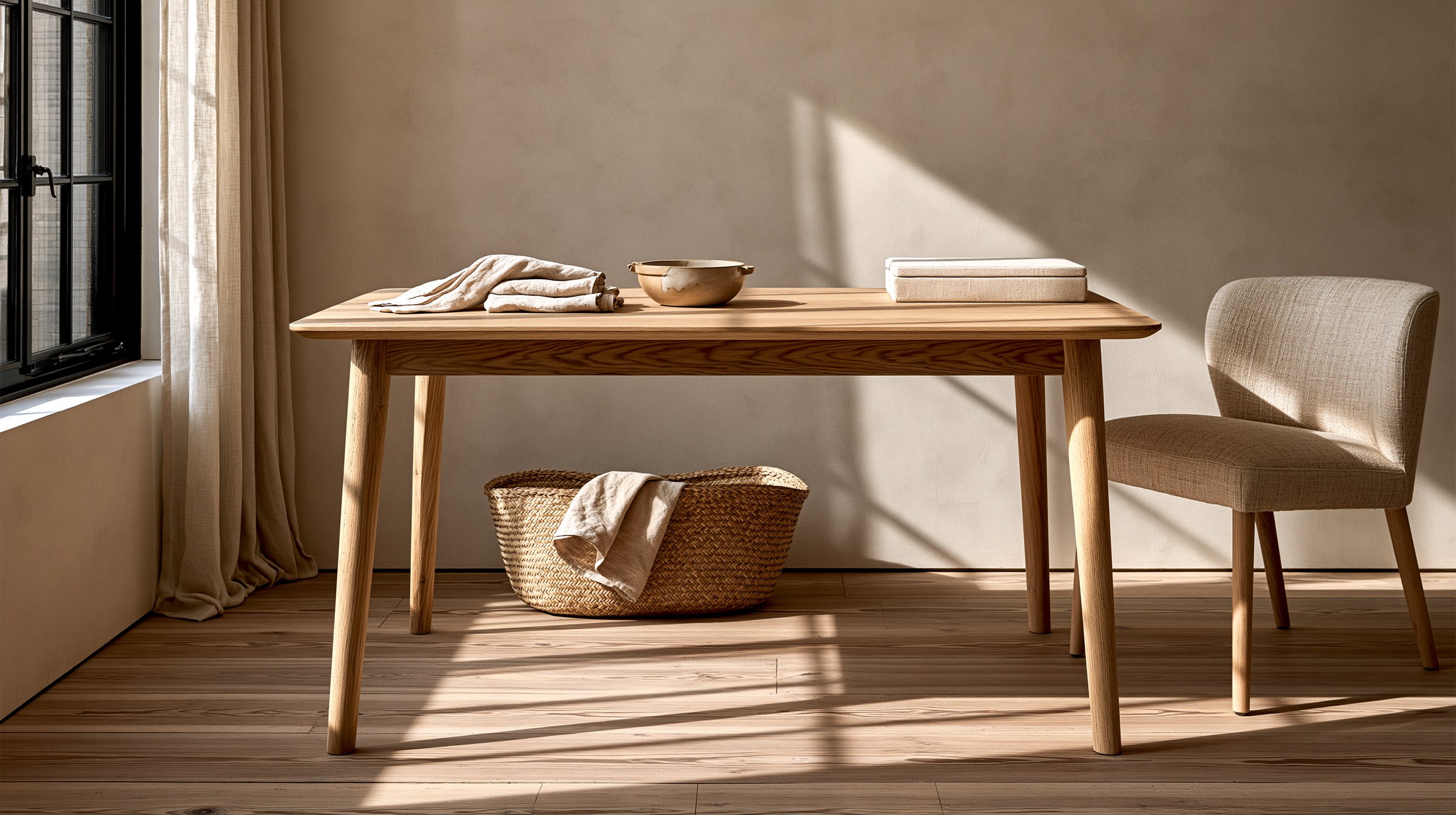
- One clear surface. A dining table, a made bed, a stretch of bare floor. It has to hold everything from the zone at once, because seeing the full quantity in one go is most of the work.
- A shallow open basket for what is leaving. Woven seagrass or heavy canvas, low sided so you can see in. Open matters: a lidded container for the outbound pile becomes storage within a week.
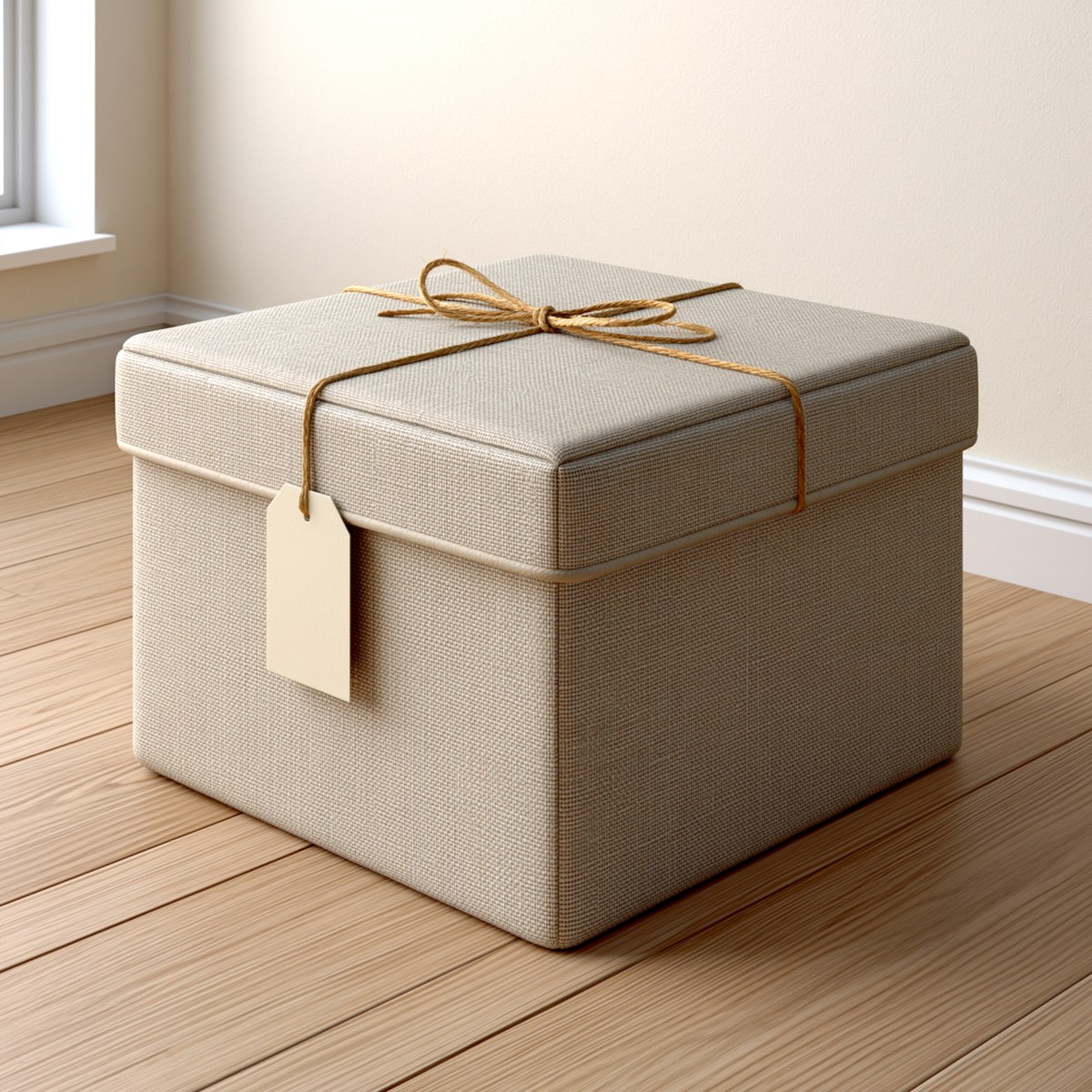
- A lidded box you can close and date. Card or fabric, big enough for ten items, small enough that it cannot become a second attic. This is for the genuine maybes, and the lid is the point.
- A soft pencil, for writing a date on the box rather than an inventory of what is inside it.
- Somewhere to write down two or three rules. A notebook or a planner page. The rules you invent while sorting are the part you will want next time, and the part everyone forgets.
- One cleared shelf or drawer at reach height. Emptied before you start, not during. Everything that earns its place needs somewhere to go the moment it earns it.
Before the First Decision
Pick a zone you can finish in one sitting. One drawer, one shelf, one cupboard. A finished zone gives you a result to look at, and the result is what makes you willing to do the next one. A whole room gives you a bigger mess at bedtime.
Decide where "leaving" goes before you start. The charity shop, the friend, the recycling centre. A basket by the door with no destination is a pile with better manners, and it will still be there in November.
Start rested, in daylight. This is a long run of small judgements, and small judgements degrade when you are tired. Wear and grubbiness read honestly by a window and flatteringly under a lamp. Saturday morning beats Sunday night by a wide margin.
How to Decide What to Keep, Step by Step
1. Empty the zone completely
Take everything out onto the clear surface, including the things you are certain about. Done right, the drawer is bare and the surface looks slightly alarming.
Why this works: an object sitting in place is invisible, and it holds its spot by default rather than by merit. Emptying the zone removes the default, so every item has to argue its way back in. That is a much easier question than whether it should be thrown out.
2. Name what the space is for
Before you look at a single object, say in one plain sentence what this space is for. This drawer is for the things I use every morning. This shelf is for books I am reading now.
Why this works: you cannot judge what earns a place until the place has a purpose. A named space gives you an outside standard, so the decision becomes about fit rather than willpower.
3. Run three questions on every item
Pick each thing up, one at a time, and ask in this order. Does this belong to the life I am living now, not the one I had or the one I keep meaning to start. Would I choose it again today, at full price, knowing what I know. Does it have a home it can reach in one motion. Three yeses and it stays. Two and it goes in the box. Fewer and it goes in the basket.
Why this works: this is the whole of how to decide what to keep, and the order is doing the work. Relevance first, then desire, then logistics, and none of the three is what it cost. Money already spent is gone whatever you decide, so it is the one input that can only mislead you.
4. Move the outbound basket out of the room
As soon as the basket has anything in it, carry it to the hall, the porch, the boot of the car. Out of the eyeline. The surface should hold only the keeps and the maybes. A leaving pile in the corner keeps reopening itself, and the items you re-litigate almost always come back.
5. Close and date the undecided box
Put the genuine maybes in the lidded box, write today's date and a date six months out on the outside, and put it somewhere you do not walk past daily. Do not list the contents.
Why this works: an open maybe pile is a decision you have agreed to make again tomorrow, and again the day after. Closing it turns a standing cost into a single appointment, and anything you have not gone looking for in six months has answered the question itself.
6. Put back only what earns the space, most-used first
Return the keeps in order of how often you actually reach for them. Daily at the front, at hand height. Weekly behind or above. Less often than that and it belongs in another room. Leave the last few centimetres genuinely empty.
Why this works: frequency is the one ordering principle your hands already use. Arrange by category and you will reorganise in a month. Arrange by frequency and putting things back becomes the path of least effort rather than an act of discipline.
7. Wipe the surface and write down what you learned
Clean the emptied surface, which marks it as finished and makes it much harder to casually reload. Then take two minutes and write the two or three rules this session produced. No more than four pairs of scissors. Nothing goes back in this drawer that lives somewhere else. If it needs mending, it gets a date or it goes.
Somewhere to keep those rules matters more than it sounds. They are the difference between doing this once and having a working method by Christmas.
Where This Usually Goes Wrong
- Starting with the photographs or the letters. Sentimental items need a practised eye and on day one you do not have one. Build the reflex on a utility drawer, then come back to the letters in a few months.
- Letting "still perfectly good" decide. Condition is not the test. Half the things making a home feel heavy are in excellent condition and belong to somebody you no longer are. That is the best possible reason to pass something on rather than store it.
- Buying containers before the sort. Anything bought in advance has to be filled, and it will be. Sort first, measure what is left, then buy once, in a material you like enough to leave visible.
- A maybe pile with no lid and no date. Undecided is a legitimate answer, but only for a fixed period. Without a date it is not a decision deferred, it is a decision avoided, and it will sit in the spare room for four years.
- Deciding while someone hovers. Even a well-meaning audience turns a private judgement into a negotiation. Sort alone, then show the result if you want to.
The Same Test, Bigger or Smaller
One drawer, fifteen minutes
Keep the three questions and shrink everything else. No basket, no box, just a drawer emptied onto the counter and sorted straight back. This is the version most likely to become a habit.
A whole room, over three sessions
Split the room into three zones, one per session, with a day between them. Surfaces first, then storage at reach height, then the high and low storage nobody looks at. The gap between sessions matters as much as the sessions, because it is when you notice what you did not miss.
A shared home, in two passes
Each person runs the three questions on their own things first, separately, then you meet over the shared categories with everything already narrowed. The joint pass goes faster and stays friendly, because the only things left are ones you both have a real claim on.
One Surface, This Week
Choose the surface you look at most, the one your eyes land on before you have decided to look at anything. Empty it, name what it is for, and run the three questions once. It takes twenty minutes and will tell you more about your keeping habits than a weekend of reading. For the wider argument about why the room you live in keeps shaping who you become, read letting your space reflect who you're becoming. And if the surface you picked is a kitchen counter, the quiet kitchen has the system for keeping it clear once the sorting is done.
If a whole surface still feels like more than this week has room for, begin smaller. The free One-Drawer Reset takes a single drawer and about fifteen minutes, and it is the gentlest way to feel this kind of order before you scale it up. You'll find it just below.