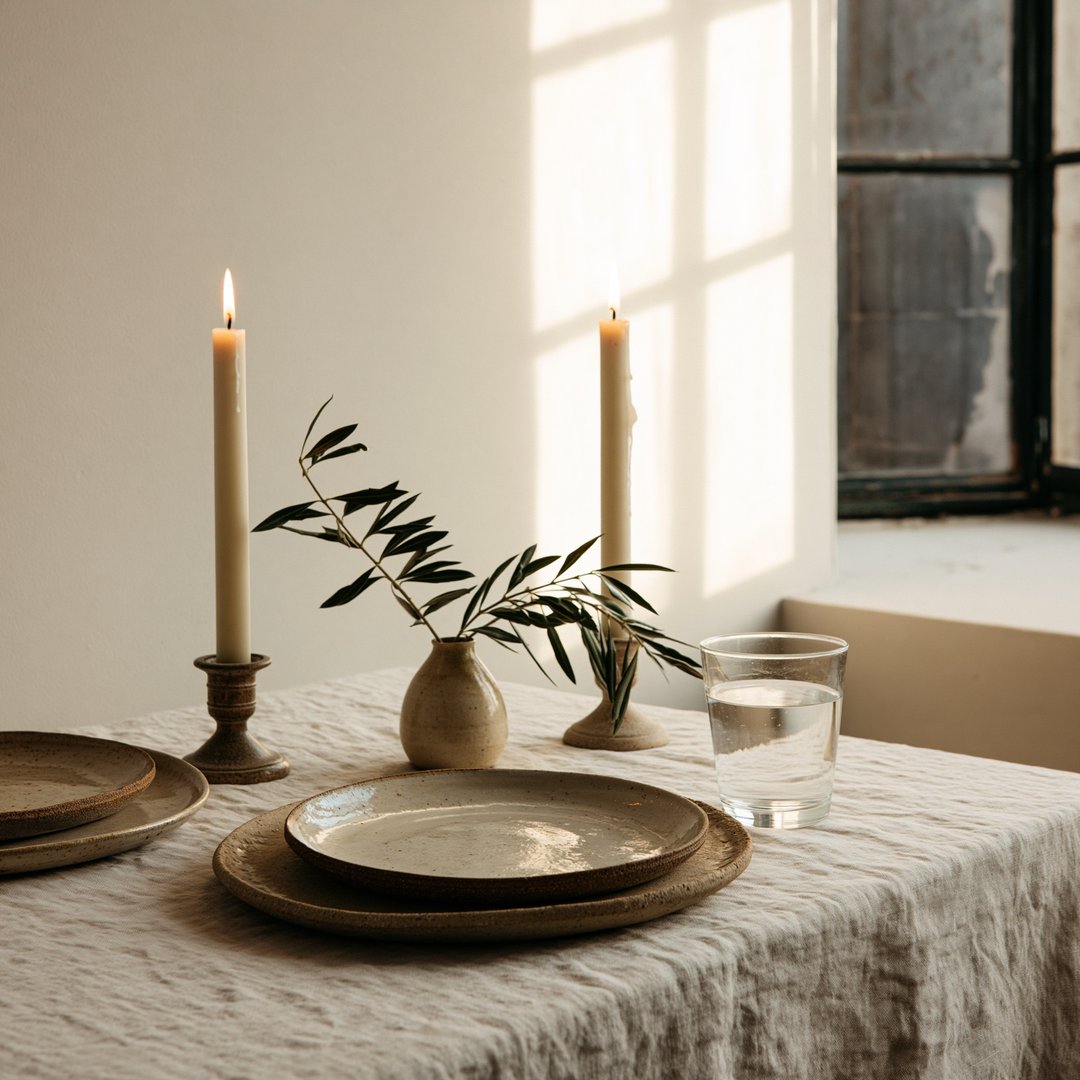

A simple fall table setting takes about fifteen minutes and five materials, and this is the nine idea version, written for a Friendsgiving you would rather sit down at than fuss over. Everything here works on a fall table you already own most of, because the shift into the season is a change of light and tone rather than a change of inventory. Nothing on this list has to be bought to make the first one work.
What's Shifting in Fall Table Style
The palette moves one step deeper, out of the cream and clear glass of summer and into clay, oat, and amber.
Light becomes the main material, because from late October the table is set after dark more often than not.
Texture does the work that colour did in June, so the linen gets heavier and the glazes get more reactive.
Serving moves to the middle of the table rather than the counter, which changes how much room each seat needs.
The centre gets lower and longer, so people can see one another across it.
Almost nothing new arrives, and two or three things get put away.
Why this works: a table that takes fifteen minutes to set is a table that gets set. One that takes an hour becomes something you save for occasions, and then the occasion has to justify the hour, which is how a season passes without anyone coming over. So it helps to know where the floor is. A cloth, a plate, a glass, and one source of light is a set table. Everything above that line is optional, and knowing where it sits is what separates hosting twice this autumn from meaning to.
The Key Elements of a Calm Fall Table
- Linen, unpressed. Washed flax or oat, heavier than the summer version, folded loosely rather than ironed flat. The creases catch low light and keep the table from looking staged.
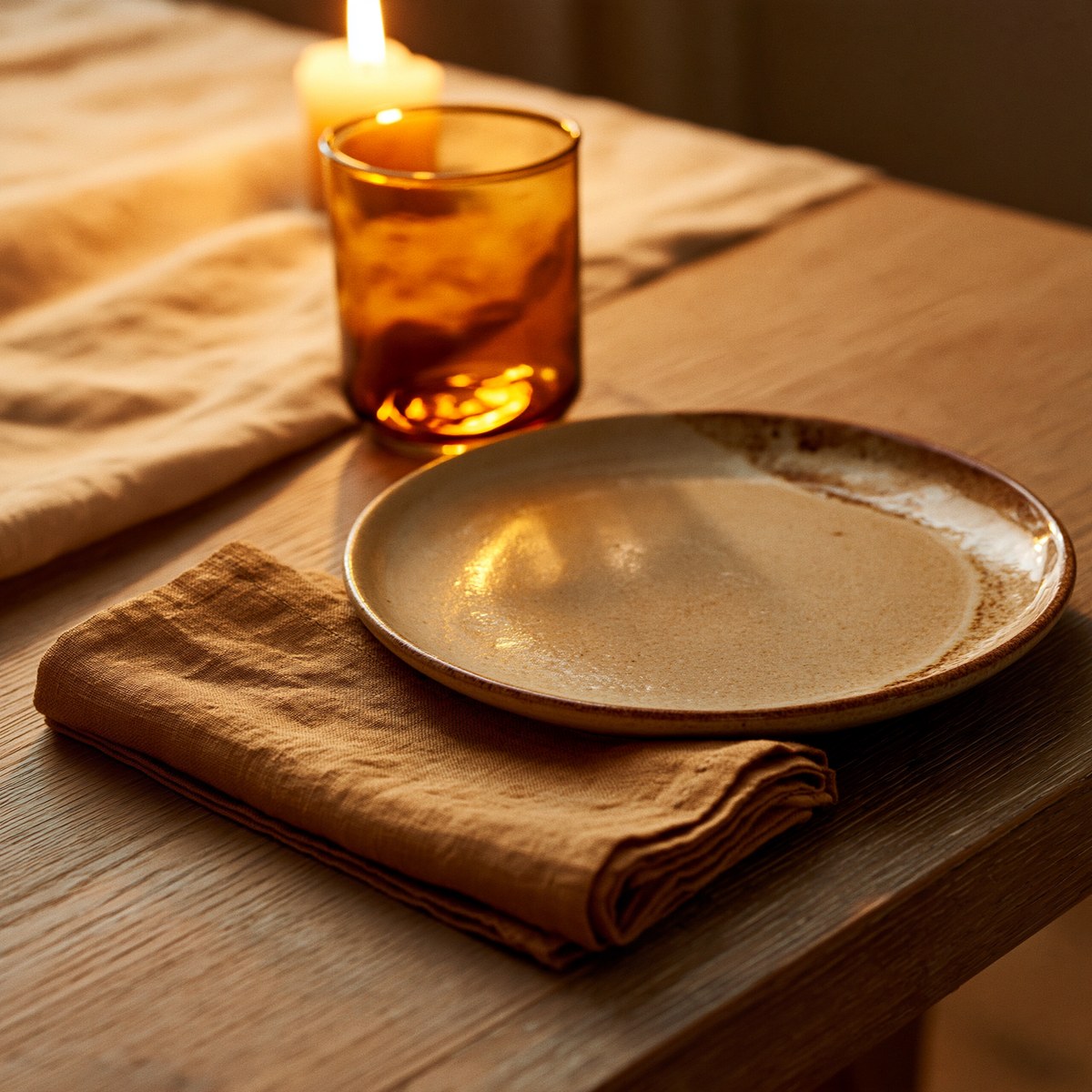
- A matte, reactive glaze. Stoneware in cream or pale clay, pooling slightly at the rim. Gloss throws hard reflections once the candles are the only light.
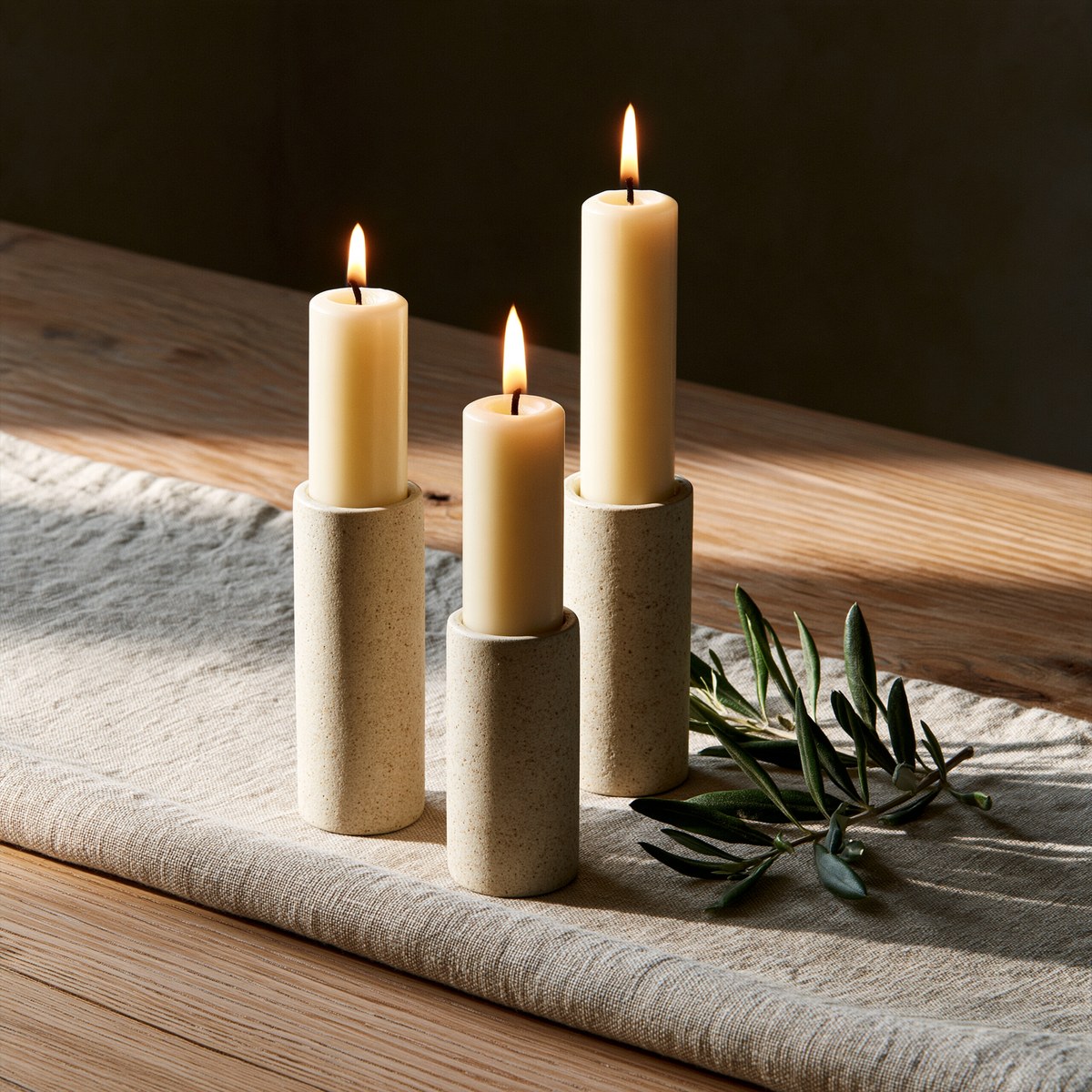
- Two heights of candlelight. Tapers at eye level and something lower near the plates. One height reads as decoration; two heights read as a room.
- Tinted glass. Smoke or amber rather than clear. It holds colour when the daylight goes, which clear glass stops doing at about five o'clock.
- A low, long centre. Nothing above about fifteen centimetres in the middle. Height in the centre is the most common reason a table feels formal.
- Bare wood at the edges. A runner down the middle rather than a cloth over everything, so the table stays part of the palette.
Nine Simple Fall Table Setting Ideas
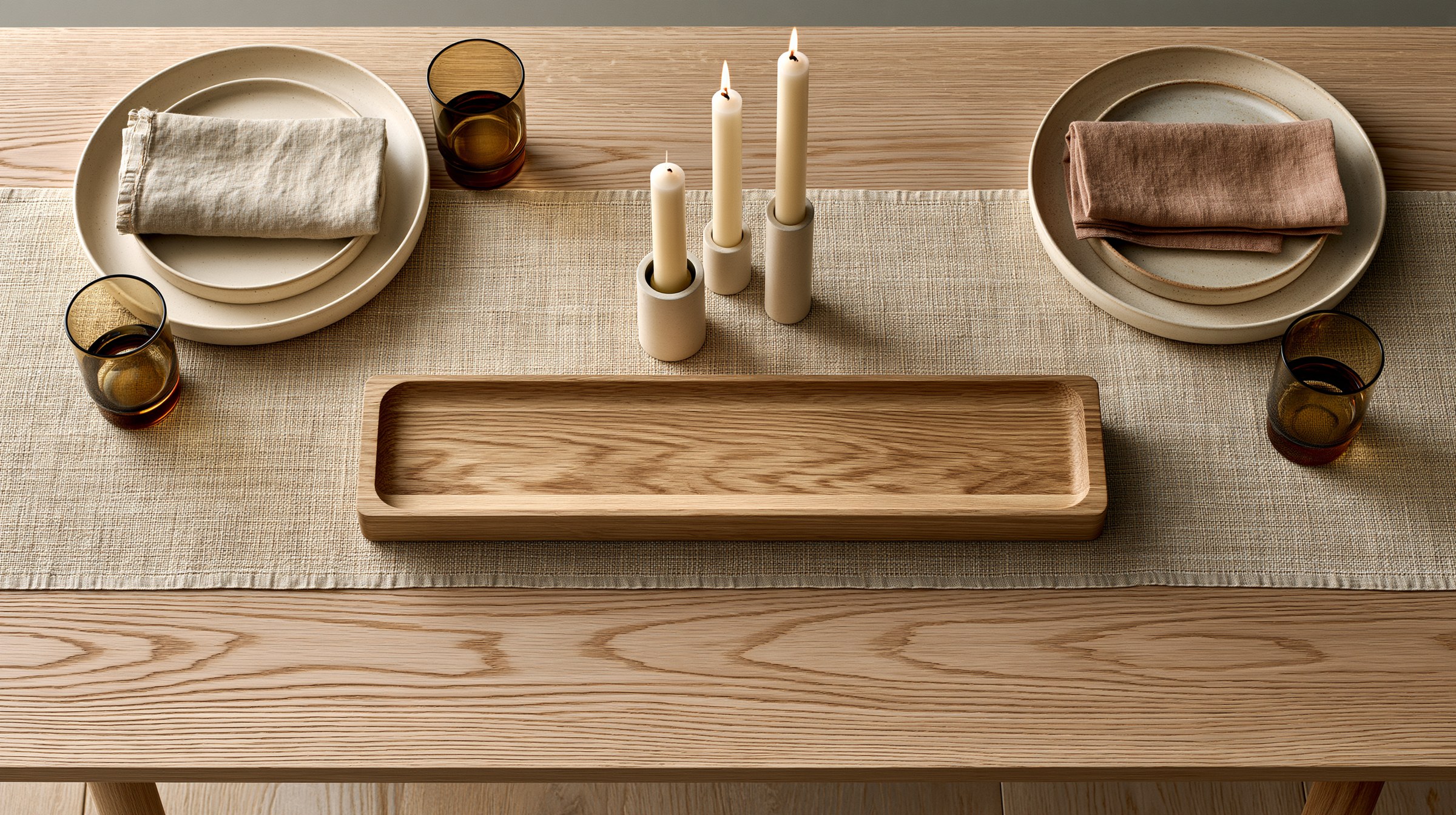
1. Run the linen, do not cover the table. A runner down the centre leaves wood showing at each place, which breaks the surface into settings without any other effort.
2. Fold the napkin once and lay it flat. To the left of the plate, or on it, with no ring and no shape. A folded napkin looks considered; a sculpted one looks like it took a tutorial.
3. Set the candles before anything else. Tapers first, then work the settings around them. In the other order they end up wherever there happens to be a gap, which is usually the worst place for them.
4. Stagger the tapers, do not line them up. Two at one height and one slightly lower, spaced unevenly down the runner. A row of matching candles reads as a centrepiece; a stagger reads as light.
5. Give the centre one green thing, low. A few olive sprigs laid straight on the runner, or a short branch in a squat vessel. Laying it down rather than arranging it upright keeps the sightlines open.
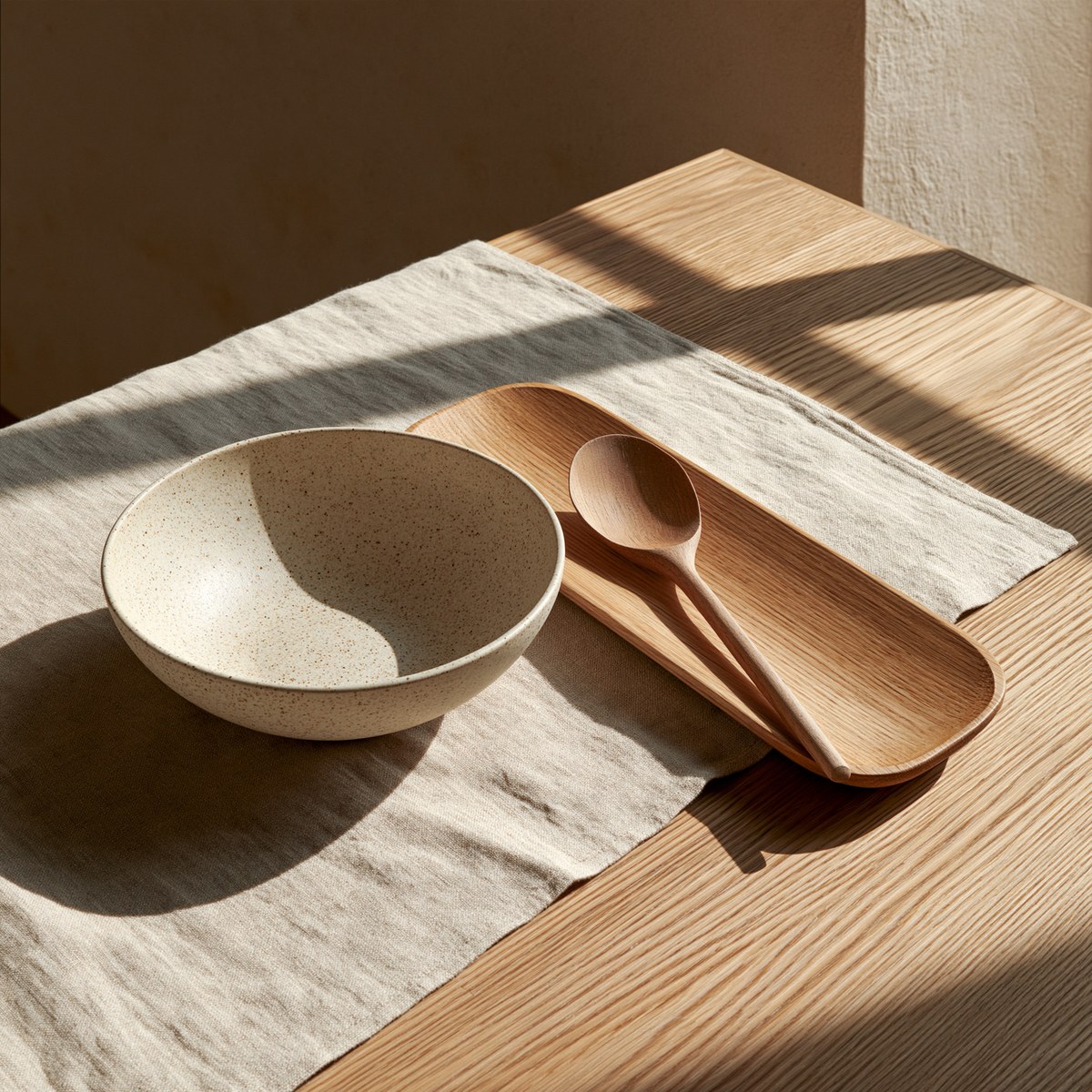
6. Serve from the middle. One wide, shallow bowl and one long board in the centre, filled before anyone sits. It is the whole difference between eating together and being waited on.
7. Leave a hand's width between settings. Measure it once with your actual hand. Crowding is why a fall table that looked right empty feels wrong full.
8. Put a name at each seat. A small card at each place, even among six people who all know each other. It removes the hovering moment at the doorway when nobody wants to choose first.
9. Turn the overhead light off before the doorbell. Lamps at the edges of the room, candles on the table, nothing overhead. The light does most of the seasonal work here, and a table that looked plain at noon will look finished by six.
What to Try First
If you change three things this week, change these.
Unscented ivory tapers and two holders at different heights. The largest visible shift for the least effort, and unscented matters because scent at the table competes with the food.
Oversized linen napkins in a deeper clay tone. Larger than feels necessary, in the one place a warmer colour earns its keep. They are also the single cheapest way to move a summer table into a fall table without replacing anything.
A place card at each seat. The smallest piece of the whole table and the one that does the most social work.
Pieces That Anchor a Fall Table
Ordered by how much each one changes the look. Most tables already have four of them.
A washed linen table runner. Flax or oat, heavier in weight than a summer runner, long enough to overhang each end by about twenty centimetres.
Oversized linen napkins. In a deeper clay or sand tone, generously cut so they fold once and lie flat. This is where the colour shift onto a fall table happens, which is why it is worth doing here rather than in the plates.
Matte stoneware dinner plates. Cream with a reactive glaze that pools at the rim. An unglossy surface keeps the food as the focal point and stops the candlelight bouncing.
Unscented ivory taper candles. Straight, slim, and long enough to burn through a whole evening. Unscented is the specification that matters at a table.
Slim taper holders in two heights. Brass or matte ceramic, narrow at the base. Buy an odd number in two heights rather than a matching set.
Tinted glass tumblers. Smoke or amber, short and heavy enough to sit steadily on linen. Tinted glass holds its colour after the daylight goes.
A wide, shallow serving bowl. Matte stoneware again, low enough to see over and broad enough to serve the whole table. A tall bowl blocks the room.
A long, low serving board. Solid wood, narrow, running with the length of the table rather than across it, so the centre has something horizontal against the candles.
Place cards and a small menu card. Heavy uncoated stock in cream, one per seat and one for the table. The smallest pieces here, and the two that make a casual table feel planned for the people at it.
Make It Easy the Day Before
Almost all of this can be done the night before, which is the difference between arriving at your own table rested and arriving out of breath.
- Set the whole table the night before and leave it. Plates, glasses, napkins, candles unlit. Fifteen minutes at nine in the evening removes the worst hour of the day itself.
- Trim the candles now. Cut the wicks and check every taper stands straight in its holder, because a leaning candle found at seven is a small thing that feels enormous.
- Wash and hang the linen two days out, not one. Heavy linen takes longer to dry than you think, and it wants to be creased loosely rather than damp.
- Write the place cards while the table is empty. Deciding the seating on a bare surface takes two minutes; deciding it with guests in the hallway takes twenty.
- Move one chair out of the room. Six seats at a table sized for eight is more comfortable than eight, and a chair is easier to carry out the night before than mid conversation.
- Put the serving pieces out empty. Bowl, board, spoons, in position and waiting. On the day you are only filling things, not hunting for them.
Your Next Move
If you want the largest change for the least effort, choose the candles and the two heights of holder.
If you want the table to feel like a different season, choose the linen napkins in a deeper tone.
If you want people to settle faster once they arrive, choose the place cards and decide the seating yourself.
If you want to host more often rather than better, choose the night before list and nothing else on this page.
For the lighter, brighter version of the same five materials, the quiet summer table sets out the summer counterpart. And if the part you are actually dreading is not the table but the evening around it, how to host without the stress is the piece that comes before this one.
If you want a calmer way to gather, I made a short guide to help. The Calm Host's Starter Guide walks through five simple principles, with one easy thing to try for each. It is free, and it is yours to keep. You'll find it just below.